
Can the X5 and GLE be beaten? Audi unveils third-generation Q7
Audi has unveiled the third-generation Q7, a new large SUV. The Q7 is Audi's flagship SUV, competing with premium models such as the Volvo XC90 and BMW X5. Audi plans to initially launch diesel engine specifications with mild hybrid technology in the European market. It is highly likely that petrol mild hybrid and plug-in hybrid models will be added to the lineup later.
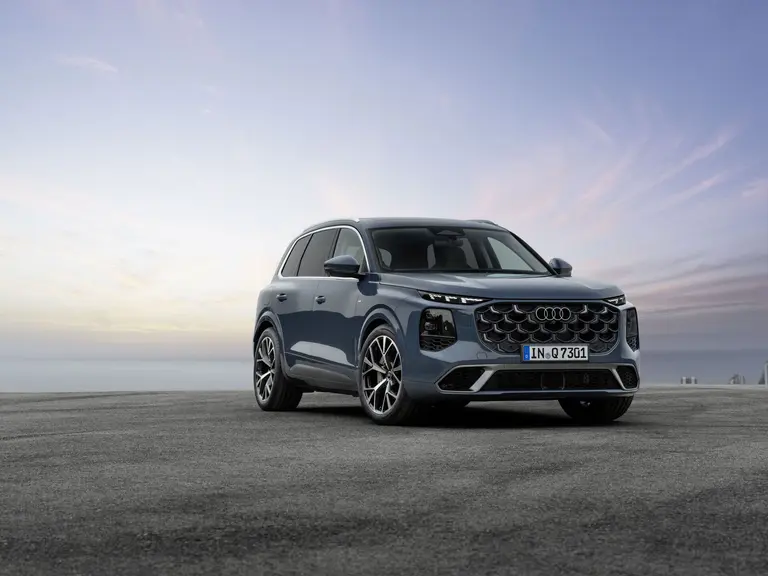
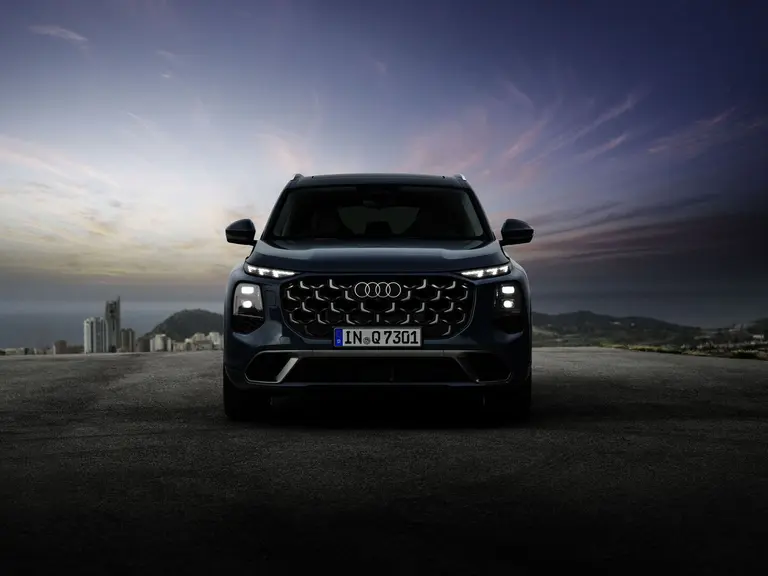
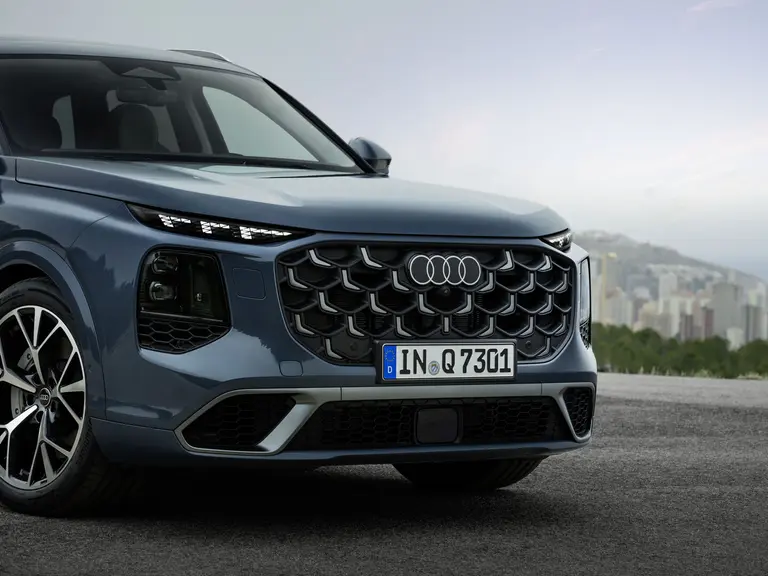
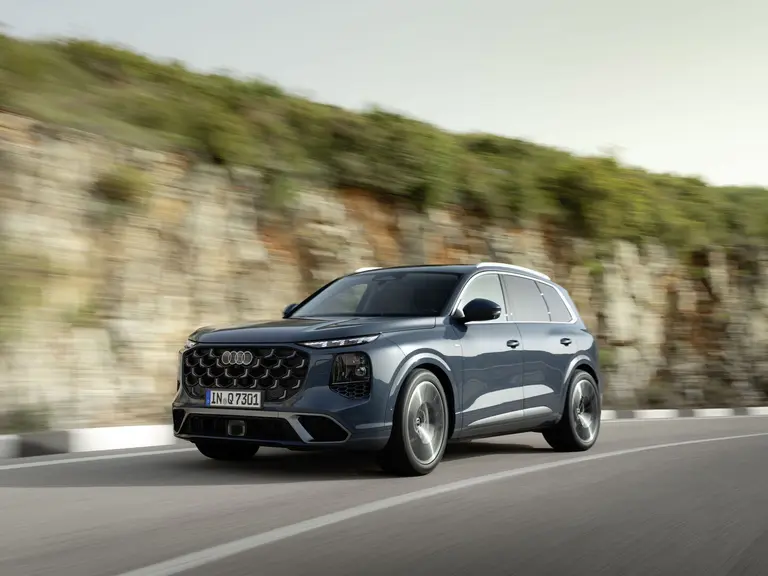
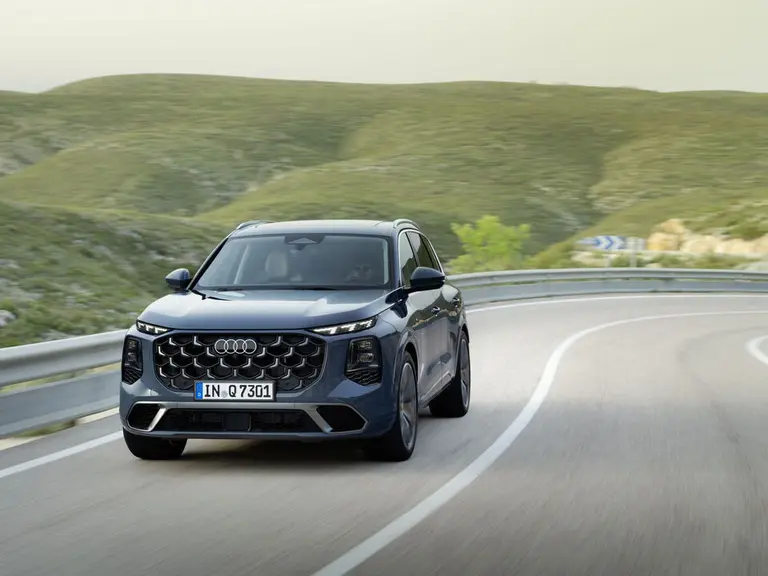
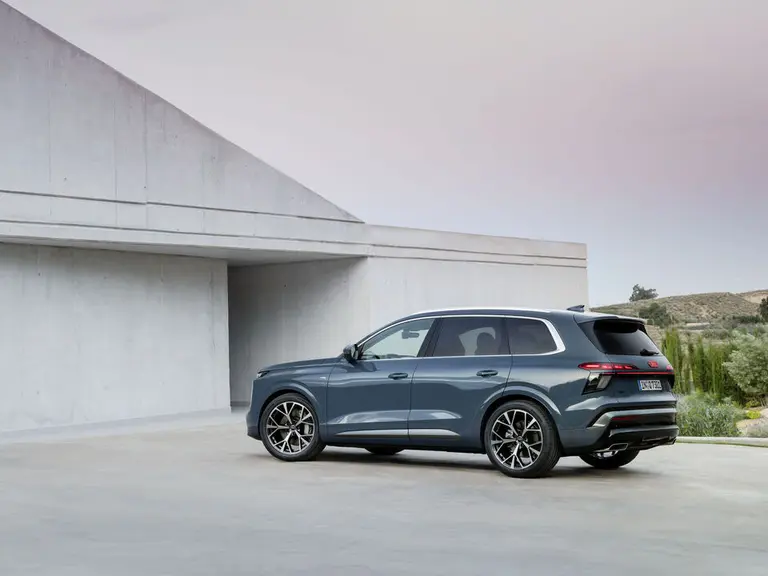
Audi's iconic four-ring emblem has been repositioned higher up, creating the effect of making the car appear larger. The design emphasising the volume of the wheel arches is also intended to make the vehicle look wider. The large single-frame grille and air intakes have been redesigned, and the shoulder line has been raised to give a more robust impression. The D-pillar is designed to be nearly vertical, achieving a horizontal roofline, which in turn ensures generous interior headroom.
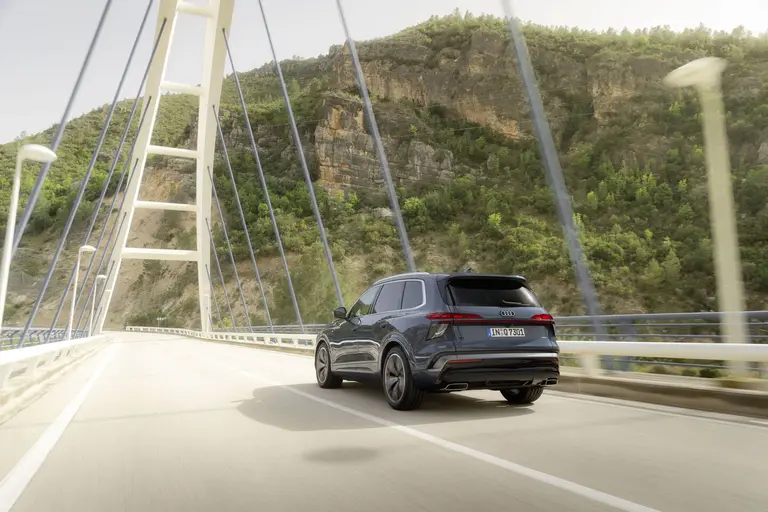
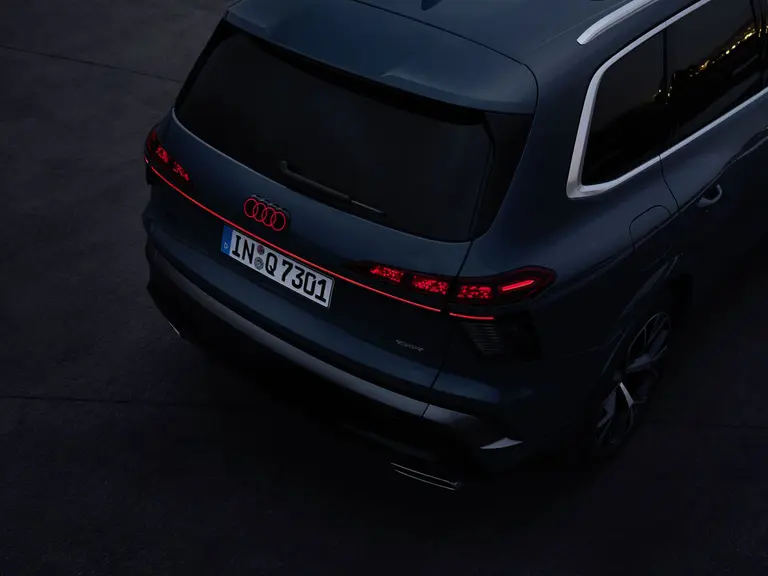
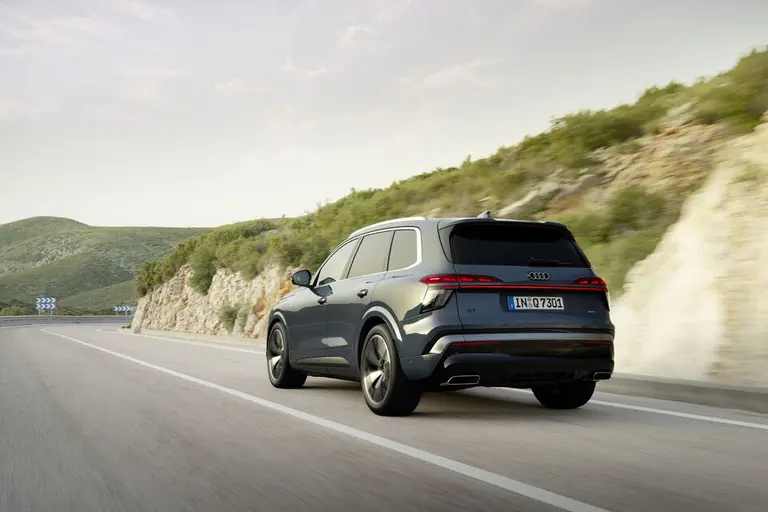
The optional rear lights feature third-generation digital OLED technology. A light strip connecting the tail lamps spans the entire width of the rear of the car, accentuating its width. The rear bumper integrates a diffuser and uniquely styled tailpipes to complete the distinctive rear-end design of the Q7.
Furthermore, for the first time in the Q7 lineup, optional fully automatic doors provide a convenient entry and exit experience. During door opening and closing, surrounding sensors detect obstacles to prevent collisions, and an electric soft-close function ensures the doors shut smoothly. It is also possible to control the doors remotely using the myAudi app on a smartphone.
The digital matrix LED headlights are seamlessly integrated with the vehicle's advanced driver assistance systems. When changing lanes, if another vehicle is detected in the blind spot, a warning is sent to the driver via the lane marking light. Additionally, a marking light function allows the headlights to illuminate pedestrians located in dark areas at the roadside, aiding the driver's awareness of the surroundings at night. Dynamic turn signals are also integrated into these digital matrix LED headlights.
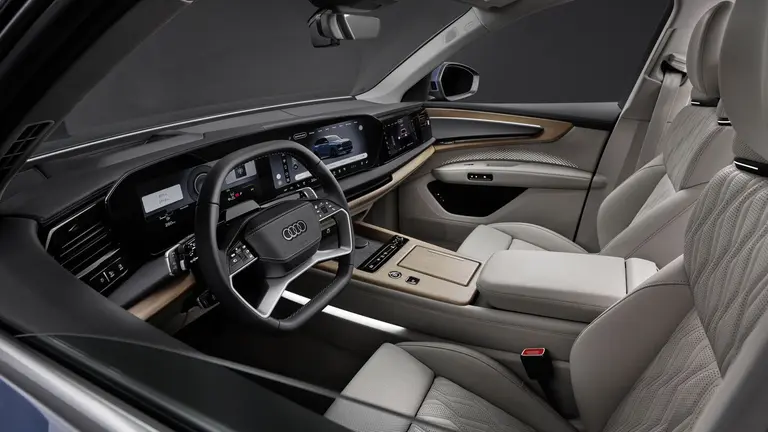
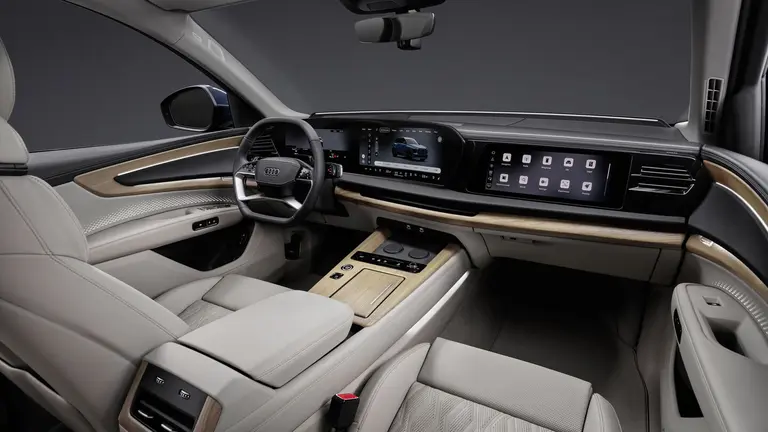
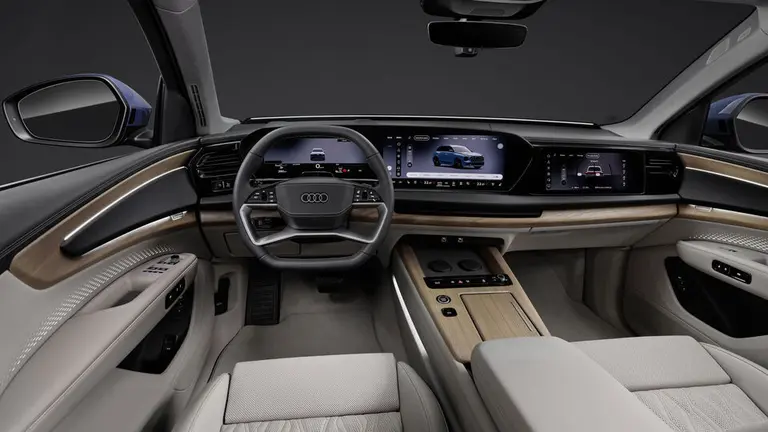
The interior features a design where the dashboard and door trims form a cohesive geometric unit. The air vents are equipped with a dynamic control function that allows the airflow direction to be adjusted electronically. The overall interior creates an environment that allows the driver to focus solely on driving, thanks to clean lines and a clearly defined layout.
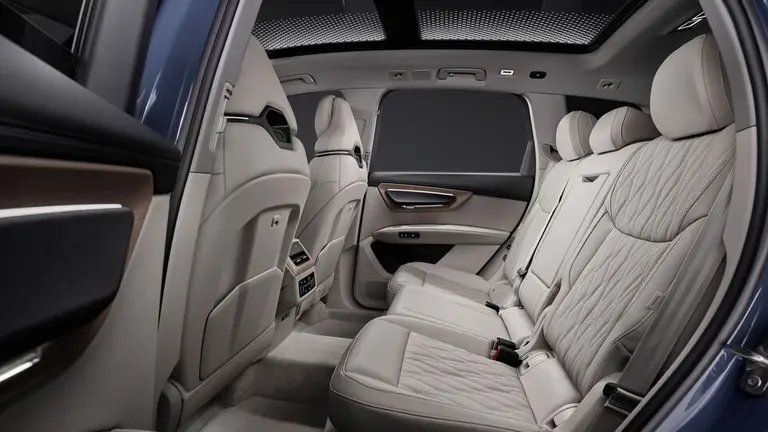
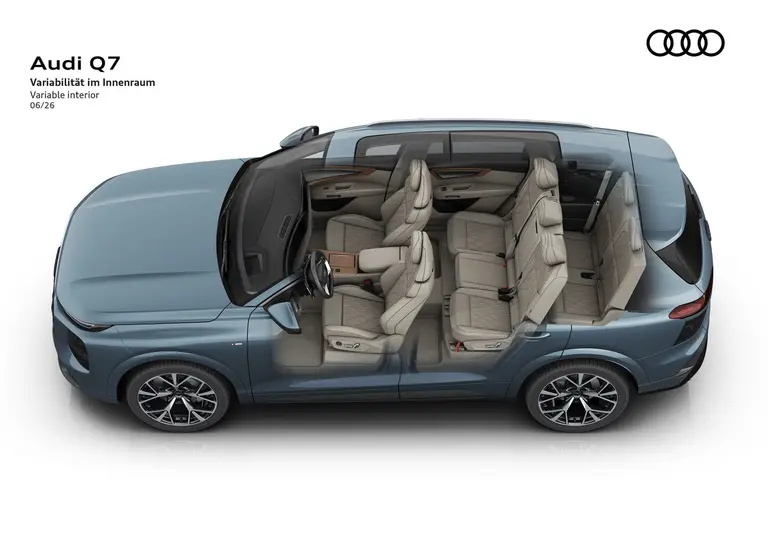
The new Q7 comes as standard with five seats, with six-seat and seven-seat configurations available as options. All seats feature electric adjustment, and both the five-seat and seven-seat models can accommodate three child seats side-by-side in the second row. The second-row seats can be electrically slid and folded in a 65:35 or 35:30:35 split. Thanks to the comfort entry function, access to the third-row seats is possible even with a child seat installed in the second row.
The optional sports seats plus feature backlit lighting at the base of the headrests for a visual effect. This lighting illuminates when the vehicle doors are locked or unlocked. The ambient lighting surrounding the dashboard and door trims adds a visual effect that makes the interior appear more spacious. The dynamic interaction light (IAL), spanning the full width of the dashboard, is fitted as standard and facilitates intuitive interaction between the driver and the vehicle. For example, when the turn signal is activated, the light synchronises to provide a visual auxiliary signal to the driver.
A dedicated display for the front passenger is fitted as standard, and a digital interface for controlling the climate control system is displayed on the lower bar of the central infotainment display. The centre console features a wireless charging pad capable of simultaneously fast-charging two smartphones at 25W each. Notably, a dedicated cooling vent for the wireless charging pad prevents smartphone overheating during charging and ensures a stable charging speed. Convenience for rear-seat passengers has also been enhanced, with USB-C charging ports located on the back of the front seats, as well as ports for the third-row seats. The charging output is up to 60W for the second row and up to 100W for the third row.
A premium 4D sound system developed in collaboration with high-end audio brand Bang & Olufsen is also available. In addition to the existing speakers integrated into the headrests, actuators mounted inside the front seats transmit the vibrations of the sound to the body, providing an immersive auditory experience. A total of 22 speakers are positioned throughout the interior, delivering a maximum output of 1360W.
The large panoramic sunroof provides a sense of openness in the cabin, and when the optional specification is selected, it adds an electronic transparency control function and synchronisation with the interior ambient lighting colours. The transparency of the sunroof can be adjusted in nine stages. Furthermore, coated laminated glass is applied as standard, blocking up to 99.5% of harmful ultraviolet rays.
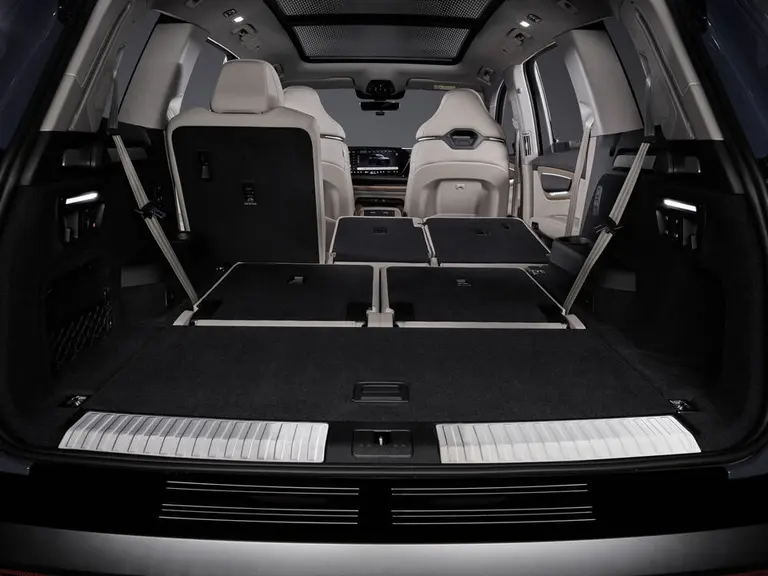
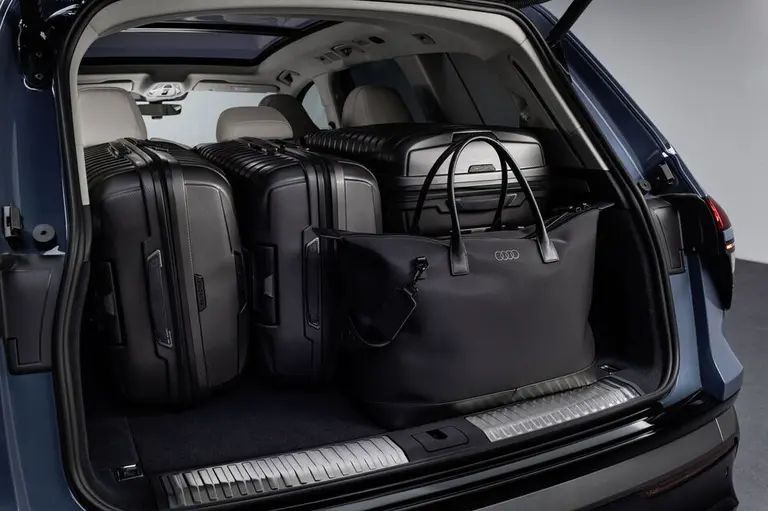
Load space has also been expanded. The basic boot capacity of the five-seat model is 806 litres, which extends to a maximum of 2075 litres when the rear seats are fully folded. For the seven-seat model, the boot space is 722 litres with the third row folded, and 1980 litres when both the second and third rows are folded. An optional aluminium rail system is available on the boot floor for securing cargo.
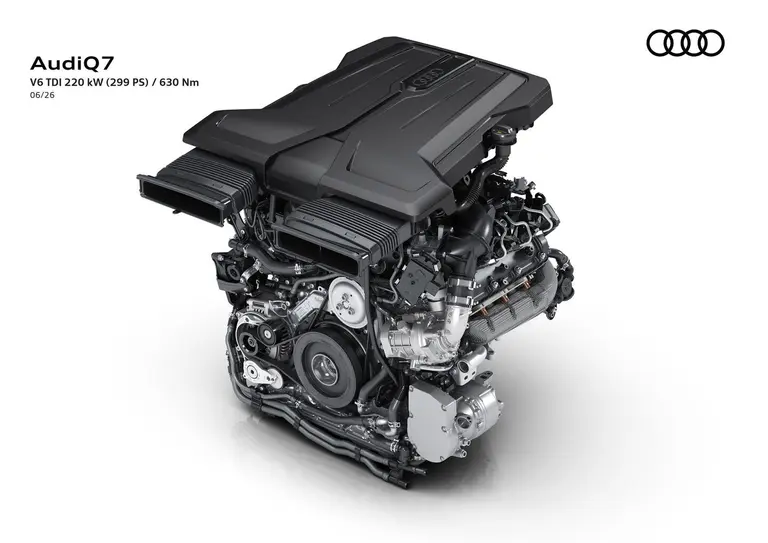
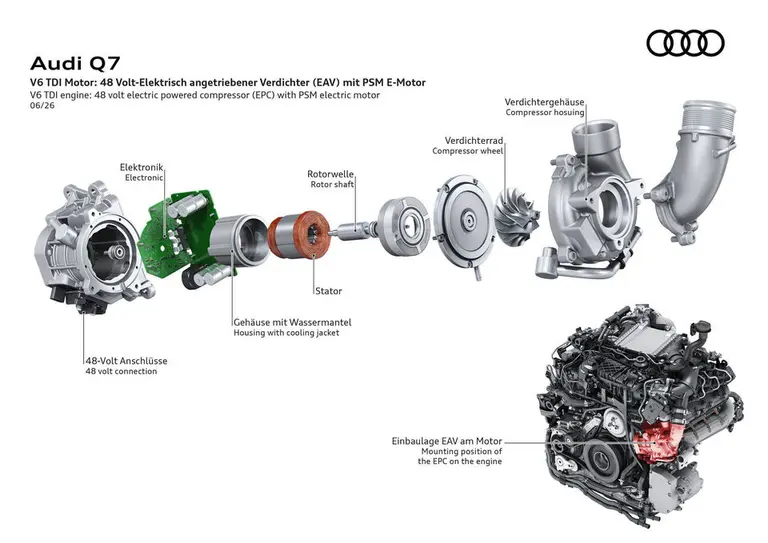
The powertrain for the new Q7 is based on a 3.0-litre V6 diesel engine. It is offered in two versions: a high-performance variant producing 299 bhp and 64.24 kgfm of torque, and a standard variant producing 245 bhp and 50.99 kgfm of torque. Both versions come as standard with next-generation 'MHEV (mild hybrid) plus' technology and an electrically powered compressor (EPC).
The MHEV plus technology adds 24 bhp and 37.72 kgfm of torque via the drive motor, enhancing responsiveness during initial acceleration and overtaking. The electrically powered compressor receives power from the powertrain generator and rapidly generates a boost pressure of up to 3.4 bar.
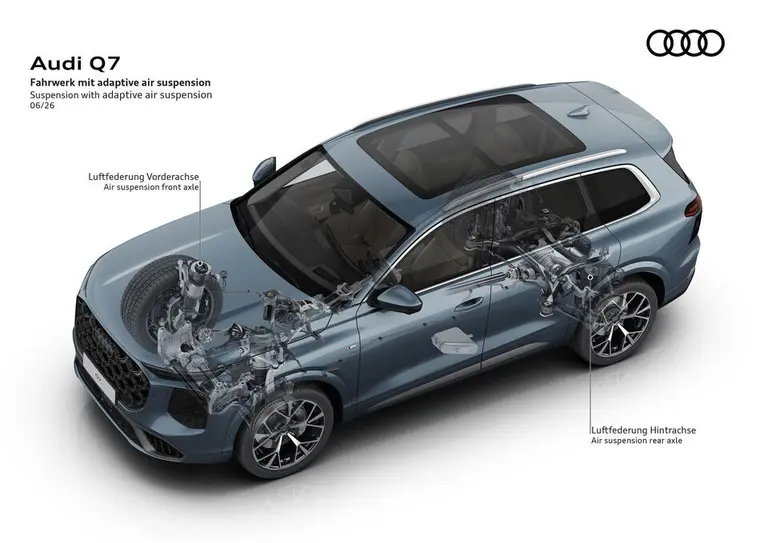
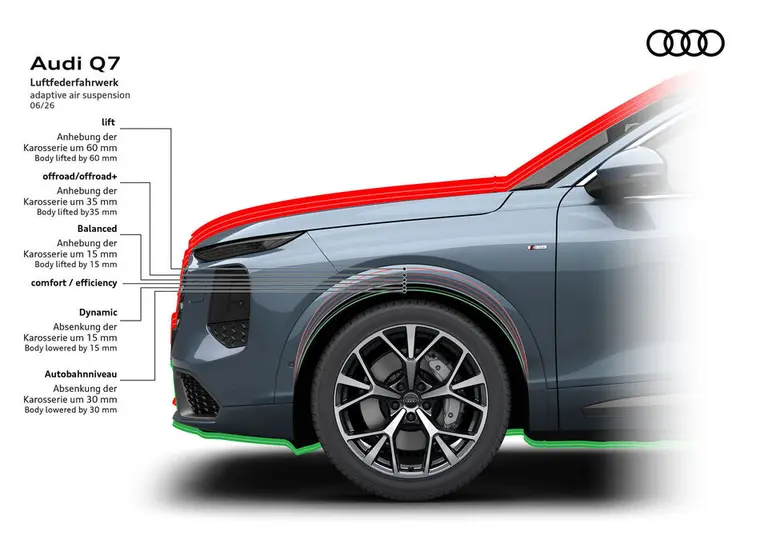
The suspension system can be chosen from three options depending on the driver's preference. These include a basic steel spring suspension, an 'adaptive air suspension' with an electronically controlled damping system, and an 'adaptive air suspension sport' which lowers the ride height by 30mm. The air suspension specification maintains the vehicle's level depending on driving conditions and includes a lift function for off-road driving. Additionally, when the exit mode is activated to aid entry and exit, the ride height is automatically lowered by up to 62mm.
The braking system features 400mm large-diameter lightweight composite brake discs with six-piston fixed calipers on the front axle, and 350mm discs on the rear axle. The standard wheels are 20 inches in size, with optional 21-inch and 22-inch wheels available in three and four designs respectively. 23-inch large alloy wheels are also available as an option.
Advanced driver assistance and safety features include automatic emergency braking (AEB), blind spot monitoring, rear cross-traffic alert, a 360-degree surround-view camera, an intelligent parking assist system, as well as trailer manoeuvring assist for towing, trailer stability control (TSC), and an integrated trailer brake control system.
The new Q7 is equipped with an emergency assist function called 'hard shoulder steering assist'. If the driver becomes unresponsive, for example due to loss of consciousness while driving, the system takes over control of the vehicle, steers it towards the hard shoulder, and gradually reduces speed to bring the vehicle to a safe stop.
The lane departure warning system can be operated in either 'standard mode' or 'reduced mode' depending on the driver's preference. In reduced mode, if the vehicle drifts out of its lane, the driver is alerted by a slight vibration in the steering wheel and a red warning graphic. The system then intervenes by steering the wheel only in situations such as when another vehicle is detected in the adjacent lane. In contrast, in standard mode, the system automatically corrects the steering as soon as the vehicle departs from the lane, regardless of the presence of surrounding vehicles, while simultaneously providing steering vibration and visual warnings.
The third-generation Audi Q7 will be produced at the Bratislava plant in Slovakia. Official customer deliveries in the European market are scheduled to begin this September.
Comments
0 comments