
Blue Origin Blew Up Its Launch Pad, So NASA Will Invite Its Rockets Over for Testing
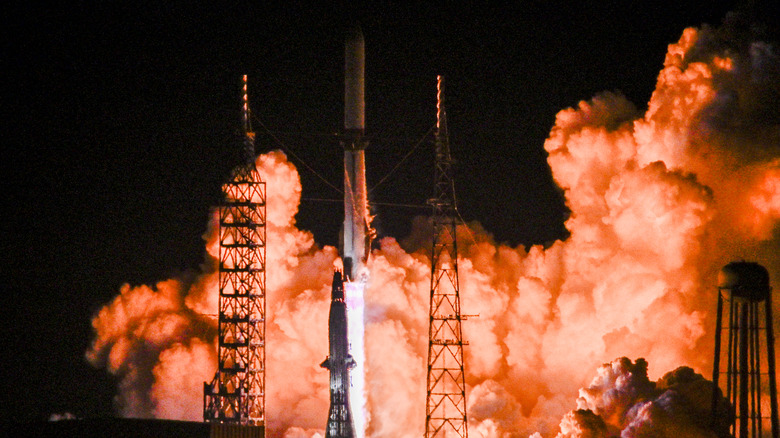
Have you ever had one of those days when you start to self-sabotage, but a friend steps in to piece you back together? Whatever your story is, it's not quite as intriguing as when Blue Origin blew up its own launchpad with a failed New Glenn rocket. That's bad in general, but it's especially bad when that was the only launchpad in the world that could actually accommodate your rocket. And it's triply bad when NASA is counting on you as one of only two options to land astronauts back on the Moon. So it does make sense that NASA has swooped in to help Blue Origin get back on its feet. The space agency has announced that it will retrofit its B-2 testing pad at the Stennis Space Center in Mississippi to fit the New Glenn's upper stage. While nobody will be able to launch anything from there, it does get the business of testing underway again so progress can be made.
The New Glenn's new home has a storied history behind it. This is where the Saturn V rocket was tested before it flew astronauts to the Moon during the Apollo programme. Later, the Space Shuttle did the same; more recently, the Space Launch System that sent the Artemis II astronauts around the Moon was trialled there. What all of those have in common, however, is that they were NASA hardware, government owned. The New Glenn's upper stage will be the first time that a private rocket will use the site. As NASA Administrator Jared Isaacman said, "Winning the new space race means moving faster and working alongside a strong commercial industry." This represents yet another indication of the space agency's push to commercialise much of its historic activity.
A New Glenn for a new lunar dawn
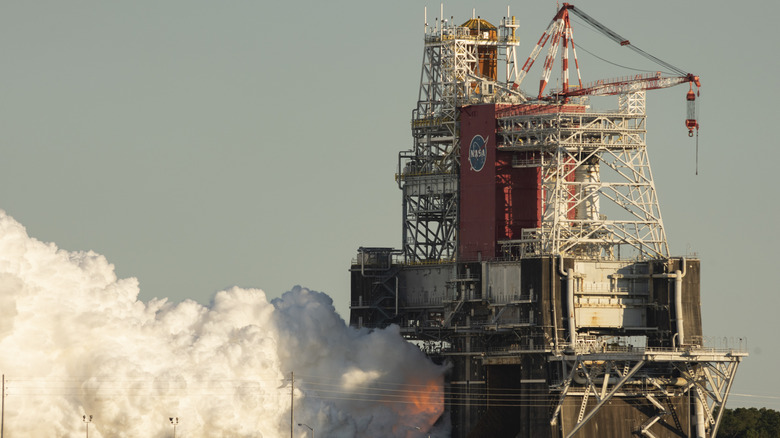
As one of the major players in the space industry, Blue Origin has received a number of NASA contracts just in the last year or two. As the agency prepares to build humanity's first off-world colony on the Moon, the company's Blue Moon Mark 1 lander will be ferrying much of the material to the lunar surface. As mentioned earlier, it may even bring Americans back there for the first time since 1972, provided it beats out its archrival for the contract, the SpaceX Starship. To demonstrate their capabilities, the Artemis III mission is scheduled to launch next year, in which astronauts in Earth orbit will dock with both spacecraft.
For all that to happen, Blue Origin needs to be able to actually, you know, do all that. Which requires a launchpad, which it blew up. The company is hard at work rebuilding it, better than it was before (redesigned for the next-generation New Glenn model). If all goes well, the rocket should fly again by the end of the year. What it won't have to do is a bunch of tests on the upper stage first: those will have already been done over at Stennis.
Space is hard; things go wrong. Just ask SpaceX. If America is to continue its role as a leader beyond our home, it will need to find whole-of-society methods to navigate setbacks. This is a good start.
Comments
0 comments