
Audi has replaced its oldest car, adding a twist of luxury but sticking with diesel
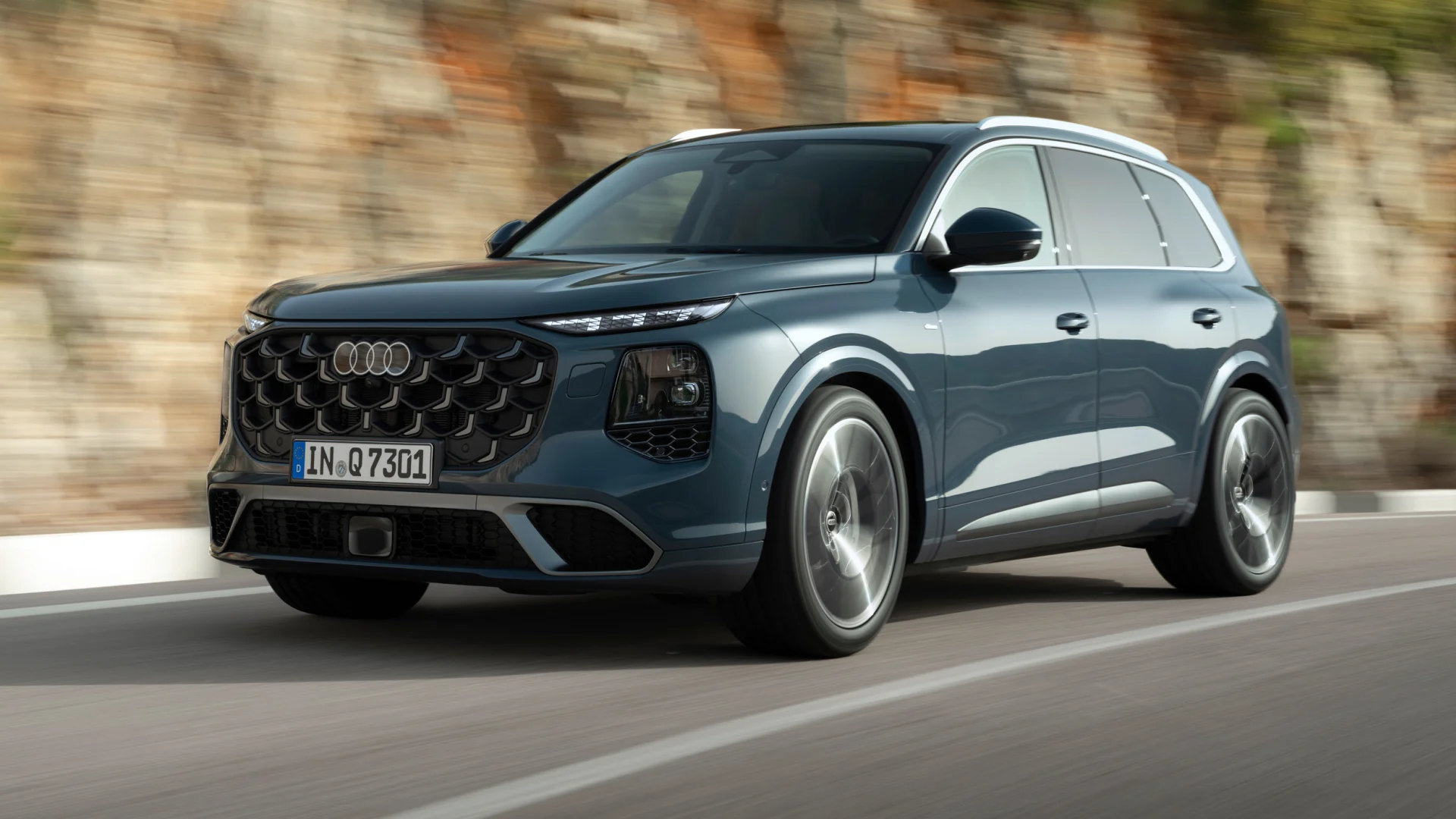
The all-new third-generation Audi Q7 has finally been unveiled, set to replace the second-generation model that has been on sale for over a decade. The Q7 is a significant model for Audi globally, and particularly so in the UK, where it remains one of the brand's most popular models despite the years (and two facelifts) the outgoing car has under its belt. Like the recently refreshed A5 and Q5, the new Q7 sticks with traditional powertrains and avoids a risky electric option. Here are all the details.
Engines and chassis
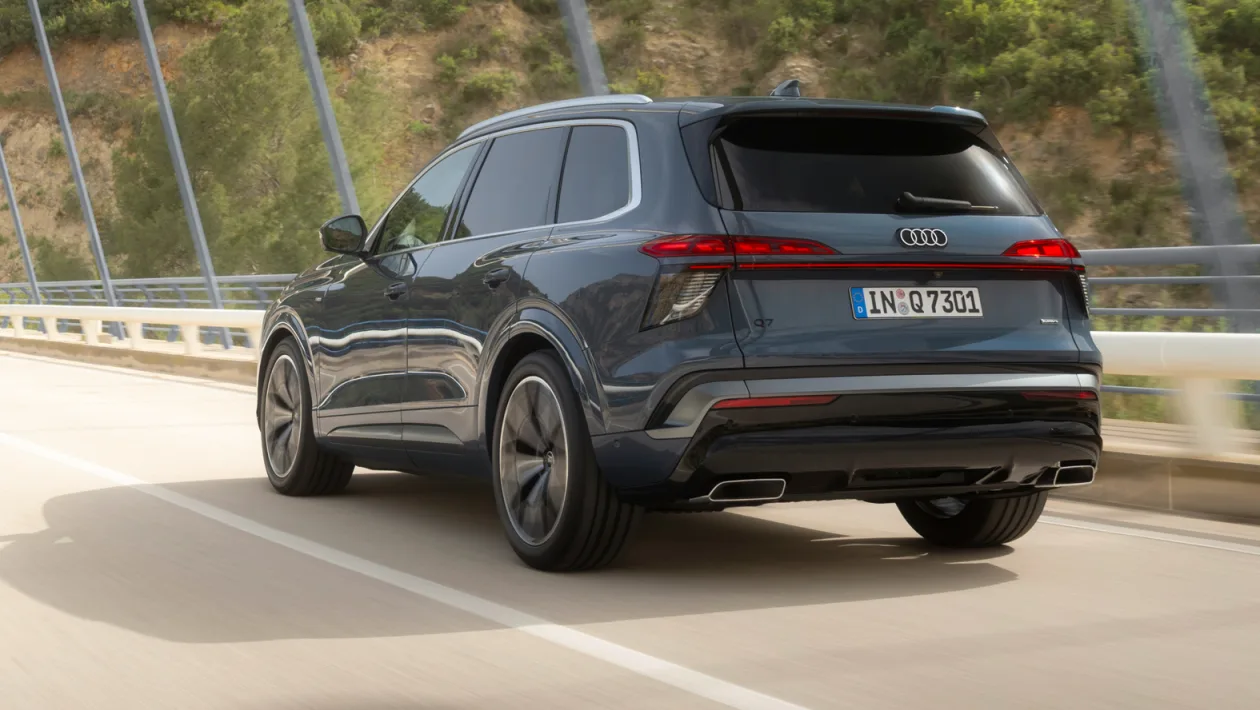
First, the engines, and surprisingly the Q7 is initially all-diesel. The new model will launch in the UK with two versions of the same V6: a 3-litre unit in 242bhp 369lb ft and 295bhp 465lb ft forms. Both feature Audi's MHEV plus 48-volt mild-hybrid technology to boost performance and efficiency, and allow low-speed electric-only running.
- Best performance SUVs 2026 – supercar performance in a family-friendly package
Plug-in hybrid variants are expected to join the line-up later. The SQ7 has already been introduced for the US market with the 591bhp 590lb ft twin-turbo V8 model, alongside a twin-turbo petrol V6 for the standard Q7. It looks likely that the flagship SQ7 model will be introduced to the UK further down the line.
All Q7s will use the same eight-speed automatic transmission, sending power to all four wheels via Audi's quattro four-wheel-drive system. On the chassis front, steel springs come as standard, with an air spring system optional. In sport mode, the Q7 can lower itself by up to 30mm, and it can also lower by 62mm when stationary, making it easier to get in and out. The car can use geo-data to prepare for what's coming up, adjusting suspension settings ahead of a rail crossing to improve refinement, for example.
Also optional will be rear-wheel steering and a limited-slip differential to improve agility and traction. Wheel sizes range from 20 inches to a full-bodied 23 inches, with all wheels housing 400mm front discs (clamped by six-piston calipers) and 350mm rears.
Design
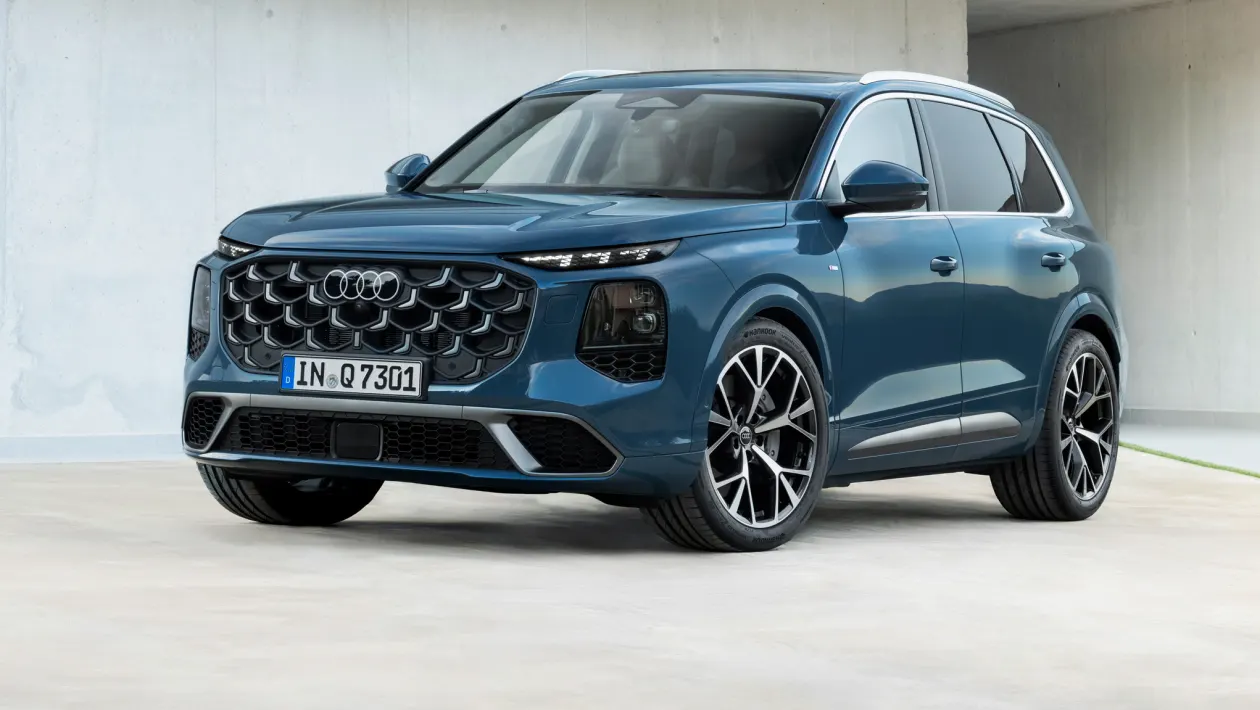
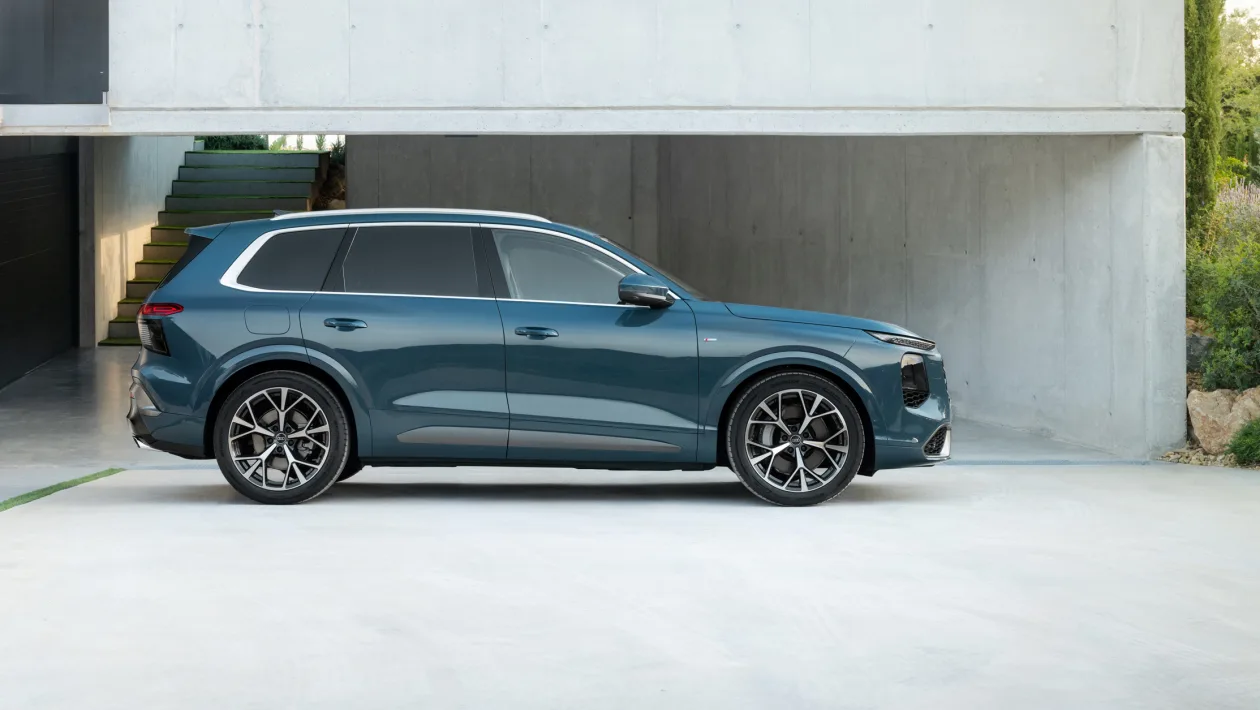
Contrary to the trend of slightly amorphous, pebble-like SUVs, the latest Q7 is the most upright yet, doubling down on the sturdy, blocky, imperious SUV form factor. This is to appeal to buyers cross-shopping with Volvo's XC90, Land Rover's Defender and Discovery, or BMW's X5, and it's a design that will effectively carry across to the even more luxurious and large Q9 flagship – a car to rival BMW's X7 and the Range Rover.
Draped across the blocky SUV silhouette is design language and lighting familiar from the Q3 and A6. The huge single-frame grille could probably swallow a whole Q3, and you won't miss it at night, given its honeycomb elements are backlit. The new Q7 is also able to project light patterns onto the road, such as orange indicator chevrons.
Interior
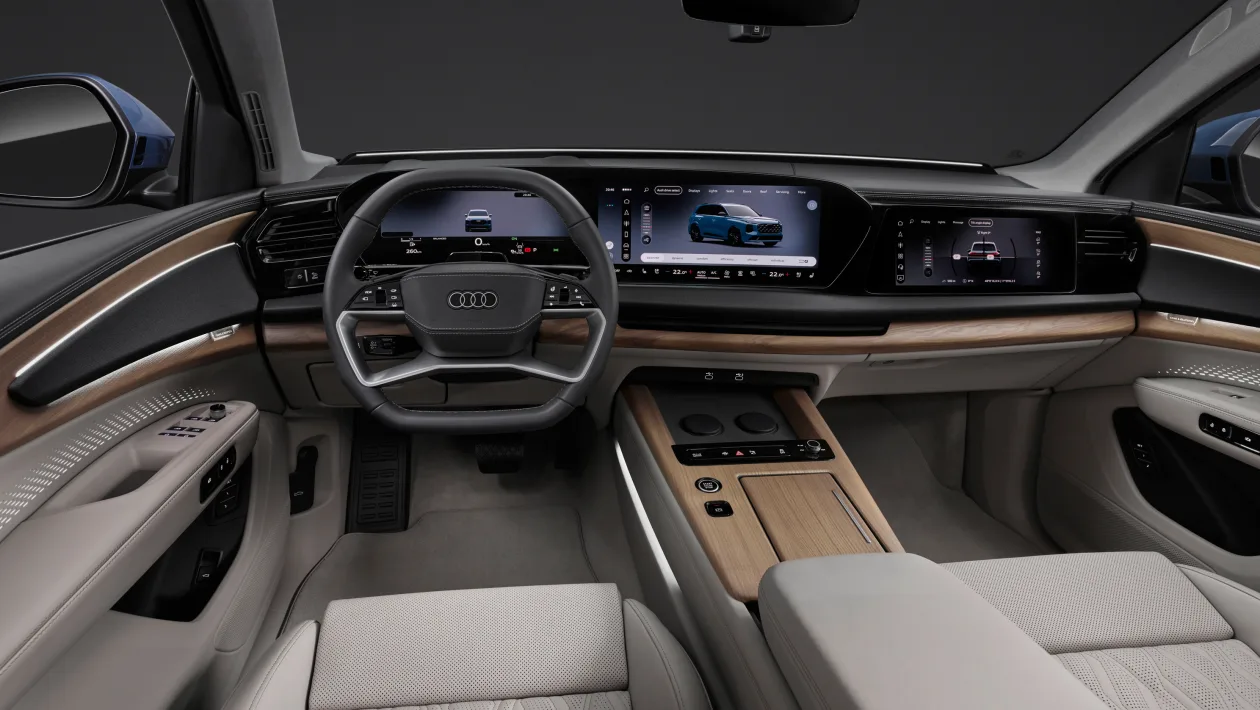
Inside, the Q7 is doubling down on luxury, starting with how you get in, given the doors are now powered. Once inside, the established Audi cabin language is familiar but enhanced. The steering wheel features the reinvented indicator and wiper controls first seen on the Q3.
The Q7's cabin is, as you'd expect, a pixel-fest, with Audi's 'Digital Stage' consisting of a 12.3-inch driver's display and 14.5-inch infotainment screen, as well as a 12.3-inch passenger display. Unfortunately, the new Q7 leans heavily on digital, non-physical controls, with even airflow direction controls hidden within the central screen. Not very luxurious.
Happily, the cabin is a sea of premium materials, with wood in place of fingerprint-magnet piano blacks in the images here. There's also plenty of leather and premium soft fabrics to ensure this is an X5-rivalling cabin experience. It should be more practical than an X5 too, with seven seats optional and an enormous boot, thanks to that tall, slab-sided tail.
Prices
The new Q7 will be available to order later this year. European prices start at around £76,000. While UK pricing has yet to be announced, buyers of the BMW X5 rival in the UK shouldn't expect to pay much more than that. For reference, the X5 currently starts from £74,280 for a basic xDrive30d, with the near-300bhp straight-six diesel. It is shortly to receive a BMW iX3 and i3-style Neue Klasse refresh.
Comments
0 comments