
The 2026 Mitsubishi Outlander Addresses Our Biggest Criticism. Why Are We Still Underwhelmed?
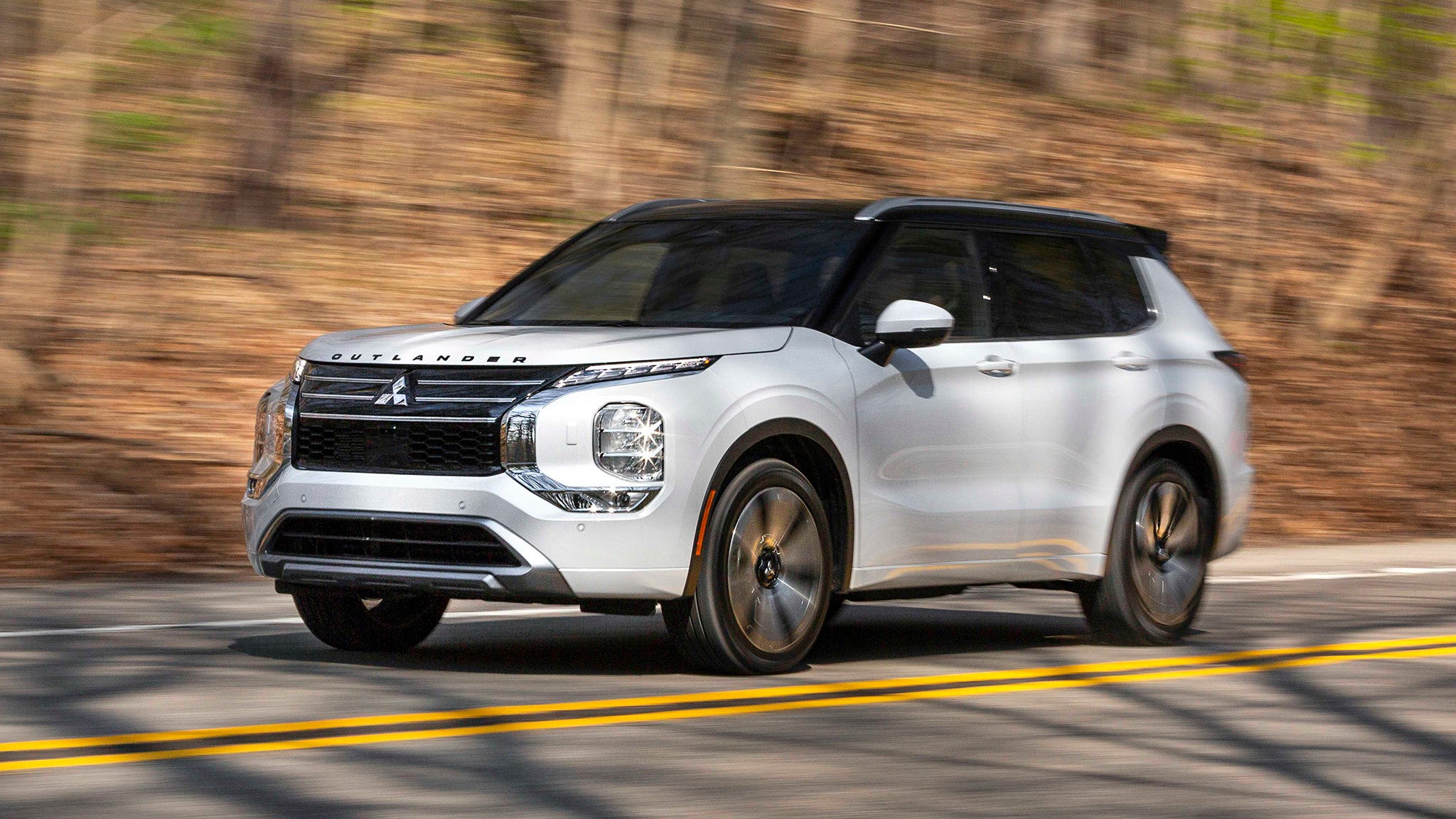
When we last checked in with the Mitsubishi Outlander, we were clear about its biggest shortcoming. The compact SUV built on Nissan Rogue bones received a modest refresh last year that included interior and exterior design tweaks, retuned steering and suspension, and a 1,650-watt Yamaha sound system. That’s all well and good, but what we really wanted was more get-up-and-go. “Our biggest gripe about the old Outlander was the lack of power, and we’re still griping,” senior features editor Aaron Gold wrote in his First Drive of the 2025 model.
So when we heard that the 2026 Mitsubishi Outlander was getting a new engine, we felt validated in a way that typically only happens in a licensed therapist’s office. The old Nissan-built four-banger, a 181-hp wheezing lump of lazy, was being replaced exactly as we’d dreamed it. “Surely Mitsubishi has a couple of spare turbochargers lying around the shop somewhere,” Gold wrote last year. Indeed, Mitsubishi found some extra snails attached to complete engines in the Japanese plant that was already making the 1.5-litre turbo inline-four for its smaller Eclipse Cross. Our cries had been heard.
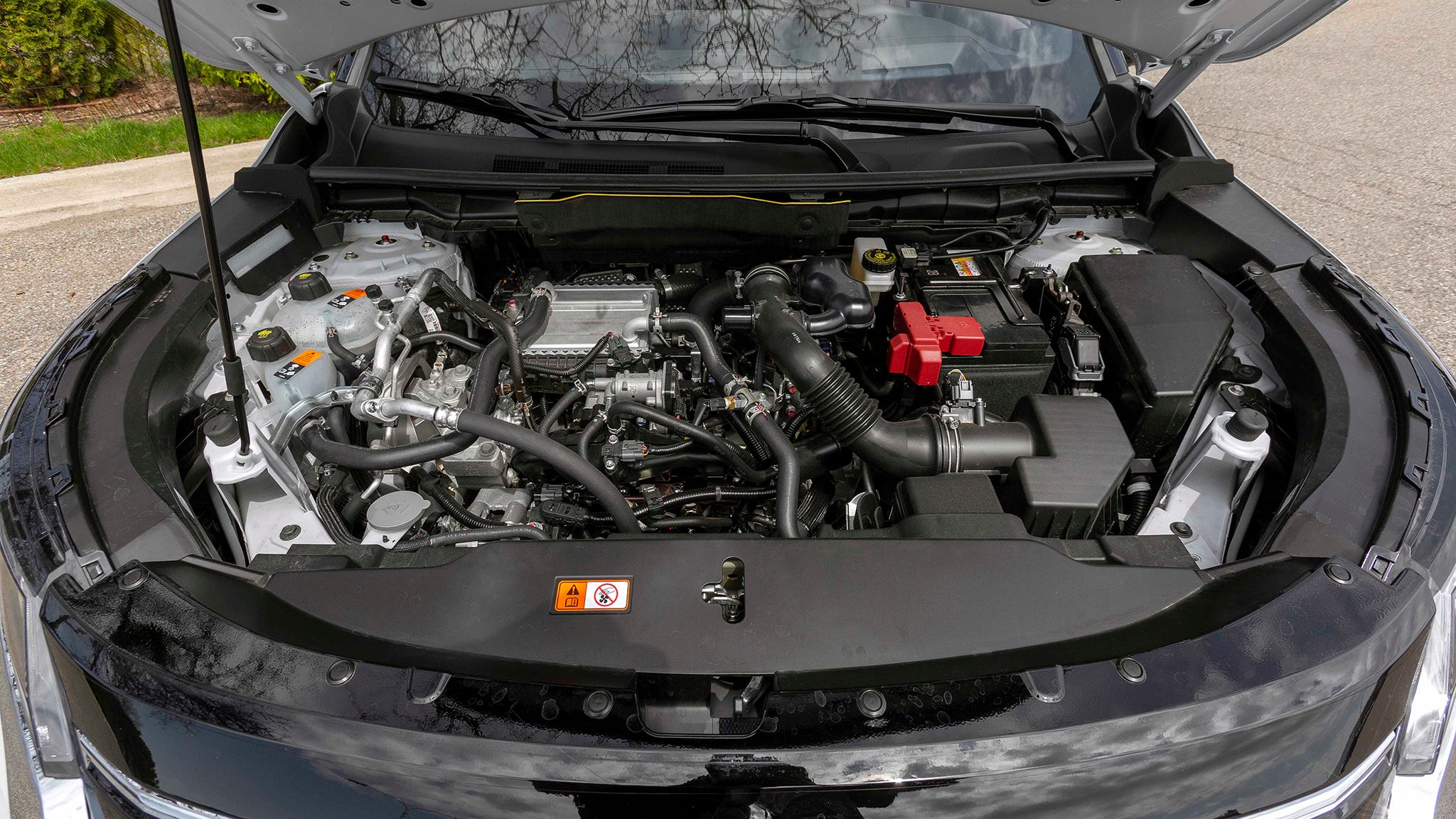
Or at least that’s what we thought until we read further and learned that the new engine produces less horsepower than the old one. Yep. The Mitsubishi Outlander’s new engine makes 174 horsepower. Despite that unsettling development, we didn’t write it off immediately. The new, boosted engine inflates torque from 181 to 206 lb-ft, and we held out hope that the extra grunt combined with spurts of electric oomph from a new 48-volt mild hybrid system would put more pep in the Outlander’s step.
Unfortunately, after spending two weeks behind the wheel, we’re still griping. The new engine propels the Outlander from 0 to 60 mph in 8.6 seconds, a meagre 0.3-second improvement on the 2025 model. Admittedly, that’s in the hunt with some of the compact SUV segment’s slower entrants, including the Nissan Rogue and the Honda CR-V with their own 1.5-litre turbo engines. However, hybrid versions of the CR-V, Kia Sportage, Hyundai Tucson, and Toyota RAV4 (where the hybrid is the base engine) dust the Outlander with times in the low seven-second range.
Our big beef isn’t just about the numbers, either. Under any form of acceleration—from a stop light, up an on-ramp, or during a pass—Mitsubishi’s 4B40 engine is as noisy and gutless as a dachshund at a dog park. One driver christened it “the little engine that couldn’t.” The 12-hp motor belted to the engine does smooth out stop/start events and bumps city fuel economy up two notches to 27 mpg compared to last year’s 2.5-litre engine (highway efficiency is unchanged at 30 mpg), so it is an improvement of sorts over the old engine. We were hoping for something punchier, though.
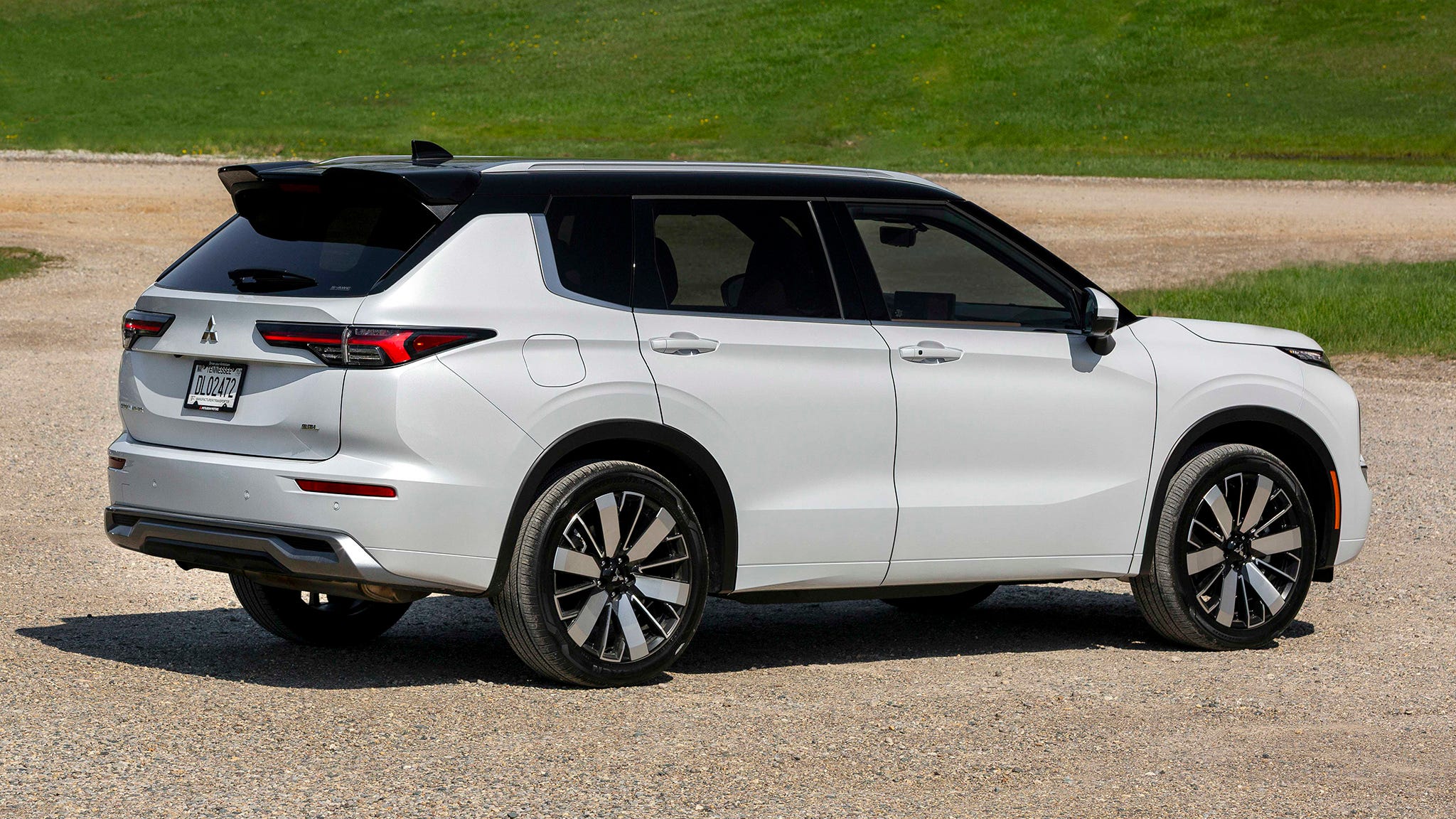
All of this might be tolerable if the Outlander sold at a discount to its more popular competition. But that’s not the case. Quite the opposite. Our top-trim, all-wheel-drive Outlander SEL stickered for an unfathomable $47,285. That amount will allow you to buy pretty much any other compact SUV on the market. Many of them are much better vehicles than the Outlander.
A small part of the problem is that Mitsubishi pads every Outlander SEL with port-installed $135 grille protection film, a $240 cargo cover, and a $225 “Welcome” package that includes a little rubber mat for the centre console, a touch-up paint pen, carpeted floor mats, and a binder for the owner’s manual. When asked about this, a Mitsubishi rep wrote back, “A customer could ask the dealer to remove them from the vehicle prior to delivery and have the cost removed from the purchase price.” You’d probably have better luck convincing McDonald’s to give you your money back a week after eating a Quarter Pounder.
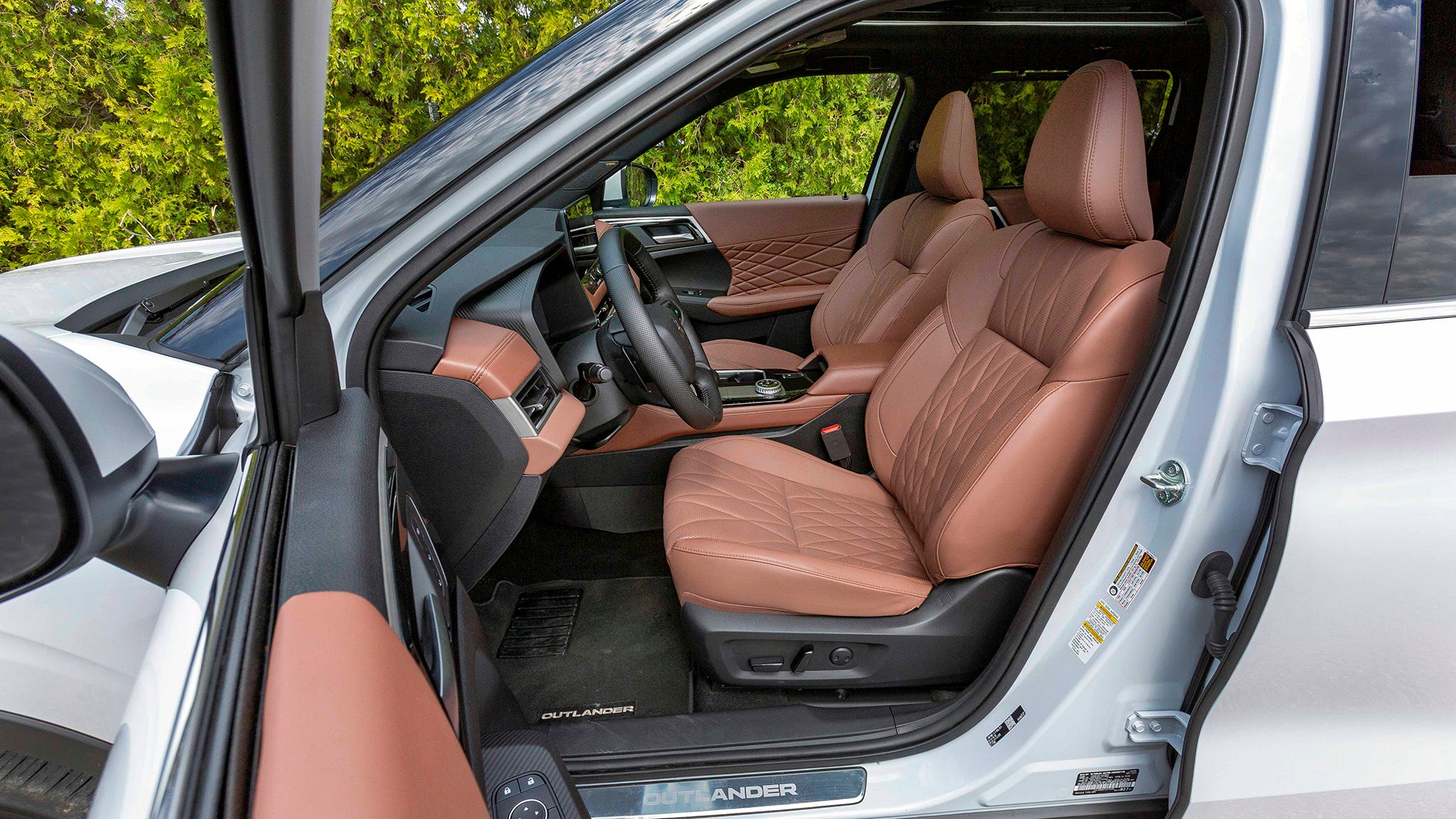
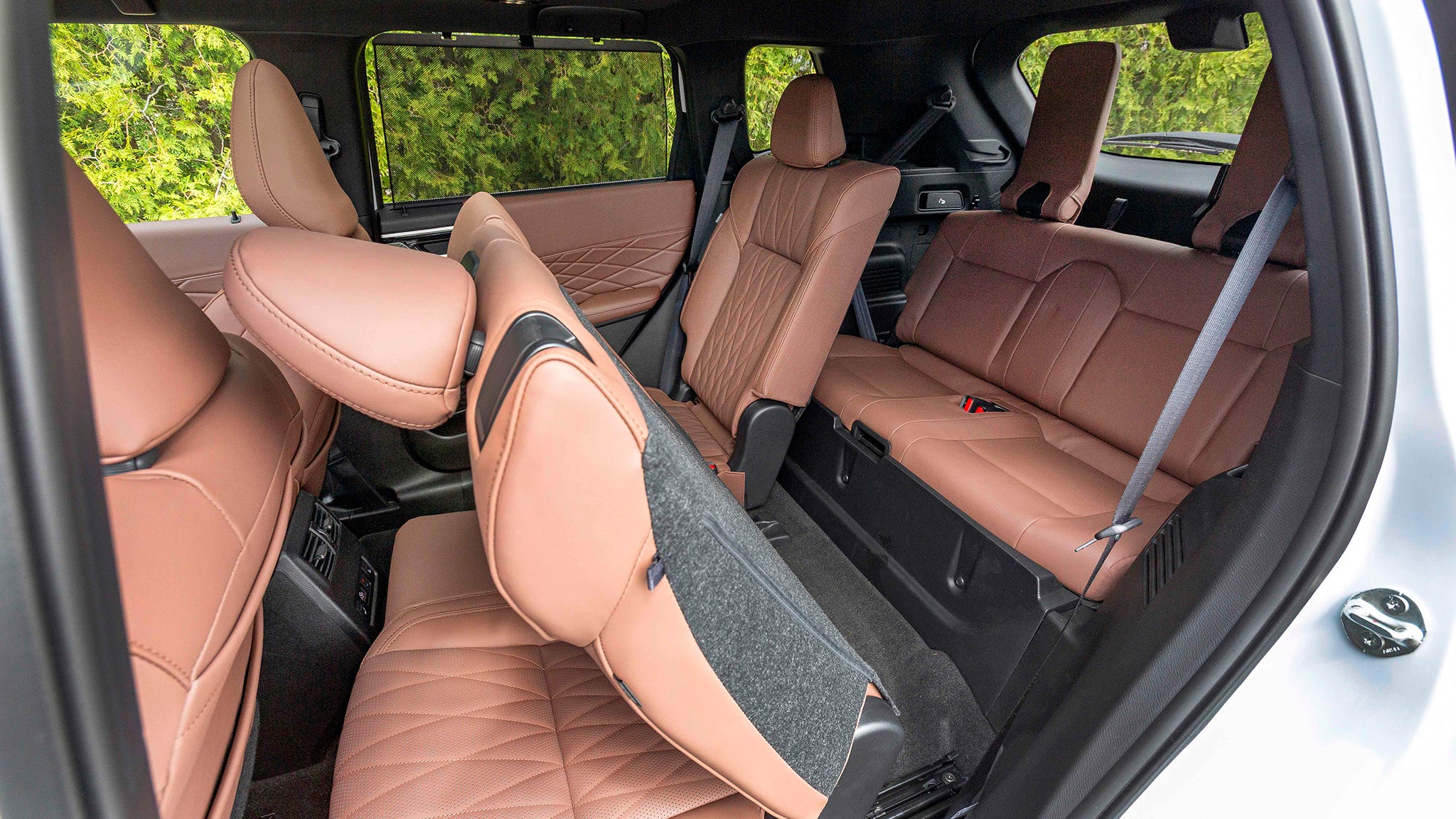
The $3,050 Premium package at least pays its way by padding the cabin with legitimate luxury. It dresses up the cushy seats in supple Brick Brown leather finished with quilted stitching. The Premium package is also your ticket to the 12-speaker Yamaha Ultimate audio system, which delivers midrange and high frequencies with exceptional clarity. While it lacks the low range you’d want to really crank Tiësto, it’s great for podcasts and generally embarrasses most other premium audio systems in the segment. Mitsubishi also tries to stand out from the crowd with a five-year, 60,000-mile bumper-to-bumper warranty and a 10-year, 100,000-mile powertrain warranty.
As recently as 2021, the Outlander’s in-car tech looked and felt like leftovers from the dial-up internet era. Raiding Nissan’s supply closet vaulted Mitsubishi into the modern age, though neither the infotainment nor driver assistance systems are top tier. The Outlander’s navigation system struggled to do anything useful with our voice commands and shouted out warnings about road closures that didn’t exist. The lane departure system makes only a minimal effort to keep the Outlander between the lines, and you have to jiggle the steering wheel periodically, or it’ll think you’ve taken your hands off the wheel.
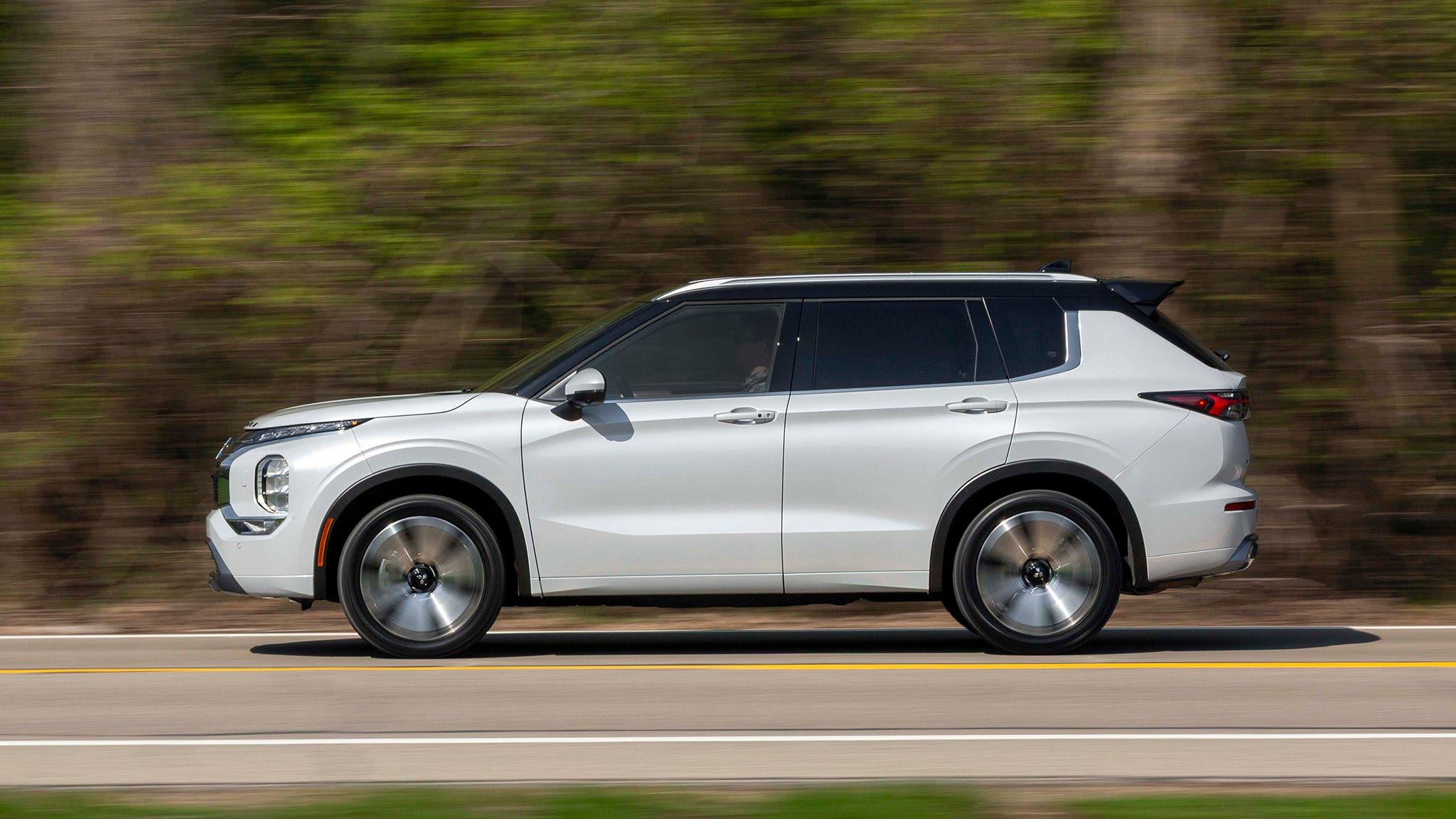
Mitsubishi has also left room for improvement dynamically. Last year, we praised the 2025 Outlander’s ride quality based on California roads, but those impressions fell apart on Michigan roads that have fallen apart. The Outlander rides on soft springs and stiff dampers, giving you the worst of both worlds. Impacts hit hard, yet handling also suffers as its body lolls under cornering and braking.
The Outlander’s only other calling card is a third-row seat that probably violates the Geneva Conventions. It won’t accommodate a 50th percentile American at any age, and the best thing about it is that once you fold it into the floor, it disappears well enough that you’ll probably forget it’s there. Anyone who intends to use the third row would be far better served by a Hyundai Santa Fe for similar or less money.
We’ll conclude this review the same way we started it: “Our biggest gripe about the old Outlander was the lack of power, and we’re still griping.” Ditto. Copy-paste. What we said.
At the same time, we’re convinced the 2026 Mitsubishi Outlander is the best vehicle Mitsubishi has built in a decade by a mile-wide margin. Then again, that’s kind of like picking a favourite Katy Perry song or saying the New York Jets are having a good season. Calling something the best amid a long run of mediocrity doesn’t really reveal anything.
Here’s what’s telling about the Mitsubishi Outlander: It can now be mentioned as an alternative to Toyota and Honda’s wildly popular compact SUVs with a straight face. Yes, for most people, a CR-V or a RAV4 would be the better choice, but just a few years ago, the Outlander wouldn’t have even been a part of the conversation. It’s a much, much better vehicle than it once was, even if it’s far from the best.
Comments
0 comments