
We Drove the 2027 Rivian R2—and Kept Saying the Same Three Words
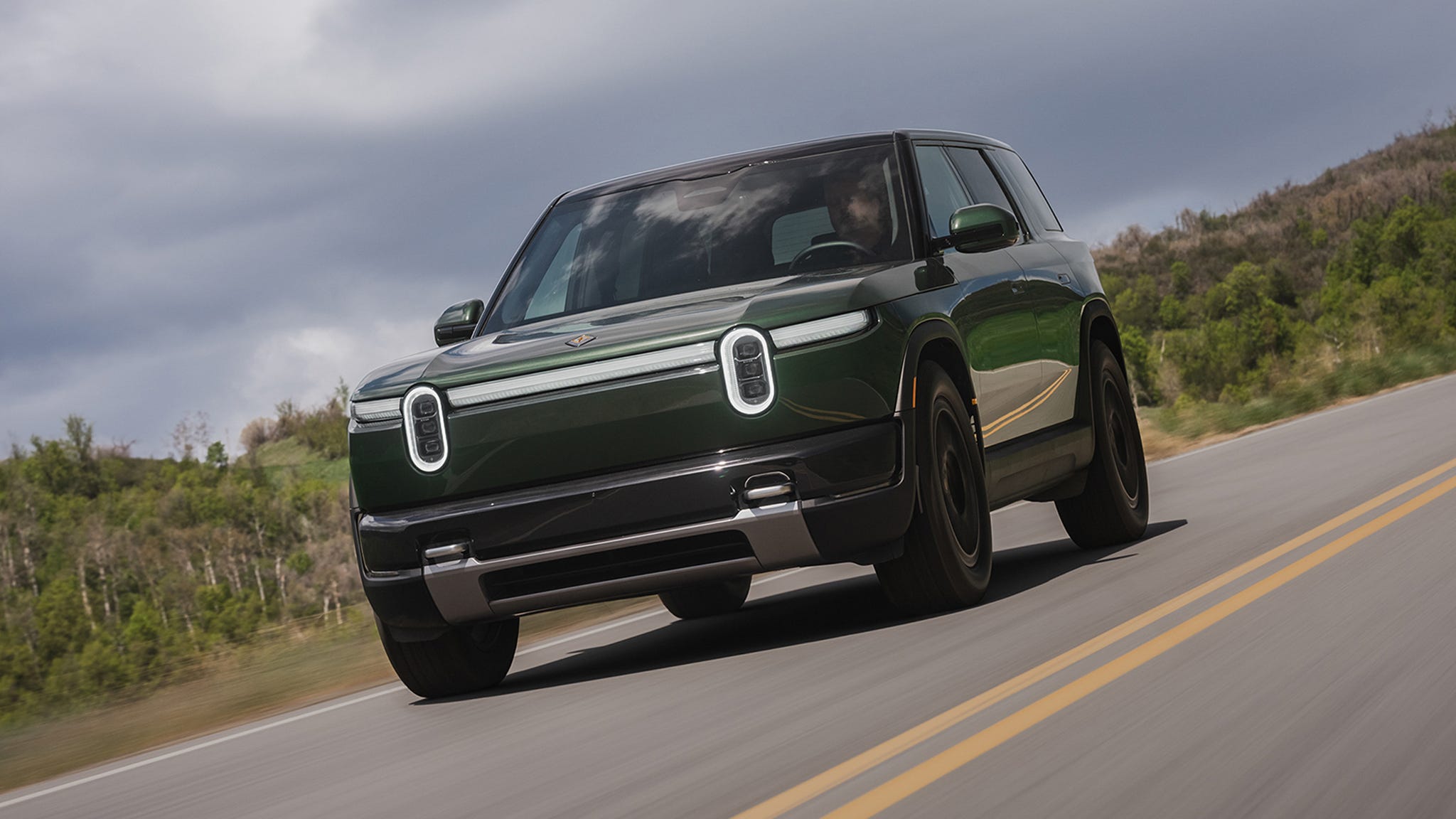
If there’s one thing Rivian has proven time and again, it’s that a team of people who love what they do, are empowered to make critical decisions, and happen to also love cars can create magical things. Rivian’s first two vehicles, the R1T and R1S, are proof positive. The electric truck and SUV are stylish and thoughtfully designed inside and out, they’re a blast to drive on-road and unstoppable off it, and they benefit from the company’s deep understanding of software, so they continue to surprise and delight long after the new car smell wears off. Those traits are what make a Rivian a Rivian.
And now, after getting behind the wheel of the 2027 Rivian R2 Performance, those traits apply just as much to the smaller, cheaper model as to its big siblings.
You’ve likely read plenty on why the R2 is important to Rivian’s bottom line, its importance to an EV marketplace starved of real choice, and its technical innovations, but we think it’s far more important to talk about how the R2 works and feels—after all, what a vehicle does to a company’s shares ultimately has little impact on your daily commute. This is especially important given the critical vehicles Rivian benchmarked for the R2—and where it expects to conquest sales. These include bestsellers like the Tesla Model Y, Toyota RAV4, and Subaru Outback, sport luxury models like the BMW X3, and hardcore off-roaders like the Jeep Wrangler and Ford Bronco.
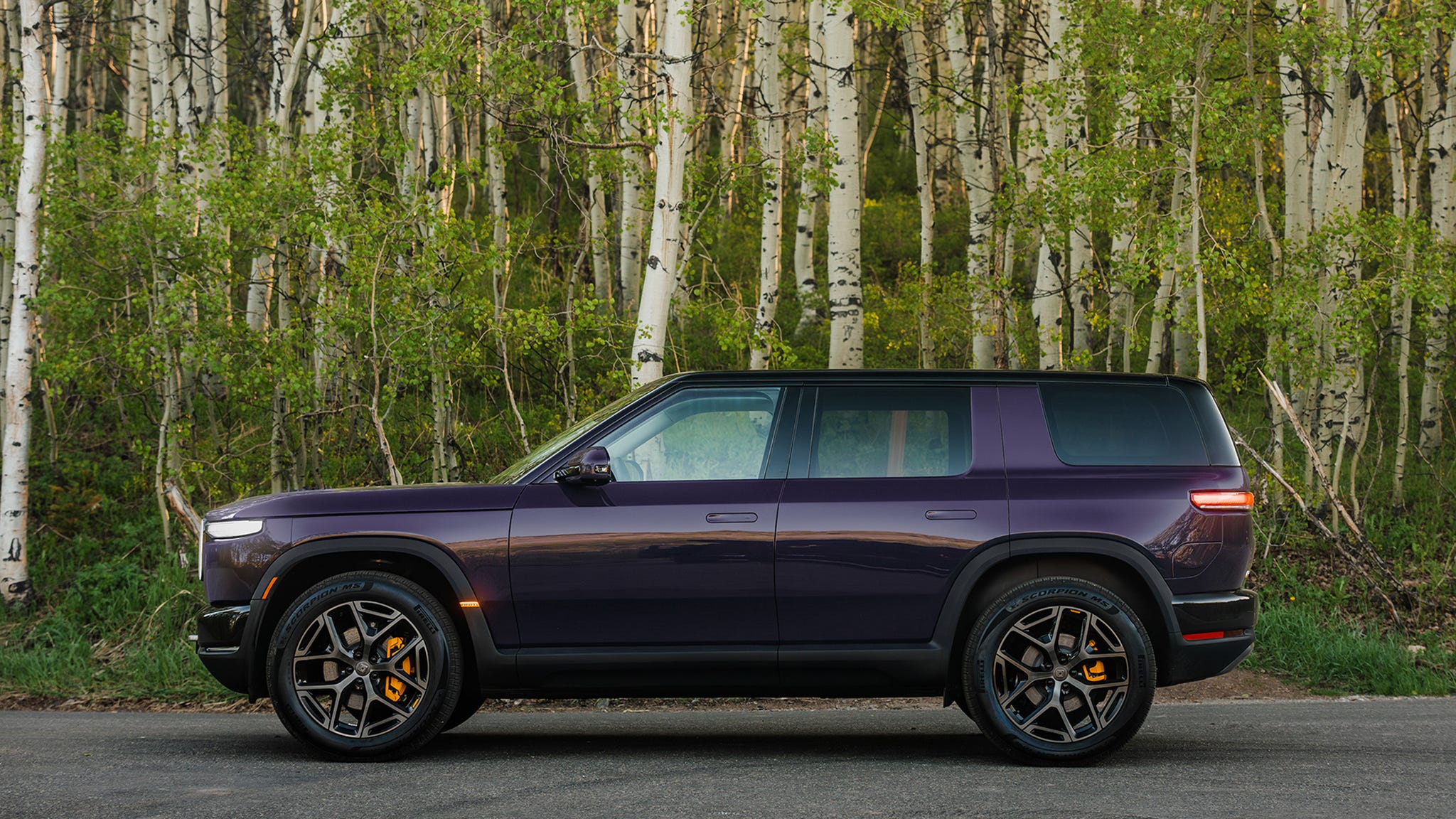
There are just three variations of the R2 planned for the next year, and options are generally limited to colours, wheels, and software for each trim. The base R2 Standard starts in the mid-£30K range, offers between 275 and 345 miles of range, and has a single rear motor with 350 hp standard. The midgrade R2 Premium gets a 400-volt, 87.9-kWh battery with 330 miles of range, dual-motor all-wheel drive, 100 more horsepower, slightly ritzier interior materials, and Toyota 4Runner–style lowerable rear glass. On sale now is the version we sampled, the R2 Performance. The most capable R2 until RAD-tuned versions hit the trails, it gets 656 hp and 609 lb-ft of torque, a semi-active electronically adaptive suspension, unique off-road drive modes, and available all-terrain tyres (which drop range from 330 to 307 miles).
All early 2027 R2 Performance models will come with the Launch package, which includes Rivian’s Autonomy+ driver assist system, a tow hitch, and a physical key fob, stickering for £59,485.
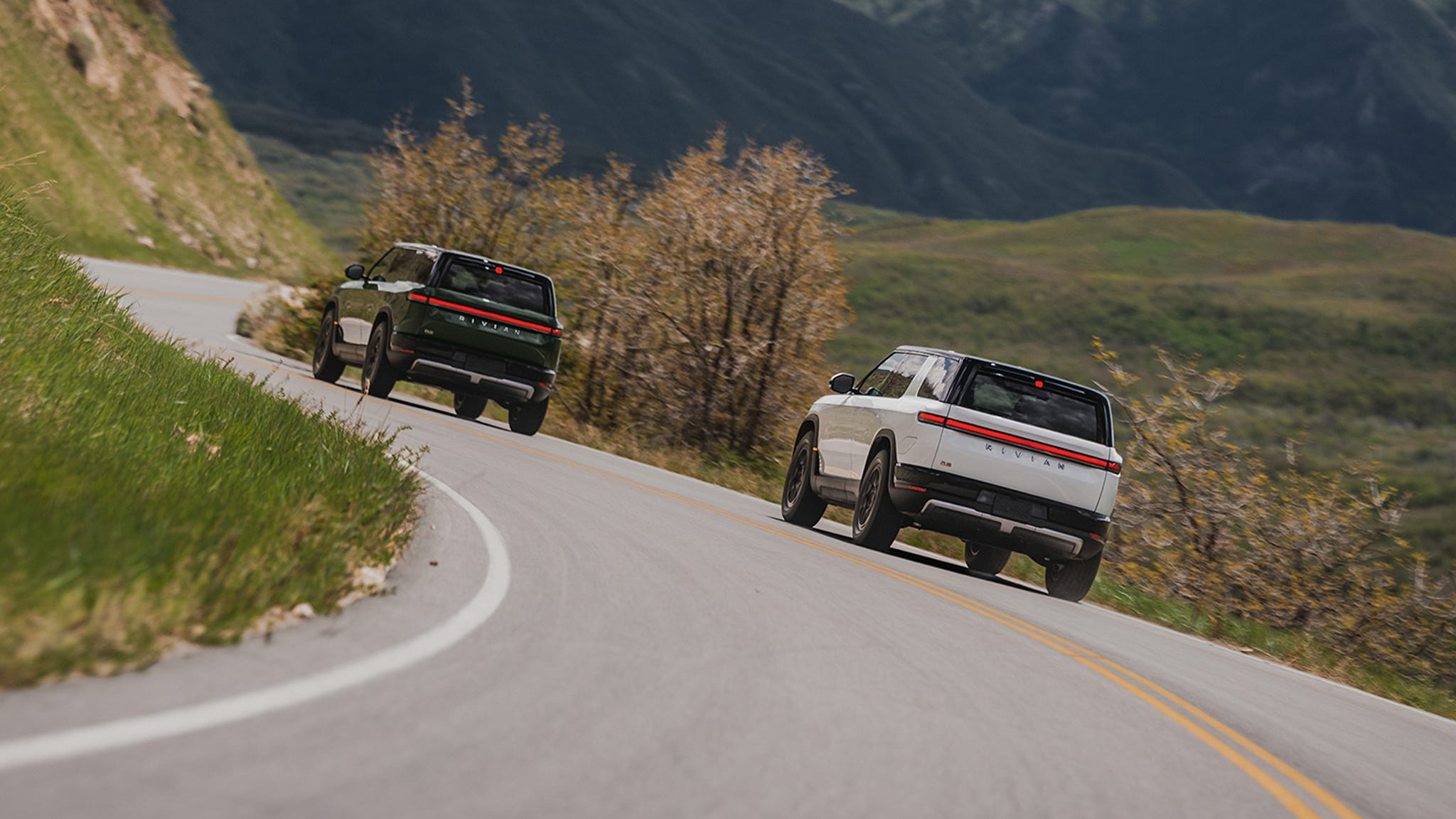
Whether you’re a member of the cars-are-simply-tools crowd, the self-driving technocracy, or an enthusiast subculture, there’s lots to like about the new Rivian R2, mostly because it feels much like a more mature version of the R1S.
About 15 inches smaller than an R1S and splitting the size gap between a Toyota RAV4 and 4Runner, the R2 is remarkably well packaged. Occupants have a commanding trucklike view of the road, while the big greenhouse gives the cabin an open and airy atmosphere—a feeling that can be further improved with one touch by dropping all five windows into their respective doors via a button aft of the rearview mirror. All seats front and back are comfortable and supportive, with the back seat in particular offering up a shockingly large amount of room for the vehicle’s size, easily allowing 6-footers (or a couple of big dogs) to spread out comfortably.
There is also a ton of storage, with big, bottle-friendly door pockets, multiple glove boxes, and a deep centre console—not to mention a large cargo area and frunk, the latter of which could swallow a rollaboard suitcase and large backpack. One of the few complaints we have about the R2 is here: The haptic buttons for opening the frunk and raising/lowering the rear glass from outside the vehicle don’t always respond on the first try.
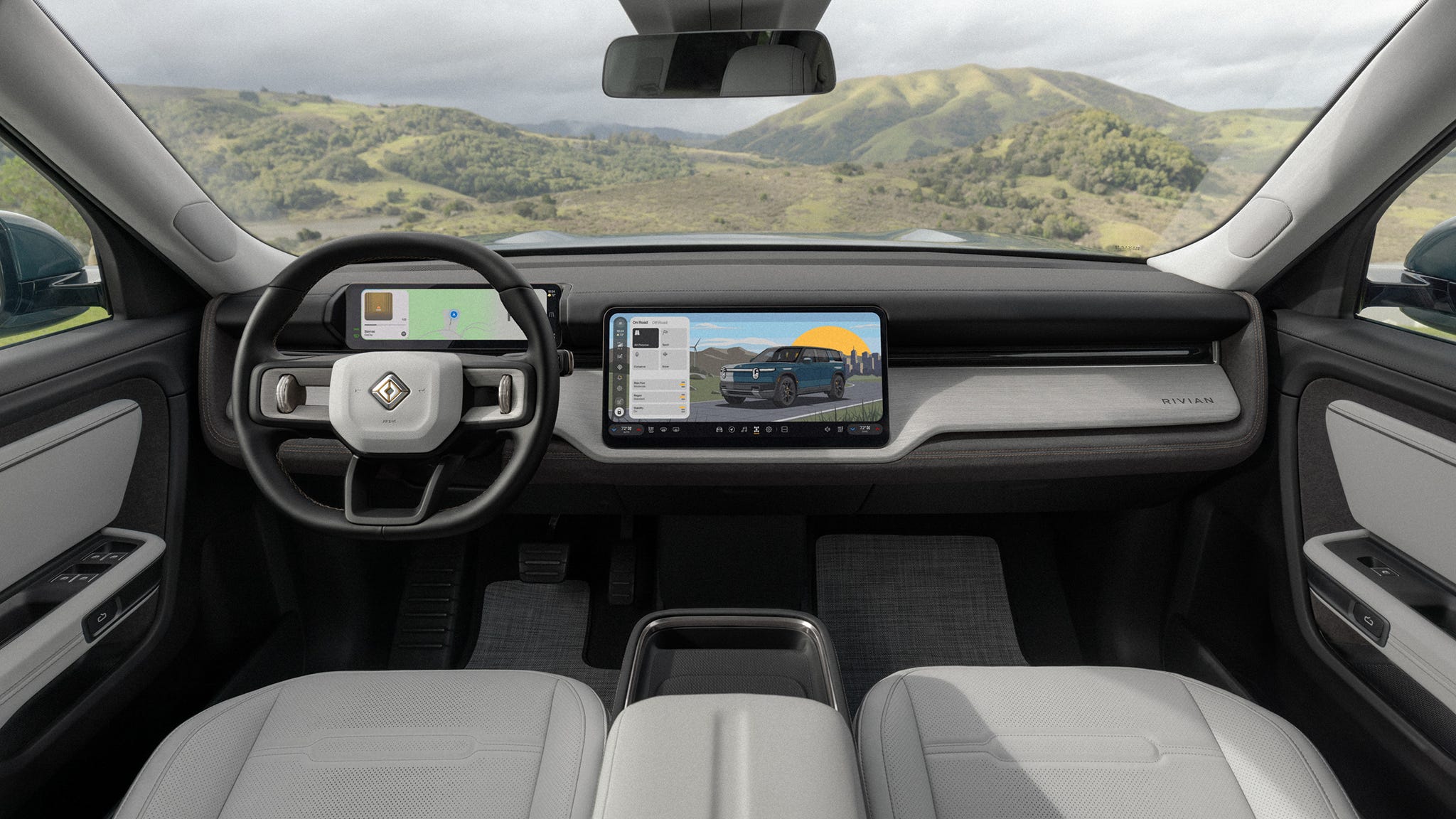
The soft product is just as good as the hard one, too, with the R2 marking the debut of Rivian’s latest infotainment operating system, “halo wheel” controls, and the newest iteration of Autonomy+.
While similar in look and functionality to Rivian’s existing OS, the new one moves controls to the left side of the display, reducing the time the driver must take their hand off the wheel to find one. It’s supported by the stylish haptic scroll wheels in the steering wheel. Capable of being spun up or down, clicked, pulled, and tapped left or right, they allow you to perform tasks ranging from adjusting the climate control temperature or setting the volume with different haptic feedback depending on what you’re doing (climate control has a hard “click” feeling, like a Google Nest thermostat; volume scrolling feel, meanwhile, was modelled after ’90s hi-fi stereo knobs), change the instrument cluster display, cycle through drive information, or even change drive modes without taking your hands off the wheel. These wheels can be somewhat finicky at times, but we suspect they’ll become second nature after some time.
While not as advanced as Tesla’s latest FSD 14 hands-free driving system, Rivian’s Autonomy+ does a reasonable facsimile. The system backs up its hands-free capability with multiple overlapping high-res cameras and a radar unit (a lidar-equipped R2 is coming next year) and inspired confidence in short highway tests. Rivian says an over-the-air update will soon add the ability for the R2 to stop at stop signs and red lights when using Autonomy+, while point-to-point hands-free travel should be added by the end of the year matching the latest Tesla FSD (Supervised).
While it’s undeniably neat, those who ultimately let their R2s drive themselves will be missing out on an exceptionally fun-to-drive SUV. It’s immediately clear within the first couple of miles that Rivian is a much more mature automaker than it was when the R1T and R1S were released. This new model is impressively quiet on the standard all-season tyres (the optional all-terrains produce a light but unobtrusive thrum).
There’s also an extraordinarily cohesive dynamic balance in the R2 rarely found in vehicles in this class, with the powertrain, steering, and suspension seemingly in perfect balance, making the R2 as good to drive at its ragged edge on a winding back road as it is in urban traffic or while cruising on the motorway.
The new motors, which typically deliver their torque in a 40/60 front/rear split, are potent. Acceleration off the line is smooth, with Rivian promising a 3.6-second sprint to 60 mph. More impressive is what the R2 does beyond that; with more top-end power than the motors used in the R1, motorway passing power is plentiful, so much so that triple-digit speeds will sneak up on you if you’re not careful. The R2 decouples its front motor to boost efficiency, but try as we might, we couldn’t feel it doing so.
Like Rivian’s other products, the R2 brakes well, with varying degrees of regenerative braking from ICE-like coasting to the full one-pedal driving experience. Pedal feel from the brakes also feels natural no matter the level of regeneration the driver selects, which is notable considering the R2 is the first Rivian with a full brake-by-wire setup.
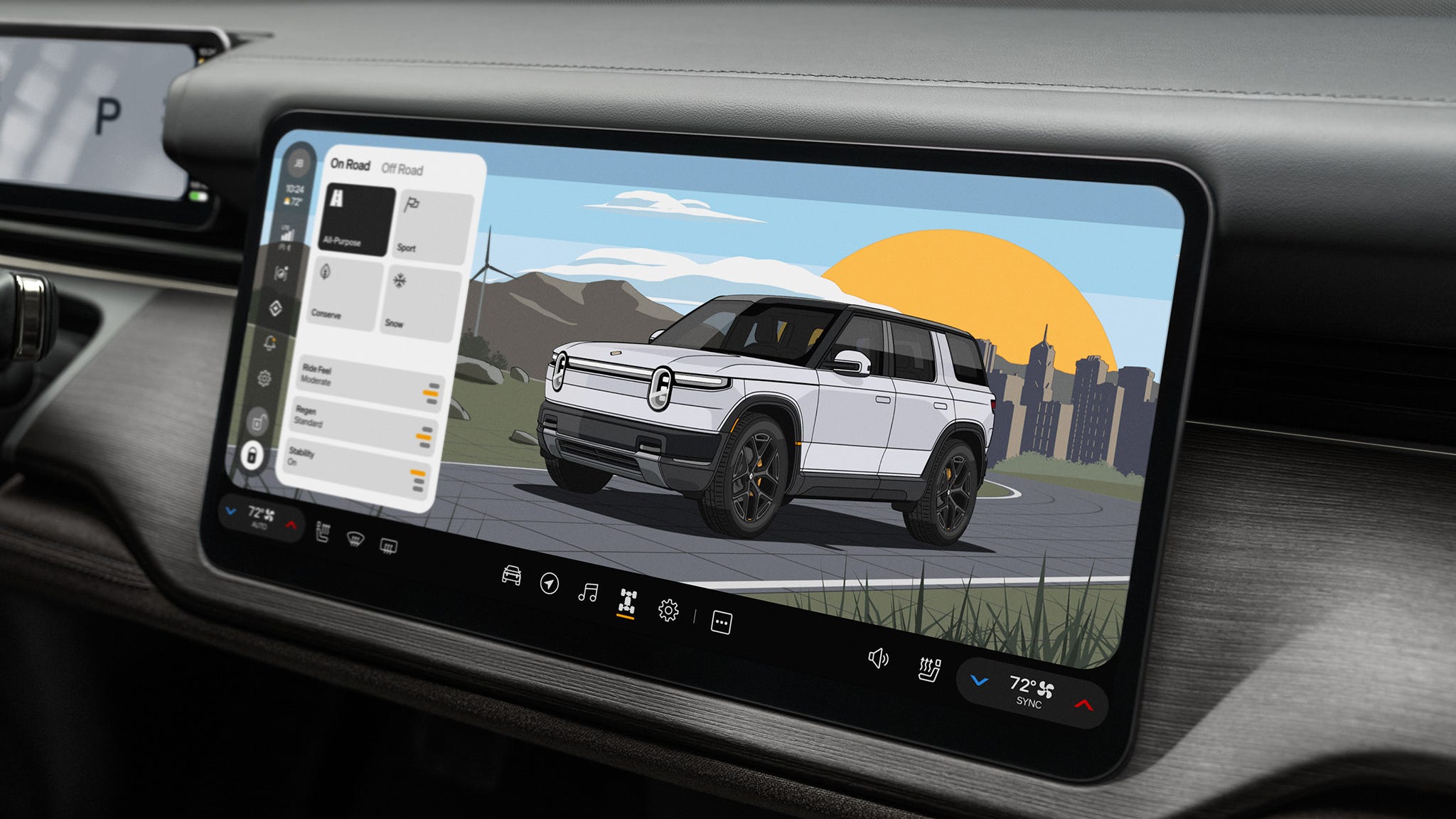
The R2’s simpler semi-active suspension system is also a Rivian first, and it too is well executed. There are three suspension settings with varying degrees of firmness, but the differences between them are minor on tarmac, as the dampers constantly read steering, pedal, and road inputs to provide for a composed ride. The steering wheel, no matter the suspension setting or drive mode, provides good feedback from the road with a smooth, satisfying torque build-up through bends. There’s little (if any) penalty with the all-terrain tyres, and they give the R2 a satisfying hint of trucklike squish through the wheel.
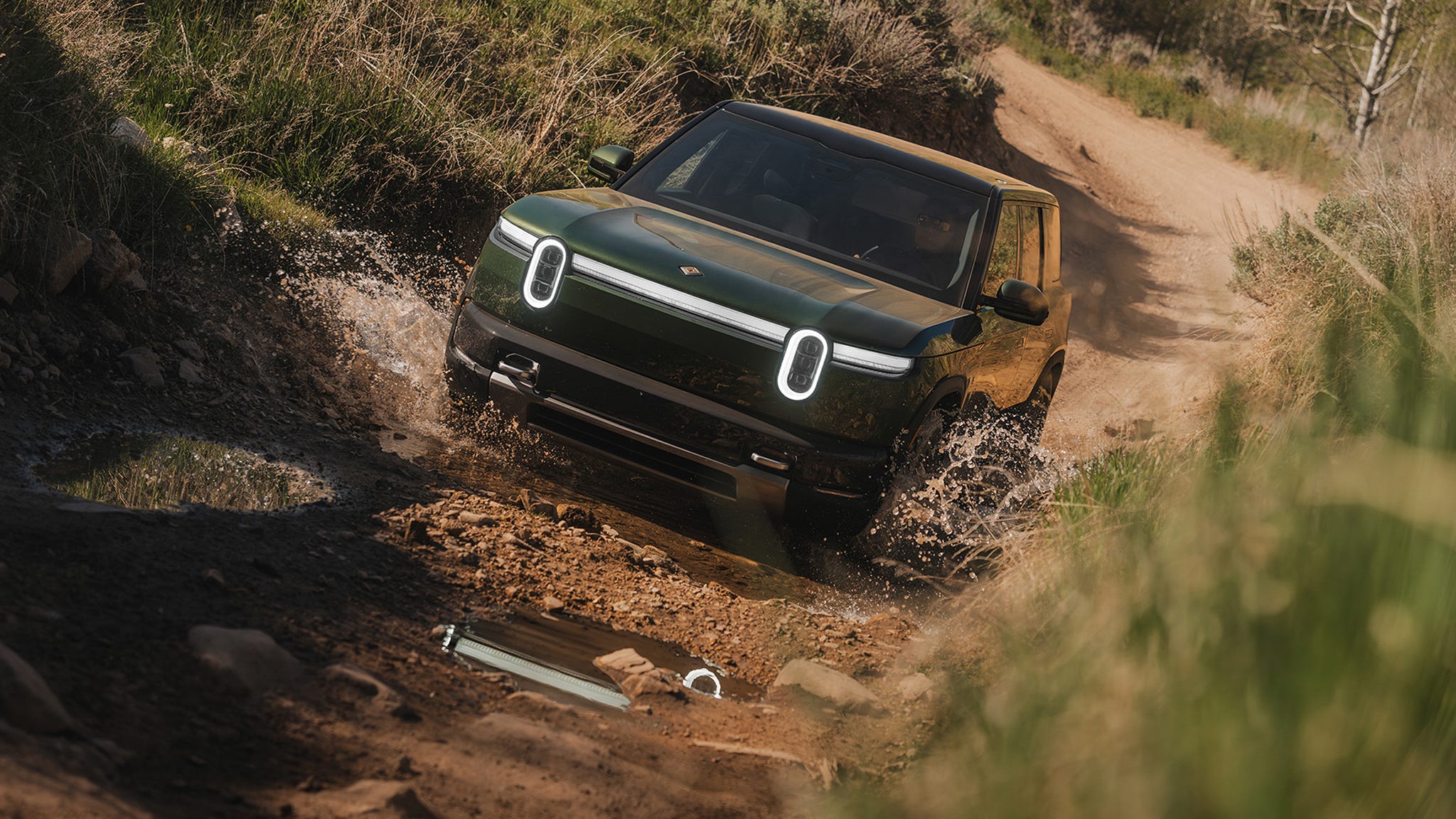
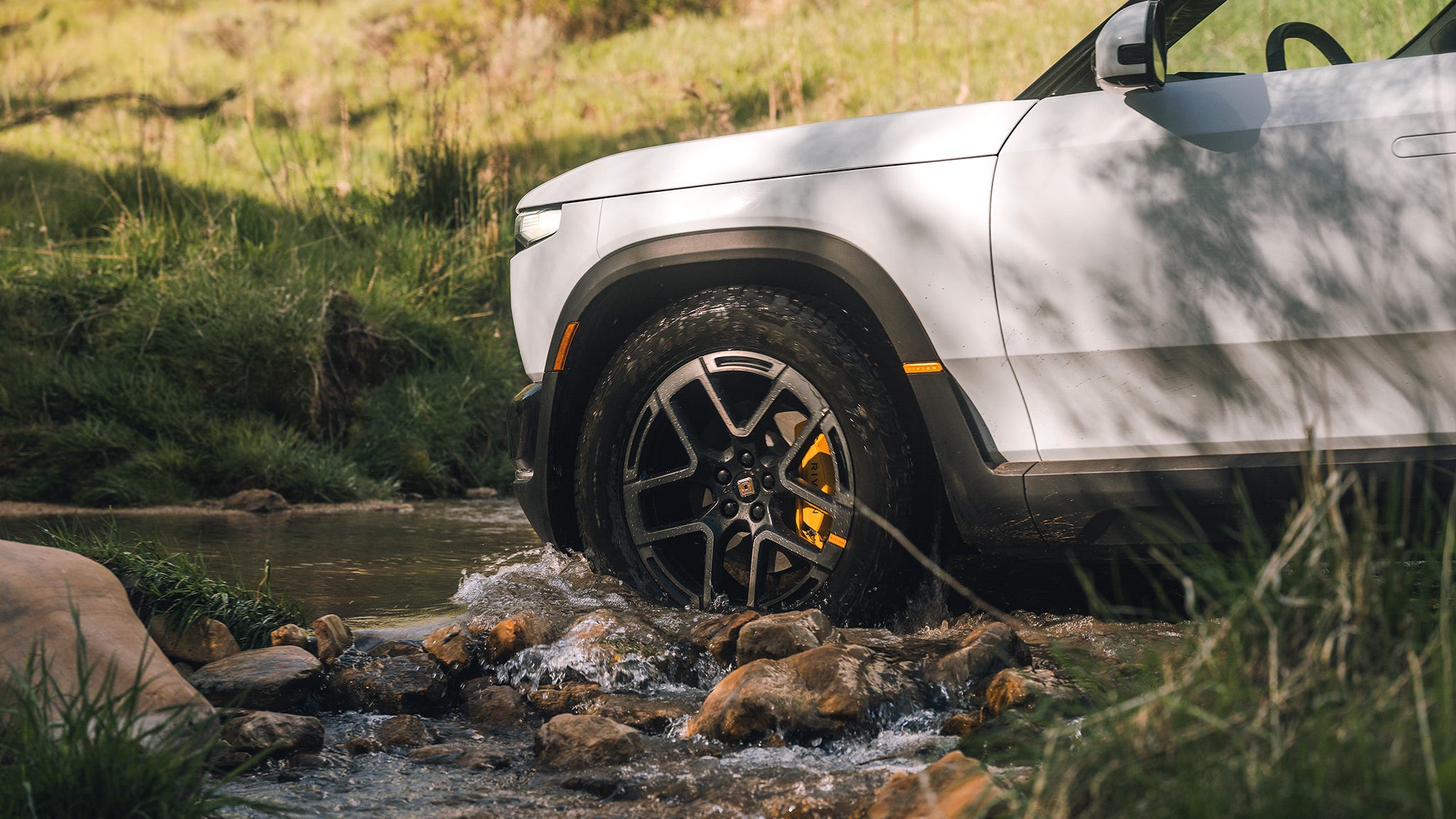
Rivian hasn’t appeared to sacrifice off-road performance, either. The R2 doesn’t look like it has a ton of clearance (it sports 32-inch tyres, 9.6 inches of ground clearance, and approach/breakover/departure angles of 25.0/20.6/26.0 degrees), but its tidy dimensions and flat-armoured underbelly go a long way off-road. On the rutted fire roads, washes, and rocky hillsides that surround Park City, Utah, where Rivian held its drive programme, the R2 felt solid and sure-footed. The dual-motor setup combined with brake-based “differentials” and all-terrains delivers plenty of traction, and the ride remained composed on faster stretches of the trail.
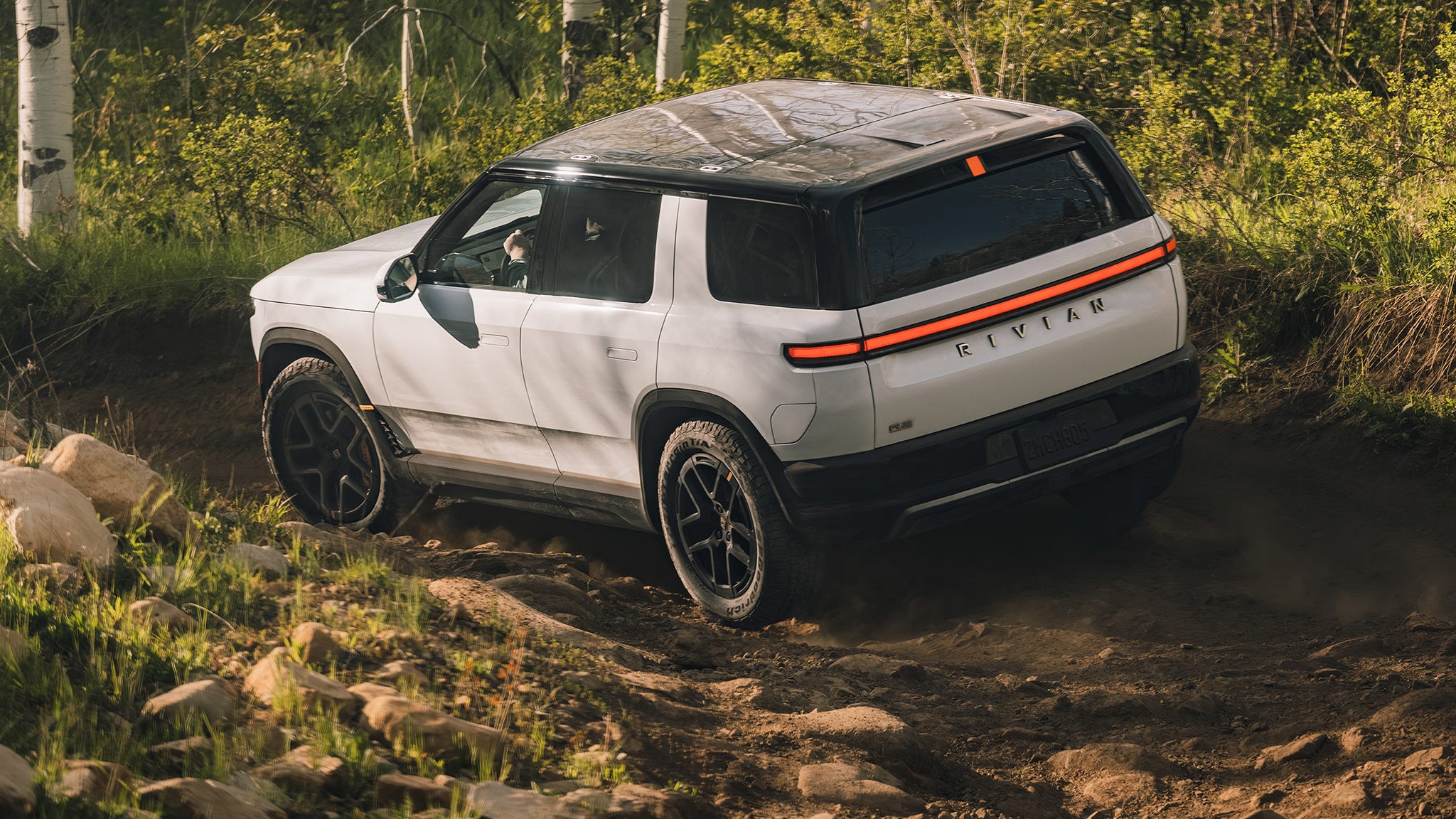
We’re looking forward to getting the R2 on our home turf for a more thorough off-road test, but based on our brief assessment, we suspect the R2 will hang with vehicles like the Wrangler, Bronco, and 4Runner until those vehicles’ superior clearance comes into play.
Five years ago, my MotorTrend colleagues and I were the first journalists to get behind the wheel of any Rivian when we undertook our Trans-America Trail expedition. After our first stint behind the wheel of the R1T, Rivian’s engineers—many of whom also developed the R2—gathered around senior editor Aaron Gold and me to ask what we thought. We looked at each other and then back at them and said three words nearly in unison: “It’s annoyingly good,” in reference to how polished it was and how hard it would be to nitpick as critics.
Standing with many of those engineers again during a trailside stop in the R2, all I could think was the exact same thing: “It’s annoyingly good.” Again.
Comments
0 comments