
Across Trackless Wastes and Carelessness: How and Why the Karakum Motor Rally Was Held in 1933
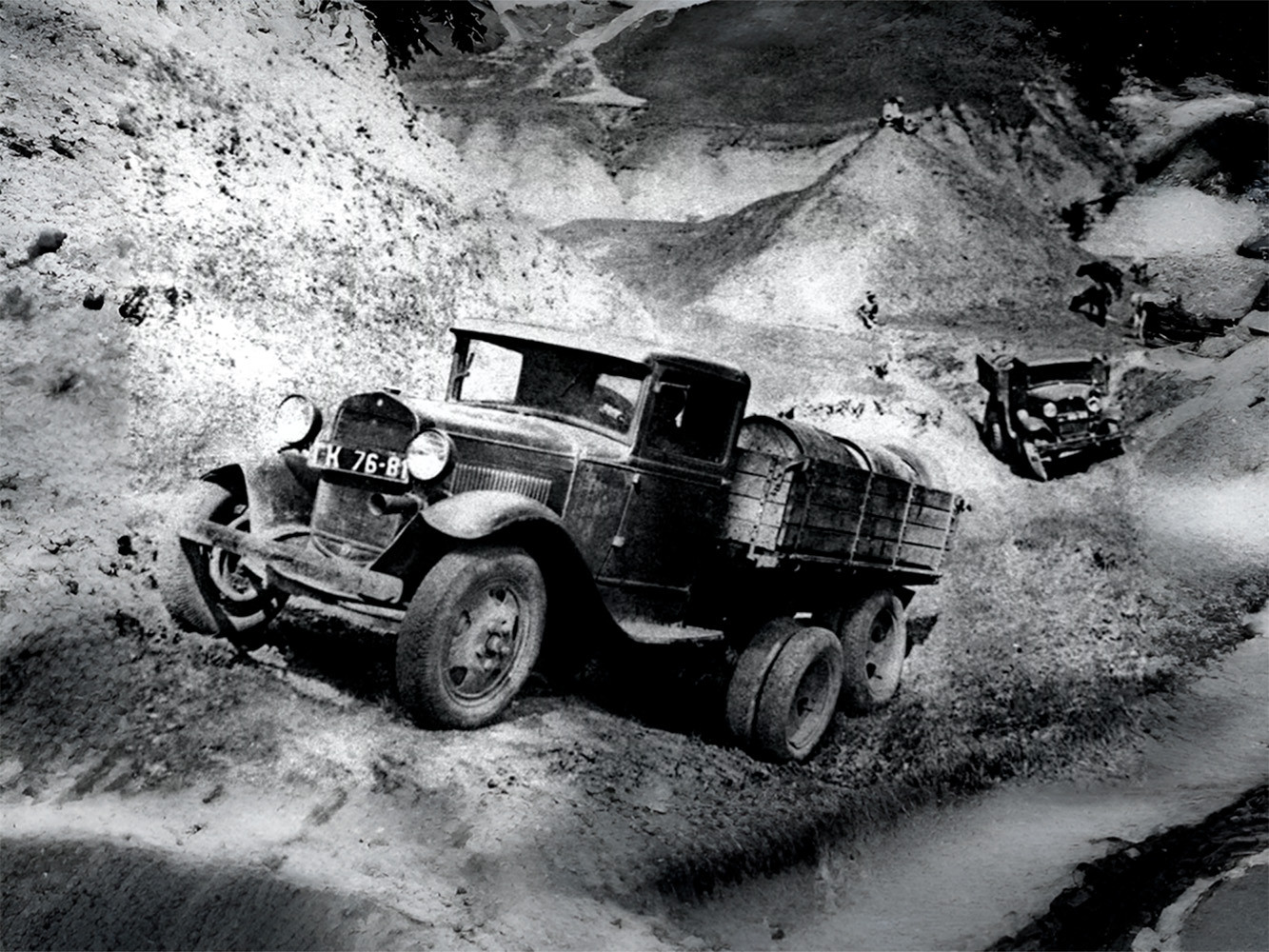
In January 1933, Joseph Stalin officially announced the creation of a full-fledged automotive industry in the USSR. He was primarily referring to the recently built automobile plant in Nizhny Novgorod (known as Gorky at the time of construction) and the major reconstruction of Moscow's 1st State Automobile Plant, renamed ZIS two years earlier. The next step was to determine what the new Soviet cars were capable of, as they were destined to face severe trials. How could this be achieved? By organising a motor rally, of course. For that era, it was simply unimaginable in scale.
Desert Raid
Before the early 1930s, the USSR's automotive industry was comparable to that of some banana republic. After the Civil War, the Soviet Union's vehicle fleet amounted to a paltry 14,000 cars, and this was a veritable mixed bag that was kept in relatively working order only with great difficulty. The few existing automobile plants were engaged in assembling either bespoke vehicles (L-1) or small-series cars (NAMI-1). The most mass-produced model of the early 1930s was the morally obsolete AMO-F-15 truck, of which fewer than seven thousand units had been produced by 1931. To grasp the dire state of the Soviet automotive industry, one need only look at the number of vehicles produced: 478 cars in 1927, 841 in 1928, and it was only in 1929 that the thousand mark was surpassed – 1,712 units. At the same time, millions of cars were being produced annually in the USA and Europe, so until the launch of the plant in Nizhny Novgorod, it could be said that the USSR truly had no automotive industry.
The country's road network looked equally dismal. 'Let's strike the impassable roads with a motor rally,' as the son of a Turkish subject, Ostap Bender, once said. For those who have forgotten, the main part of the novel 'The Golden Calf' was written in 1930, meaning that Ilf and Petrov, who put this phrase into their hero's mouth, described the state of roads in the USSR in the early 1930s with one word – impassability.
Fortunately, the Great Combinator's opinion was fully shared by the editor-in-chief of the magazine 'Za Rulem' (Behind the Wheel), Valerian Obolensky, better known by his party pseudonym Nikolai Osinsky. It was Obolensky-Osinsky, who was not only a journalist but also the deputy chairman of the all-union society 'Avtodor' (not to be confused with the Russian company of the same name), who strongly recommended 'striking the impassable roads with a motor rally' using all new Soviet cars, in order to identify their weak points and, if necessary, improve their design. Along the way, the new 'super-balloon' tyres, developed by the Research Institute of the Rubber Industry for the GAZ-A car, were also to be tested. Another goal of the rally was to popularise motor transport and accelerate the construction of modern roads. It is worth noting that, not least thanks to the efforts of 'Avtodor', during the first five-year plan the USSR managed to build and modernise 90,000 kilometres of roads.
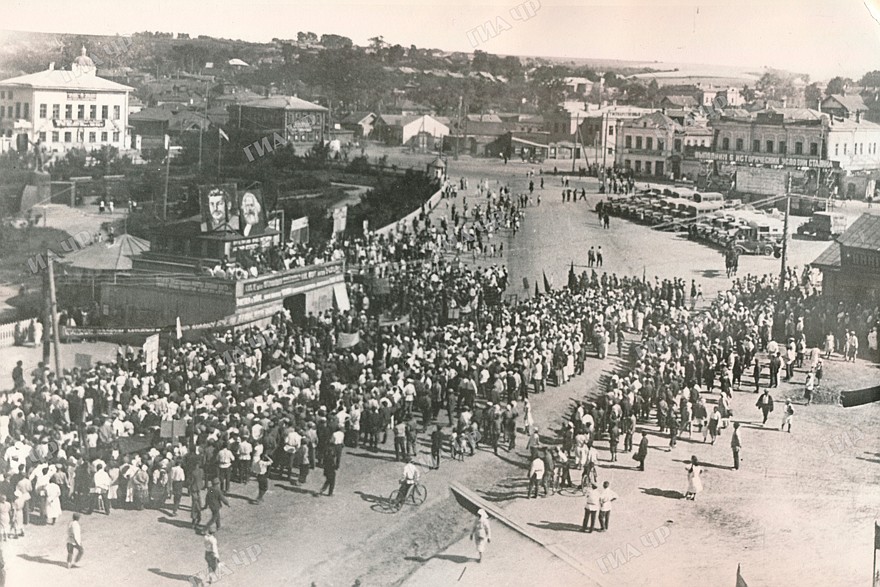
On 6 July 1933, 23 cars and nearly a hundred participants set off from the gates of the ZIS plant: drivers, testers, designers, engineers, mechanics, as well as scientists and journalists. Among them were many people who would later become famous – for example, the author of the lyrics of the USSR anthem, journalist El-Registan (Gabriel Ureklyants), and Boris Semevsky, who later became a professor and vice-president of the Geographical Society of the USSR. David Echt was appointed head of the technical department of the rally; during the Great Patriotic War he rose to the rank of Major General of Tank Troops. The oldest journalist of the newspaper 'Pravda', Lev Ognev, and the legendary cameraman and director Roman Karmen, later a laureate of three Stalin Prizes, also joined the rally. The commander, or as it was then customary to say, the commodore of the rally, was appointed chairman of the Moscow Automobile Club, Alexander Miretsky, who on 14 November 1933 would be awarded the Order of Lenin 'for outstanding organisational abilities during the Kara-Kum automobile rally'. As were two other participants, including the aforementioned David Echt.
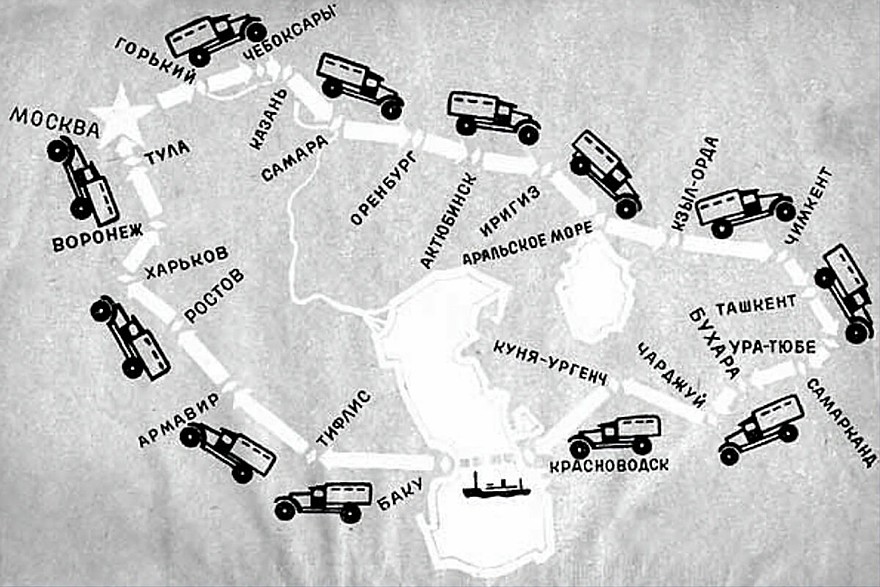
The rally was to pass through the territories of the RSFSR, Kazakhstan, Kyrgyzstan, Uzbekistan, Turkmenistan, Azerbaijan, Georgia, Ukraine, and finish in Moscow. This created a kind of 'loop' stretching 9,375 kilometres, featuring quintessentially Russian impassable roads, Kazakh steppes, the Kara-Kum desert, a 'crossing' of the Caspian Sea, and Caucasian mountain passes. The southern section was considered the most dangerous, and this applied not only to the Kara-Kum sands – bands of Basmachi were still active in the Central Asian region, and they were not finally dealt with until the early 1940s. So it was decided to take weapons and ammunition on the rally.
American-Soviet Hardware
Despite the fact that the cars setting off on the rally were of Soviet production, they were all exclusively of American design. Six GAZ-A passenger cars, seven GAZ-AA two-axle trucks, two pre-series GAZ-AAA three-axle trucks, four AMO-3 trucks, one experimental NATI-GAZ, and four purebred three-axle American Ford-Timken vehicles with a 6×4 wheel arrangement. The latter had not gained popularity in the USA, and it was only thanks to a Soviet order that just over a thousand vehicle kits were manufactured, which had been assembled in Nizhny Novgorod since 1931 exclusively for the needs of the Red Army. So, in effect, the vehicles being tested were developed by Ford and Autocar, which, in the process of naturalisation in the USSR, were supposed to differ from their American cousins. To call a spade a spade, these 'Russified Americans' were meant to be simpler and cheaper to manufacture, more unpretentious, and able to withstand greater loads.
Unsurprisingly, the rally generated enormous interest, as everyone wanted to see how the new Soviet cars would perform on highways and off-road. Looking ahead, it is worth noting that the cars had to cover 5,584 kilometres off-road, and only 2,271 kilometres on highways.
The Madness of the Brave
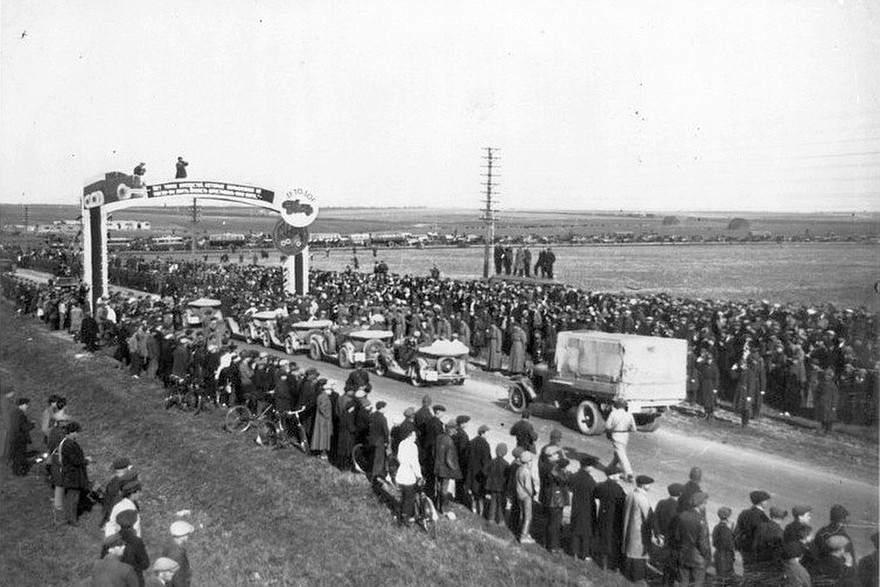
From Moscow to Kazan, the rally proceeded without problems, but the average speed was low. This was explained by the fact that along the way, numerous rallies had to be organised to acquaint citizens with the new Soviet cars, which required modern roads. Some citizens, especially after the rally participants passed Orenburg, saw a car for the first time in their lives.
That the rally would not be an easy jaunt was clear long before it began. Therefore, some of the cars set off loaded with everything necessary: food, water, medicine, oil, and fuel, but most importantly – spare parts. Despite the fact that all the cars demonstrated decent off-road capability, tyres and oil constantly needed changing, and when the expedition found itself in the Kara-Kum sands, filters and radiators had to be replaced on some vehicles. In Central Asia, dust and monstrous heat were added to all the other afflictions: the air temperature reached +50 degrees Celsius, and inside the cabs it rose to +75 degrees. Not only people suffered from the heat, but to a much greater extent – the engine cooling systems. Aircraft often came to the aid of the rally participants, delivering food, fuel, spare parts, and most importantly – water. The rally participants recalled that it was the constant shortage of water that bothered them most while crossing the Kara-Kum sands. However, the ubiquitous sand and dust, which disabled the filters, were also remembered with less than kind words.
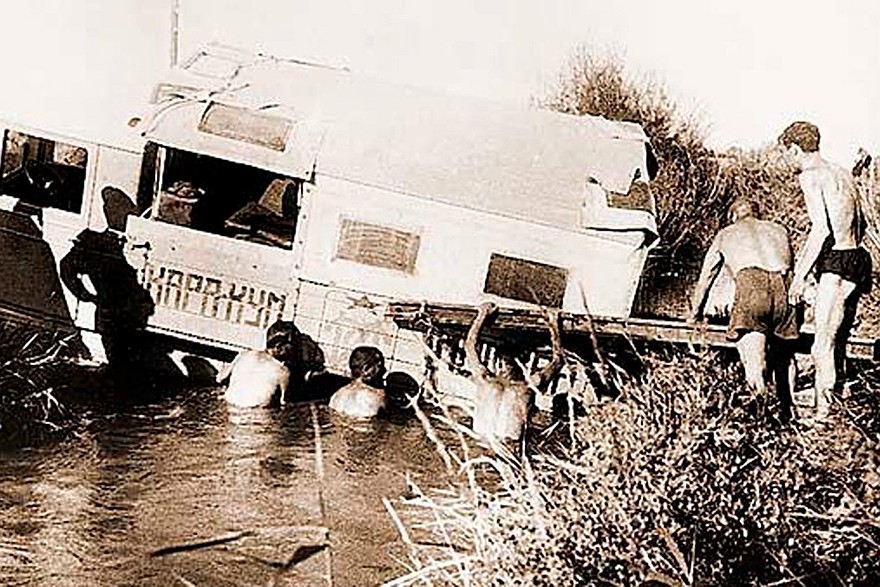
It was only after the cars, loaded onto ships at the port of Krasnovodsk (present-day Turkmenbashi), crossed the Caspian Sea and landed in Baku, that they could catch their breath, because the most difficult, arduous, and dangerous part of the rally was behind them. True, the expedition still faced the Caucasian passes ahead, and that too was no easy test, but at least in the mountains there were no problems with water.
From there, the rally proceeded fairly calmly: Tbilisi, Armavir, Rostov, Kharkov, Voronezh, Tula, and the finish on 30 September in Moscow. Covering the distance of 9,375 kilometres took 86 days, thus the average speed was just over a hundred kilometres per day. Of course, this does not reflect the true speed of the cars, as for a significant part of the route, dozens of rallies had to be held, explaining to citizens all the advantages of motorising the country and the importance of creating modern roads.
Debriefing
Immediately after the rally participants reached Moscow, the 'debriefing' began. Detailed reports were presented by the designers and engineers of GAZ and ZIS, not forgetting to mention the products of 47 supplier enterprises. Some things were praised – for example, the 'super-balloon' tyres, which performed well in the desert, while others were criticised (air filters, suspension, electrics, cooling system). Almost all the comments were taken into account, and changes were made to the design of the cars. But most importantly – it was proven and shown to the whole world (thanks to Roman Karmen's documentary film) that the Soviet Union was producing cars that were in no way inferior to foreign ones. And even though the cars participating in the rally were entirely of American origin, they were already 'our Americans'. Incidentally, the only purebred 'American', the three-axle Ford-Timken truck, performed well, but had no future with us: the Soviet side refused further purchases of vehicle kits, placing its bet on the three-axle GAZ-AAA. Over 37,000 of these were produced from 1934 to 1943.
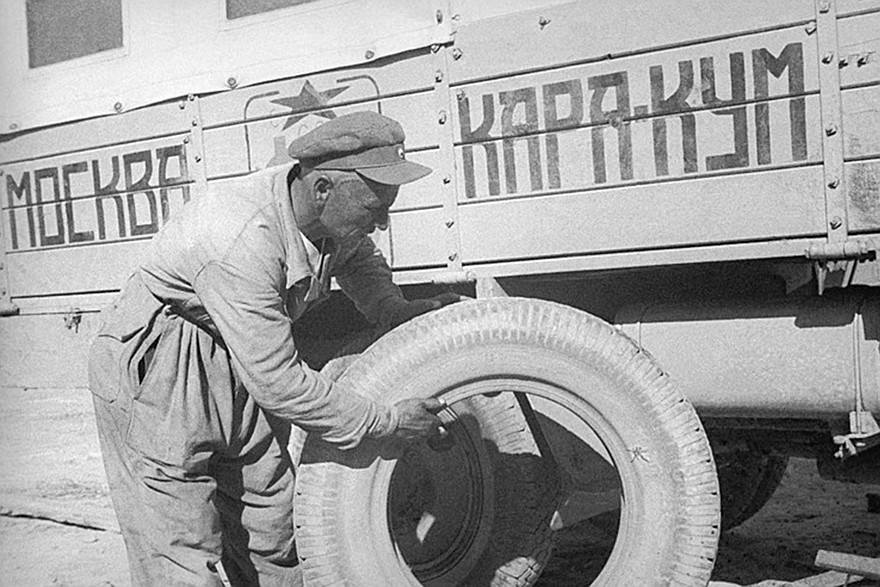
The most interesting thing is that the Kara-Kum motor rally was not a one-off PR stunt. Similar rallies were held several more times, and the Gorky Automobile Plant made it a rule to run in every new car under conditions as close to combat as possible, that is, testing it in different regions of the Soviet Union. And it is understandable: GAZ cars were to be operated in all republics of the USSR and be equally suitable for both the European part of Russia and Central Asia. However, the same could be said for other Soviet automobile plants.
Nevertheless, the 1933 Moscow-Kara-Kum-Moscow rally became the largest and, perhaps, the most memorable of the rallies held in the pre-war USSR. Just eight years later, in the summer of 1941, many of the cars that took part in the Kara-Kum rally would have to pass a very different test of their fitness for purpose. And they would pass it largely thanks to the changes made to their design as a result of the 1933 rally.
Comments
0 comments