
Used Audi A7 (C7): Durable Suspension, Expensive Gearboxes and Scored Cylinders
In the first part of this feature, we established that the first-generation Audi A7 doesn't cause too much trouble – problems with aluminium components are easy to spot, and surprises with the mechatronic internals are inevitable in any technically complex car. Now let's look at how the powertrain and running gear fare, because the most interesting aspects of Audis from those years can be hidden right inside.
Running Gear
Braking System
The braking system on the A7 is good: even the budget versions received front discs measuring 320×30 mm, and when opting for wheels larger than the standard 17-inch items – 345×30 mm. Cars with the 3.0 TFSI engine and the S7 version received composite discs measuring 356×34 mm, while RS 7 models were optionally fitted with carbon-ceramic discs measuring 400×34 mm and 6-piston Brembo calipers instead of the standard single-piston TRW or twin-piston ATE units with floating brackets.
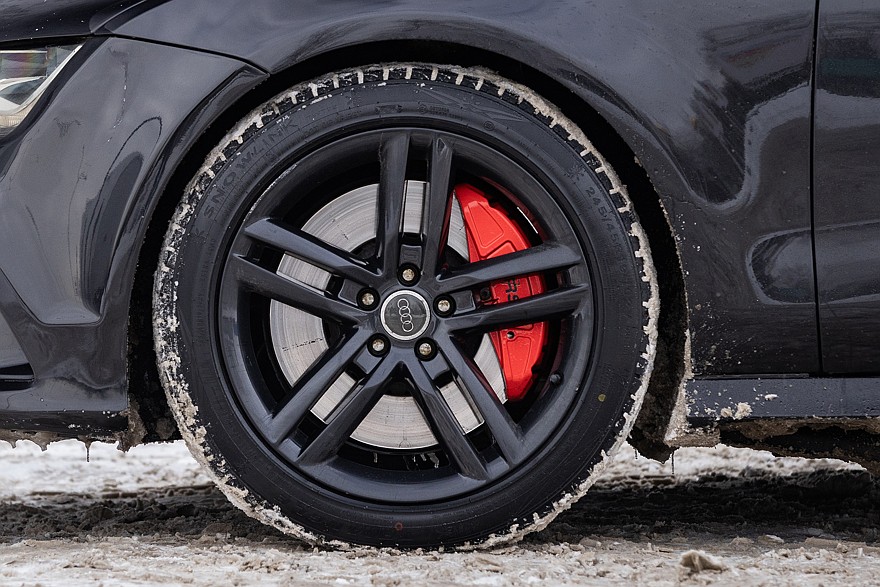
Overall, few people complain about the A7's brakes – you could say everything has been engineered with a good safety margin. On the rear axle, the discs are smaller: from non-ventilated 300×12 mm up to 356×22 mm in the case of cast-iron discs and 370×30 mm for ceramic ones. The rear caliper is always a single-piston floating design with a parking brake actuator. Incidentally, there are few complaints about the handbrake's operation – the electric actuators have become cheaper, and plenty of budget alternatives are now available.
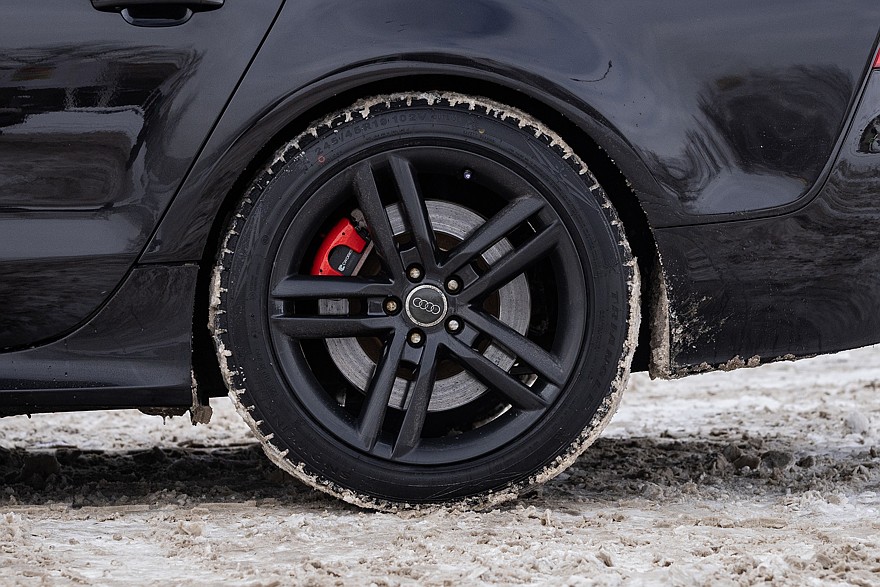
There are no particular issues with the ABS – sensors occasionally fail, and sometimes there are complaints about damage to the magnetic ring in the hub, but more often than not the cause is a worn-out bearing. That's hardly surprising, given that very low-profile tyres are used on the standard 19-21 inch wheels, and many owners manage to fit even larger diameter wheels with increased offset. However, the brake lines do need monitoring – on some cars they swell due to deep corrosion.
Suspension
The suspension on the MLB platform differs little from Audi models of the mid-to-late nineties – it's just as reliable and fairly easy to maintain. The arms are different, and the hub carrier is aluminium, but the upper pinch bolt still seizes up. For MLB-Evo, a bolt with the part number WHT006542 was introduced, featuring a thinner central section instead of the standard N10770901 – with this, such problems are virtually eliminated. The new bolt was even fitted to later A7s, but most owners will have to purchase it themselves.
On early cars built before 2012, a rather unsuccessful straight arm and plastic anti-roll bar links were used, but in most cases these components have already been replaced under warranty. Only the ball joint of the straight arm is replaceable – it's the most heavily loaded one – while on the other arms, only the bushings are officially replaceable. The overall service life of this type of front suspension exceeds 200,000 km with careful use, but the A7 has many specifications with extreme tyre sizes, so the load on the suspension here is considerably higher than on the A6 model.
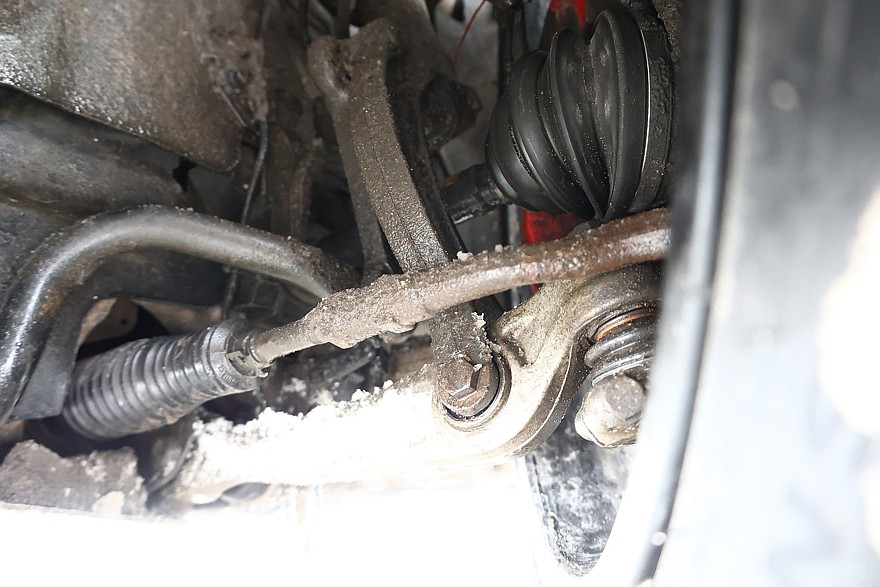
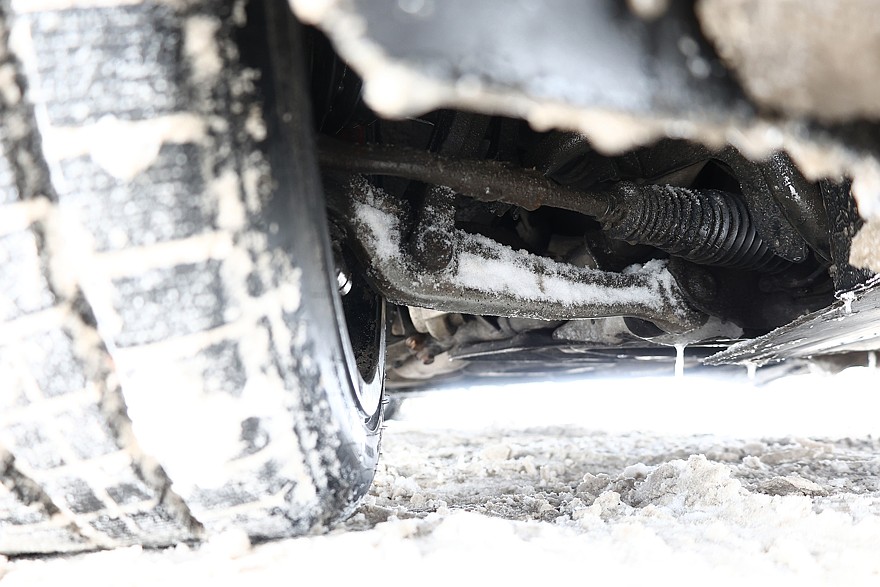
The service life of the hub bearings isn't particularly long: rear bearing failure after just 50,000 km is far from uncommon, and the front ones are only slightly more durable. The price of parts is relatively high: the original costs between 15,000 and 56,000 roubles, with the more affordable version at 15,000 roubles offering a reinforced bearing with reduced rolling resistance, fitted to cars with the rough-road package. The cost of non-original parts starts from 2,700 roubles, but on average a component will set you back 5,000-10,000 roubles.
The rear suspension on MLB is quite durable, with almost all bushings being replaceable. Only the inexpensive front diagonal arm is replaced as a complete unit, although aftermarket bushings can be found for it if desired. The service life of the outer bushings on the trailing arm is typically at least 120,000 km, with prices ranging around 5,000 roubles for the original and 1,500-2,000 roubles for equivalents. Some even fit hydraulic-filled components from the A8 saloon – particularly those using very low-profile tyres. Naturally, such experiments remain the preserve of highly advanced owners.
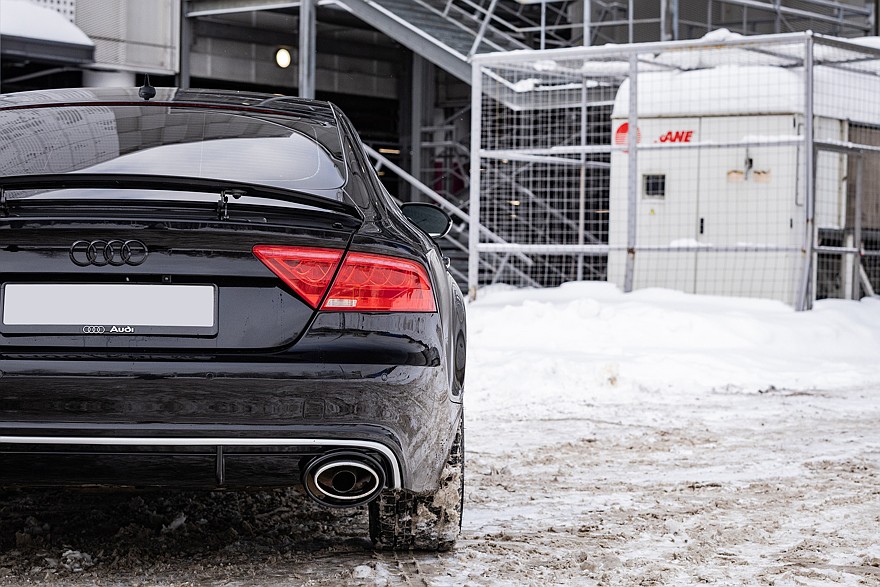
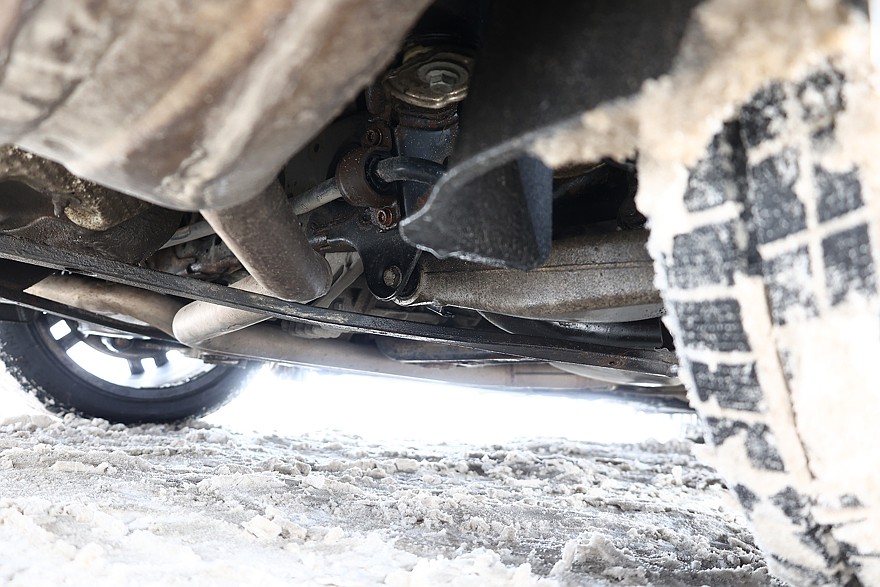
Air springs are the most common elastic elements found in the A7. The air suspension design is quite successful – only on the very oldest cars do problems begin with leaks, corroded fittings, cracked hoses, failing ride-height sensors and pump wear. But there's no need to fear this, as the cost of repairing one strut has dropped to 15,000-30,000 roubles. For the compressors, you can buy very inexpensive piston assembly kits. And the valve block doesn't cause particular problems either, plus finding a used one isn't difficult – and it's cheap.
Steering
The steering rack with electric power assistance on the A7 is very reliable. It exists in two variants – standard and 'active', with variable ratio. The main problems with the rack are water ingress when the bushings and gaiters wear out, as well as damage to the wiring connector. If you don't ford water obstacles half a wheel deep and regularly check the gaiters, the risk isn't too high. Those who neglect preventative maintenance will one day have to fork out around 150,000 roubles for a new rack, whether original or aftermarket.
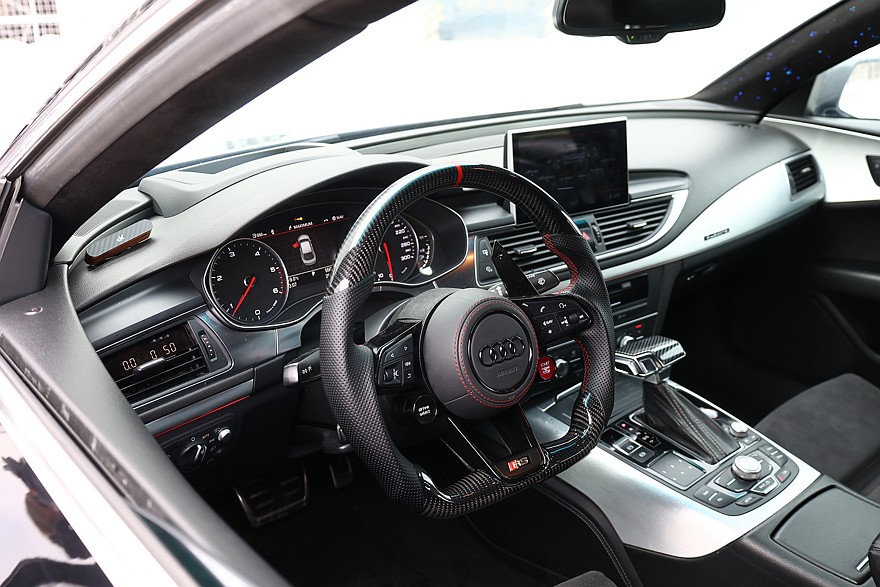
If there's no severe corrosion damage, the repair cost will be noticeably lower – replacing the motor and control unit will come to less than 50,000 roubles. The service life of the track rods and tie rod ends can be frustratingly short, but, as with the suspension, it all depends on wheel size. Wide wheels plus low-profile tyres mean heavy loads and plenty of vibration, which stresses the rack and rods. Don't be surprised if, on cars with 21-inch wheels, mechanics condemn the tie rod ends every other service. After all, it's enough to simply drive on uneven tarmac and frequently turn the steering wheel on the spot.
Transmission
Common Issues
No serious problems with the driveshafts have been noted on the A7. The splines and CV joints serve reliably, the joints fail when the gaiters are damaged, and there are simply very few cars with mileages over 300,000 km. There is one problematic component on four-wheel-drive cars – the propshaft has a CV joint whose gaiter literally disintegrates every few years due to the unfortunate positioning of the exhaust system. If you don't want to be hunting for a replacement CV joint from a Moskvich-2141, keep an eye on the condition of the gaiter.
Gearboxes
The A7 has quite a number of gearboxes. Front-wheel-drive cars were fitted with either the trusty old VL381 CVT or the 7-speed twin-clutch DL382, which came into use after the facelift. Four-wheel-drive cars were equipped with the 7-speed twin-clutch DL501, which was fitted to almost all versions. The most powerful versions received the 8-speed ZF automatic – the 8HP55A variant – although cars from the USA were equipped with this torque-converter gearbox paired with the naturally aspirated 2.8 FSI engine before the facelift.
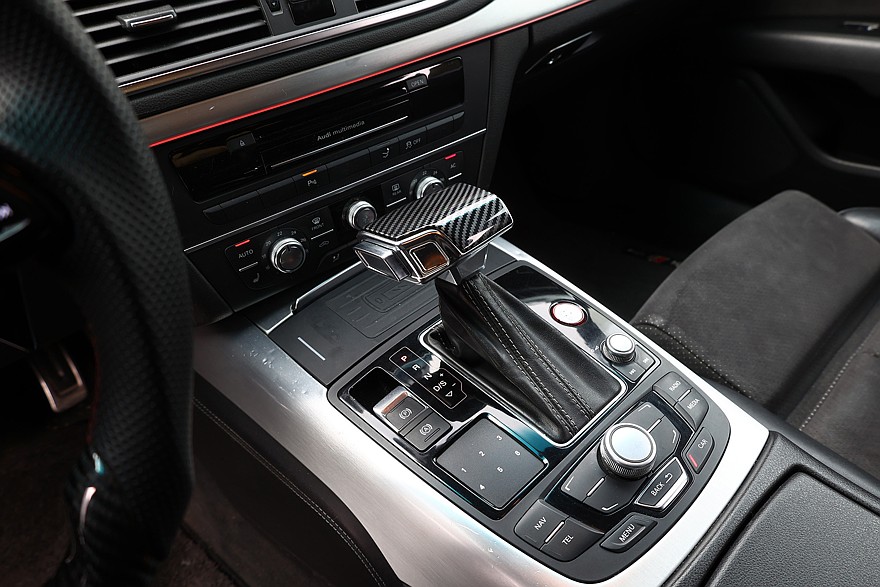
We've already written in considerable detail about these gearboxes, so this time we'll limit ourselves to a general summary. The VL381 CVT is a simple and reliable choice if front-wheel drive is sufficient and you drive sedately. The gearbox is very stable and durable if it isn't overheated. Typical failures are mainly the speed sensor giving up, which requires re-soldering the control unit, or the launch pack seizing and cone scoring after towing, which is contraindicated for this car. There's no 'neutral' here, and the launch pack, which disengages the transmission, isn't lubricated when the engine is off and overheats after just a few hundred metres of being towed.
With infrequent oil changes, the gearbox starts to make bearing noises and overheat due to a clogged heat exchanger. On the downside, the price on the second-hand market is fairly high – you won't find one for less than 120,000 roubles, although CVTs from the previous generation cost roughly half that. But the most obvious drawback of the CVT isn't its durability at all: the unit really dislikes an aggressive driving style, resists sharp launches, and whines and vibrates when you try to use the full power of the engine.
The DSG units of the DL501 series impress not so much with their shift speed and ability to handle enormous torque, but rather with the cost of repairs. And this is despite the gearbox being fairly old and well known to specialists.
Yes, it's quite reliable, but every 100,000-150,000 kilometres it requires serious servicing – with checks of both the mechanical part and the mechatronics. The list of what needs checking is fairly extensive – from fork tips to solenoids and wiring. Moreover, both the friction plate pack and the dual-mass flywheel are very expensive. If you simply want to replace the clutch pack complete with housing, be prepared to spend at least 60,000 roubles. Fortunately for budget-conscious owners and garages, the clutch assembly can be rebuilt, and it can usually be repaired very cheaply – the price of a friction plate kit is in the range of 10,000-15,000 roubles, and including the seal, oil seals and labour, there's a chance of keeping it under 35,000.
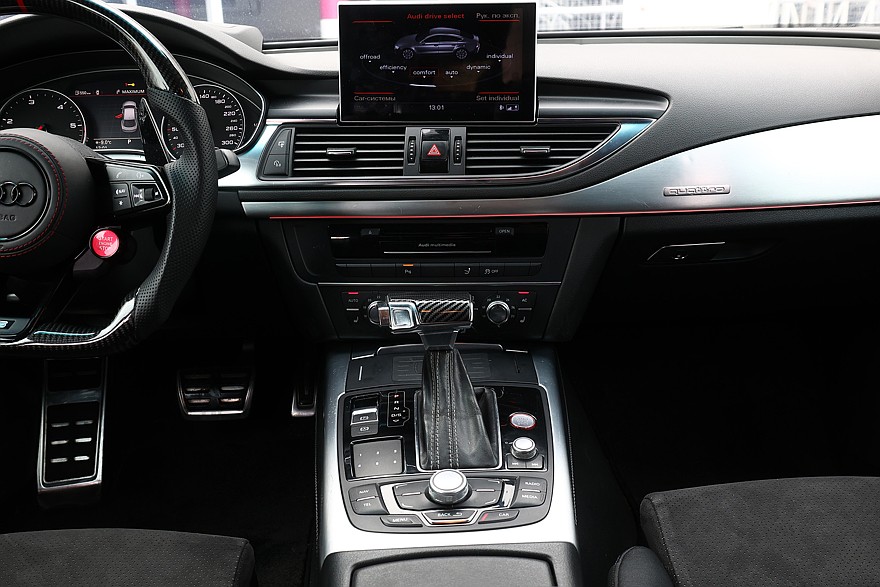
The price of a dual-mass flywheel in original form will be around 300,000 roubles. LuK costs from 87,000, and there are simply no cheaper options. The flywheel can be repaired for a fraction of that amount – for those who like launching 'flat out' from standstill, it fails after roughly 50,000 km, while with normal use it lasts 150,000-200,000 km.
Front-wheel-drive cars with the DL382 gearbox don't lag far behind the four-wheel-drive DL501 cars in terms of automatic gearbox running costs, because the price of the flywheel and clutch kit is only slightly lower – the clutch costs from 71,000 roubles, and the flywheel from 58,000-66,000 depending on the engine. The clutch more often has to be replaced as a complete assembly due to the nature of the wear. The gearbox's mechanical part is more delicate – an out-of-balance flywheel very quickly destroys the input shaft bearings, and the mechatronics is noticeably more temperamental, with problems affecting both the pump supply and pressure.
Operation is complicated by the multitude of component variants, as the gearbox was updated several times during the A7's production run. Furthermore, if the oil in the hydraulic section has never been changed at mileages over 200,000 kilometres, the chances of mechatronics failure increase dramatically.
Is the 8-speed ZF automatic more reliable than the DSG and the CVT? This gearbox mainly works with the most powerful engines, so – no. With the top petrol and diesel engines, the torque-converter gearbox's service life isn't great – by 150,000-200,000 km, repairs become commonplace. What's more – they're very expensive.
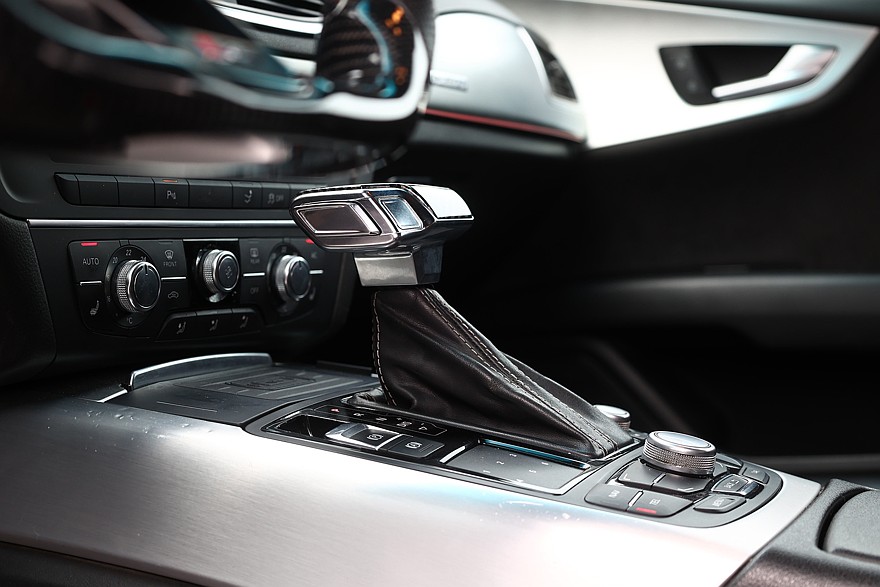
You can find used 8HP55A gearboxes that until recently cost literally a couple of tens of thousands of roubles. Their price has now increased tenfold, but it's still cheaper than a full rebuild in most cases. And some skilled specialists rebuild these automatics using 'donor' 8HP units from other brands, which allows a serious restoration to be done for around a hundred thousand roubles. Overall, it's not worth choosing the most powerful A7 variants just for the sake of a 'proper automatic', and hunting for an old 2.8-litre engine even less so.
Four-Wheel Drive
Audi's permanent Quattro four-wheel drive causes no particular trouble – it's enough to change the oil in the rear differential every hundred thousand kilometres and keep an eye on the condition of the propshaft and rear axle.
Engines
Common Issues
The V6 and V8 engines with Alusil cylinder blocks are very risky options. Moreover, the packaging density of the components is very high, so any repairs are expensive. Otherwise, it's the same as with other modern cars with high-temperature engines and an abundance of push-fit connections: many seals and cooling system components gradually fail, requiring increased attention on cars over five years old.
Another surprise is hidden in the expansion tank of almost all versions. There's a silicone filler inside which, over time, disperses throughout the cooling system, clogging radiators, heat exchangers and even the cooling jackets on diesels. Therefore, it's best to proactively replace the tank with a silicone-free one.
Petrol Engines
We've already written about these engines on numerous occasions. Pre-facelift cars were mainly equipped with EA837 Gen3 engines from the CGWB, CGXB, CGWD, CHMA, CTUA and CTTA series – these are 3.0 TFSI supercharged engines with Alusil blocks. In addition to these engines, naturally aspirated EA837 Gen2 units in 2.8-litre form from the CHVA, CNYA and CLXB series are also found. These are slightly older FSI engines with different injection hardware, which can 'delight' you with hydraulic lock, and scoring is noticeably more common on them.
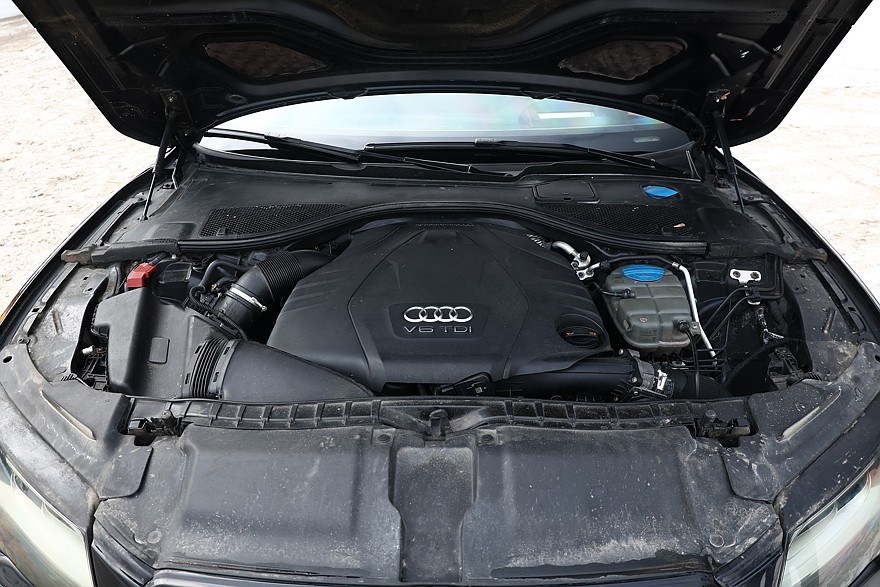
After the facelift, the EA837 Gen3 engines were replaced with the newer EA837 Gen3 Evo units from the CREC and CREH series. These are still supercharged engines producing 333 horsepower, but they now have dual injection MPI+FSI, as well as cast-iron liners. There's also a variable valve timing actuator on the exhaust camshaft, which the previous generation of supercharged engines didn't have. Of the serious problems, only the 'shedding' catalytic converters remain, which really don't tolerate tuning and misfires, and 'popcorn' remaps simply kill them. The timing chain has decent service life – sometimes over 250,000 km, but it's better to budget for replacement at around 150,000 km.
The naturally aspirated engine became known as CVPA, but in reality it's still the same Gen2 with Alusil and scoring, except that the new fuel injection hardware doesn't lead to hydraulic lock on cold starts.
On post-facelift cars, inline 'fours' from the EA888 Gen3 and Gen3b series appeared – in 1.8-litre form it's the CYGA engine with 190 horsepower, and in 2.0-litre form there are several – CYPA, CYNB and CYPB, which can have 249 horsepower in the case of CYNB and CYPB, as well as 252 horsepower for the CYPA. These are very decent units, where of all the EA888 problems, only the not-so-generous timing chain service life and the tendency for crankshaft and camshaft scoring when running on the standard low-viscosity oil with the first stage of the oil pump still active remain.
The 4.0 TFSI engines with 420 and 450 horsepower on the pre-facelift S7 are called CEUC, and on the facelift – CTGE. The Alusil engines with turbos in the vee of the block have good tuning potential, but, as with the other Alusil engines, it's worth remembering the risk of scoring. For the RS 7, the 560-horsepower versions were called CRDB and CWUB, while the rare 605-horsepower engine received the index CWUC. The differences between the engines mainly lay in the turbos and ancillary equipment, but there's no fundamental difference between them – including in terms of reliability.
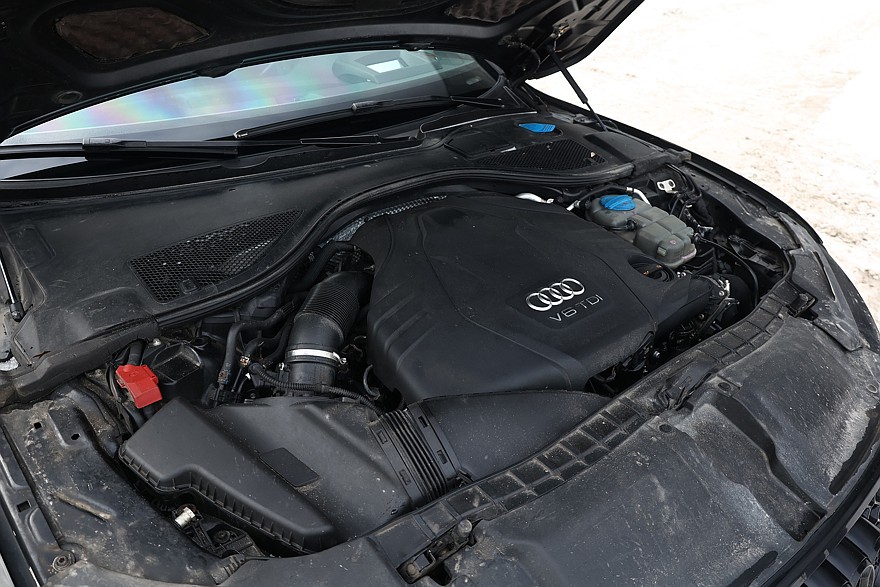
Overall, these are very technologically advanced units – the timing chain is reliable, leaks are rare, the injection is decent too, but the valves are still prone to carbon build-up. Scoring isn't the biggest problem with this range, because when tuning, the piston assembly fails either due to air leaks or a faulty sensor, or due to wear of the high-pressure fuel pump. Furthermore, the engine's design layout literally leads to head gasket replacement within three to four years, along with most of the plastic near the vee of the block and sometimes even the valve stem seals. Additionally, the steel oil feed pipes also coke up internally, and the catalytic converters burn out.
The more or less practical and reliable options are the 'fours' or the facelifted 3.0 TFSI with 333 horsepower. The other engines can't boast this. And while the risks with the 4.0 TFSI are rewarded with superb dynamics even in standard form and fantastic tuning potential to 1000+ horsepower, the rather dreary 2.5 and 2.8 FSI units are simply slightly easier and cheaper to repair than all the supercharged ones. However, their cylinders get scored almost more often – due to the higher operating temperature.
The EA837 Gen3 and EA824 Gen3 TSI ranges are an example of how the reliability situation with a new design began to improve, but never quite reached the finishing touch of the EA837 Gen3 Evo and EA825. The timing system and central auxiliary drive were simplified as much as possible, removing the problematic power steering drives, the alternator became strictly belt-driven, and the engine layout was optimised to the extreme – this is particularly noticeable on the turbocharged versions of this generation.
Cooling was sorted out, albeit with the added complexity of a switchable water pump. The timing chain began to last over 150,000 kilometres – almost as reliably as on diesels. Injection no longer had particular problems, overheating was overcome, and the most powerful versions received pistons with a special coating – although they weren't coated with atomic iron like the Mercedes M119/M120 units.
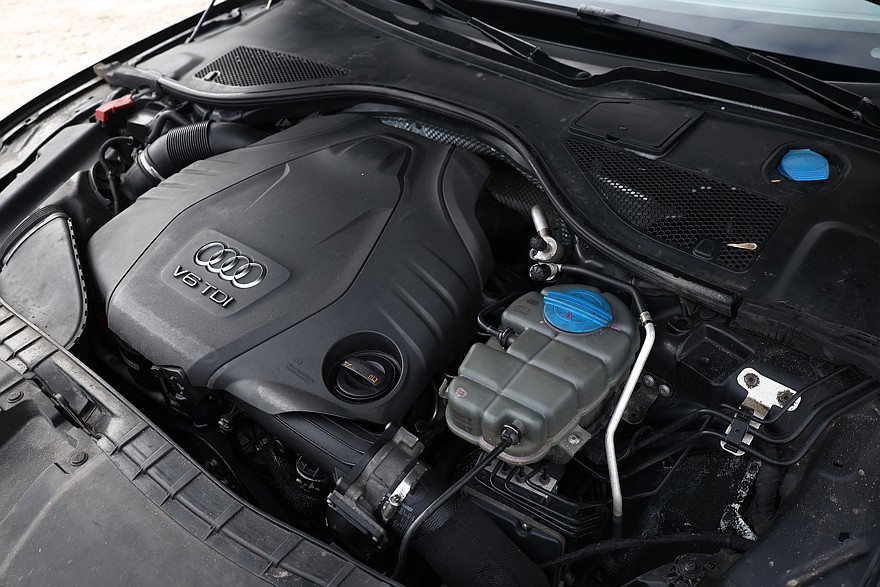
They never gave up Alusil, so the risk of scoring hung over everything like the sword of Damocles, and the price of parts for a full rebuild still causes depression, even if you use second-hand pistons and a re-lined block. Incidentally, the quality of block restoration in decent workshops is fairly high, and the average price of re-lining a V6 is around 40,000 roubles. In the case of the 3.0 TFSI, you can fit a cylinder block from the CREC and get a perfectly factory solution – although, it's cheaper to simply swap in a used post-facelift engine.
Diesel Engines
The 3.0-litre diesel engines belong to the EA897 family, starting with the CLAA with 204 horsepower and ending with the twin-turbo CGQB with 313 horsepower and the CVUA with 320 horsepower. Pre-facelift cars were fitted with CLAB, CDUC, CKVB, CDUD, CKVC and CPNB engines ranging from 220 to 286 horsepower. After the facelift, the CDUD, CVUA, CTBC, CTCC, CVUB and CPNB engines appeared, which belong to the same family, while the latest CZVC, CZVA and CZVE series belong to the EA897 Evo range and differ in having the oil pump driven from the front of the crankshaft.
All the engines are complex, prone to leaks at high mileages, and the timing chain lasts only slightly longer than on the petrol engines – the average service life is 200,000-250,000 kilometres. Admittedly, it's considerably simpler, consisting of two chains, and is easier to replace. You can add to the list of minor annoyances the temperamental piezo injectors on most of the engines and the rather fussy GTB2256VZ/VZK turbos. On the Evo engines, there's a GTB2060 turbo, which is heavily loaded and therefore has a fairly limited service life. In short, the engines are far from ideal, but they're nevertheless dearly loved because, compared to the petrol units, they boast enviable reliability. Except perhaps for the twin-turbo models with their extremely complex intake system.
To Buy or Not to Buy
Among the petrol engines, there's one option that's decisively better than the rest: the facelifted 3.0 TFSI with cast-iron liners. The inline 'fours' are also good, but they're extremely rare, and the 3.0 diesels are fairly common but don't sit well with the model's sporty image.
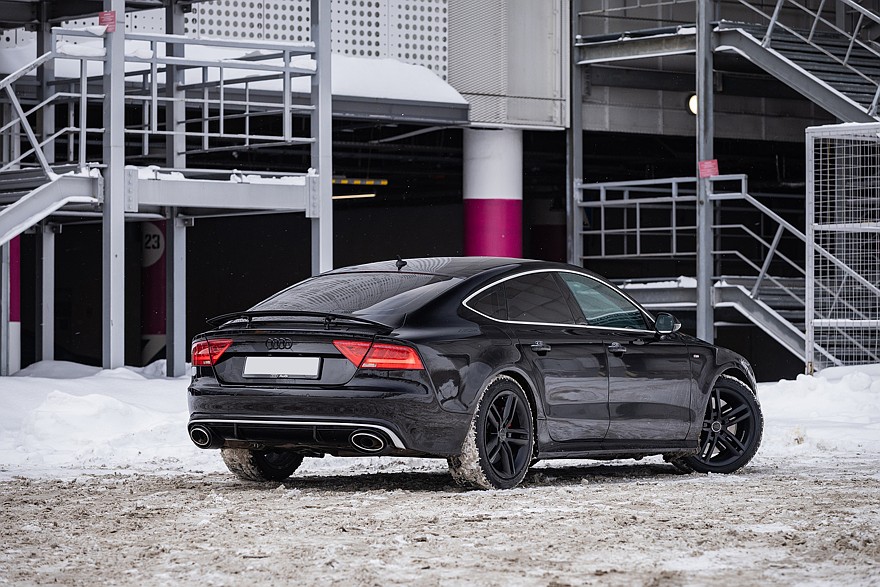
The other options have a right to exist, but the high chances of a major rebuild spoil the mood, and the oil consumption of a 'scored' engine can suddenly end with a holed block if you overload the engine. The gearbox adds fuel to the fire, as it doesn't want to remain cheap to run on any version except the front-wheel-drive with the CVT. In that case, the choice of engines narrows to the extremely unpromising 2.8 FSI and the not-very-sporty diesel.
That said, the car willingly reveals its potential if you're not inclined to skimp on running costs. There's the decent 4.0 TFSI, and its combination with two quick automatics to choose from, with the DL501 coping well with hard acceleration and even drifting. But let's be honest – in your right mind, it's hard to choose an A7 over a 'regular' A6 of the same generation.
Comments
0 comments