
Where has the 6×9 inch car audio system gone?
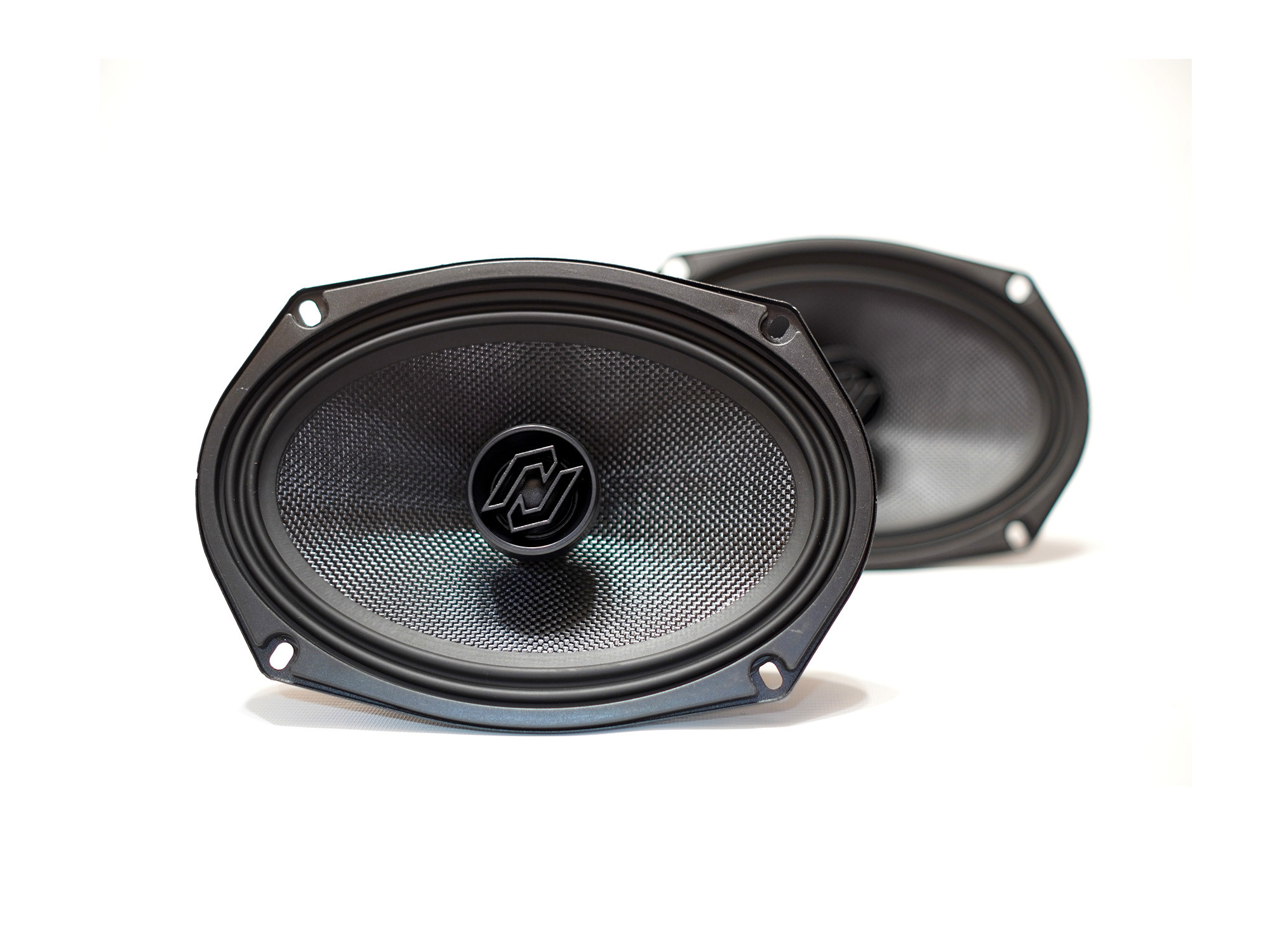
Car audio in the 6×9-inch format is an extremely popular segment. A decent pair of 'ovals' has always been able to provide respectable in-car sound – noticeably superior to the modest factory audio found in many vehicle models. However, buying decent 'pancakes' has become difficult.
Today in Russia, it has become almost impossible to purchase car audio from brands that were once considered trendsetters in the mass market with reasonably high quality – such as Pioneer, Alpine, JBL, Sony, Panasonic, Kenwood, and the like. All these and similar companies have ceased operations in our country, and what is sold under their names on marketplaces is, in nine out of ten cases, crude counterfeits bearing no relation to the original.
Nevertheless, domestic brands have successfully filled a significant portion of the universal audio range in most popular sizes and niches over recent years, commissioning speakers with the required specifications. Admittedly, not all of them, and not entirely.
Take, for example, the highly popular 6×9-inch format in Russia – also known as 'ovals' or 'pancakes'. This is audio with diffuser dimensions of 16×24 centimetres, typically coaxial – two-way or three-way. Traditionally, they were valued for their ability to deliver powerful, loud sound with tight, punchy bass, decent midrange, and acceptable highs, all at a modest cost and effort. The classic 'all-in-one' solution in a single pair of drivers, characterised by the following features:
- High power handling with large midbass cone excursion
- Coaxial design with multiple bands
- Bass from 50 Hz or lower, highs from 20 kHz or higher
The issue is that replacing the lacklustre factory speakers in doors often runs into the limited mounting spaces of the original drivers. In other words, whatever size speakers were installed at the factory, you have to fit the same size when selecting higher-quality, more powerful alternatives, and the increase in power and quality is limited (unless, of course, you plan to ruin the interior with various spacers and adaptors for larger speakers in the doors). However, large coaxial 6×9-inch 'pancakes' are inherently more powerful and wideband drivers, and they integrate perfectly into rear shelves on many body types – saloon, hatchback, estate, crossover, minibus, etc.
What's on the market?
But let's see what we can actually find today in the 'six by nine' segment on the domestic market, excluding fake 'Pioneers' and the like from marketplaces for a couple of thousand roubles? In principle, you can track down those familiar brands 'from the old days', imported via grey channels. But 25-30 thousand roubles for a pair of 6×9 'pancakes' from Alpine or Hertz might justifiably seem excessive to many. And what do we see from the brands that have taken over our market, which have no issues with shortages, grey imports, or difficulties identifying originals versus fakes? Let's examine a few popular brands and models to understand the landscape, and evaluate them against our criteria.
- Piranha 69 V.2 – 80-12,000 Hz, 70 W
- Barracuda 69 V.2 – 70-15,000 Hz, 90 W
- Phoenix SQL 69 Neo – 68-15,000 Hz, 140 W
All these speakers are from different DL Audio lines – single-band PA-style audio, evident from their frequency response range. In other words, 'shouty' speakers, severely limited in range both at the top and, more importantly, at the bottom. Being 'PA-style' is not a sign of low quality, but simply a set of characteristics for a particular style of car audio. However, in our case, the key point is that these characteristics are not what one typically expects from the 6×9-inch size, where we need powerful all-rounders with a range from deep bass to midrange and highs.
- Gryphon Lite 69 V.3 – 55-12,000 Hz, 80 W
- Gryphon Pro 69 Midbass – 55-10,000 Hz, 150 W
Also DL Audio. Better on the bass front, but again, we're dealing with single-band speakers. And high frequencies are not their strong suit. 'Canonical pancakes' are not like this.
- Aura Fireball 690 – 50-15,000 Hz, 70 W
A simple economy-class speaker – small magnet, paper cone. Classic, certainly, but not in the sense of the '6 by 9' standard.
- Aura Venom CL69-MB – 40-6000 Hz, 100 W
Very good figures for the lower frequency limit, but this is a single-band midbass for a component setup. Not quite it...
- Ural AS-M69 Molot – 60-15,000 Hz, 100 W
- Ural Molniya AS-ML69 – 70-12,000 Hz, 100 W
In different 'Ural' lines in the 6×9-inch size, we again encounter typical single-band PA-style speakers, even though we are not looking for them at all.
- Ural Classic AS-K6947 – 52-22,000 Hz, 100 W
Now this is closer to the mark – multi-way coaxial 'pancakes' with a wide range starting from a respectable bass of 55 hertz. But the manufacturer only specifies the maximum power in the specs, and the 'max' here is just 200 watts. This suggests a very modest RMS rating. Again, not quite what we're after.
- Aura Storm 69.3 – 50-22,000 Hz, 160 W
From what was examined, only the three-way Storm 69.3 fully met our criteria. And although the goal wasn't to monitor absolutely everything available for sale, given the coverage of manufacturers whose ranges were studied, the conclusions are clear. In the car audio market for the 6×9-inch speaker segment, there is a definite shift towards PA-style, 'shouty' speakers. And, consequently, an obvious shortage of powerful, versatile 'ovals' capable of properly sounding a car's interior on their own – without other speakers, amplifiers, external crossovers, component setups, etc.
A return to tradition?
However, some manufacturers see the oddity of the current situation and deliberately try to uphold traditions that are being eroded. The Ultera RS69 'ovals' fully preserve (or restore?) all the best canons of this type of audio for those who don't need a noisy 'PA-style' in their car sound. The power, frequency range, and design features of these coaxial 'pancakes' are like those of the typical departed class representatives from brands like Pioneer, Kenwood, Sony, and others, who knew a thing or two about classic '6 by 9s' and delivered cohesive, powerful full-range sound.
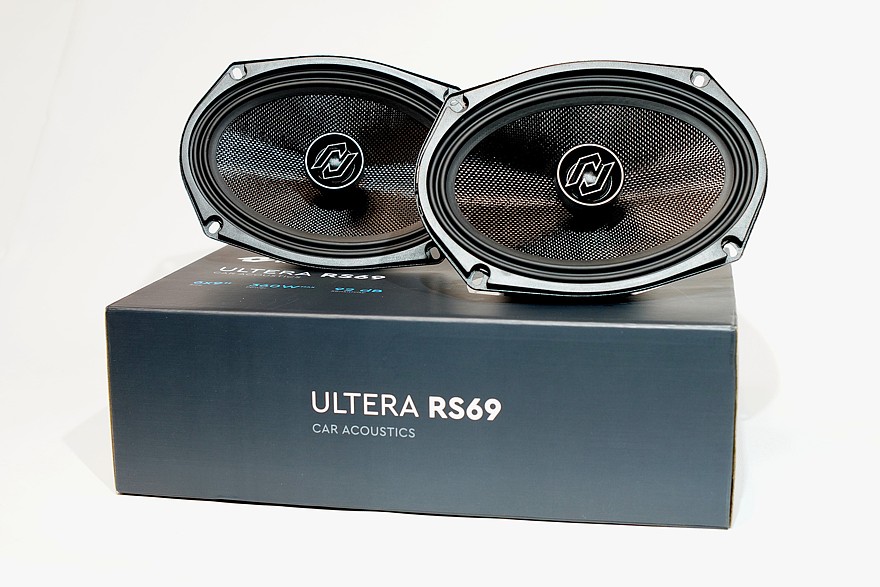
Incidentally, this new name on the domestic car audio scene isn't so new after all. The developer of the Ultera line of dynamic drivers is Neoline. Yes, that very Neoline brand you all know well from some of the best dashcams and radar detectors. Having studied the market's specifics, the company formed its own line of 'upper-mid-range' car audio in the most popular sizes, initially focusing on models most suitable for users planning to replace mediocre-sounding drivers in factory car audio systems. A key feature of the Ultera family is the use of high-quality materials and solutions typical of significantly more expensive audio, as well as special attention to design, an area where budget competitor models often fall short.
The emphasis on materials combines sound quality and the longevity of the audio itself. Nowadays, many can no longer change cars every 3-4 years as before, and vehicles (new or decent used ones) are bought with a view to longer-term use. Accordingly, the sound quality of the audio system must also remain stable for many years. The fibreglass cones on butyl rubber surrounds and silk dome tweeters used throughout the Ultera speaker line are among the best acoustic materials, maintaining consistent characteristics across the wide range of temperatures and humidity typical of a car.
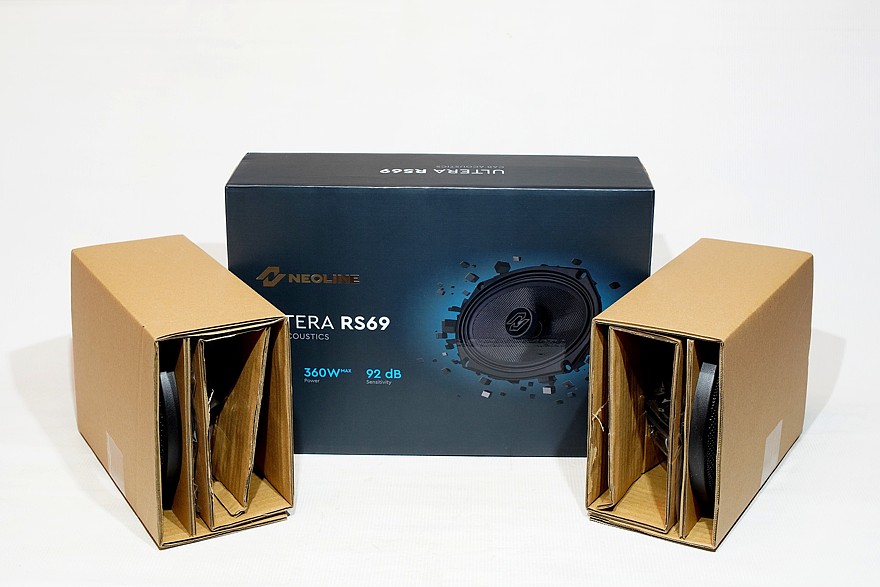
The two-way Ultera RS69 model in the 6×9-inch size comes in a large box, inside which are two individual 'half-boxes' made of thick corrugated cardboard for each of the pair of drivers, eliminating even a hint of damage during transport.
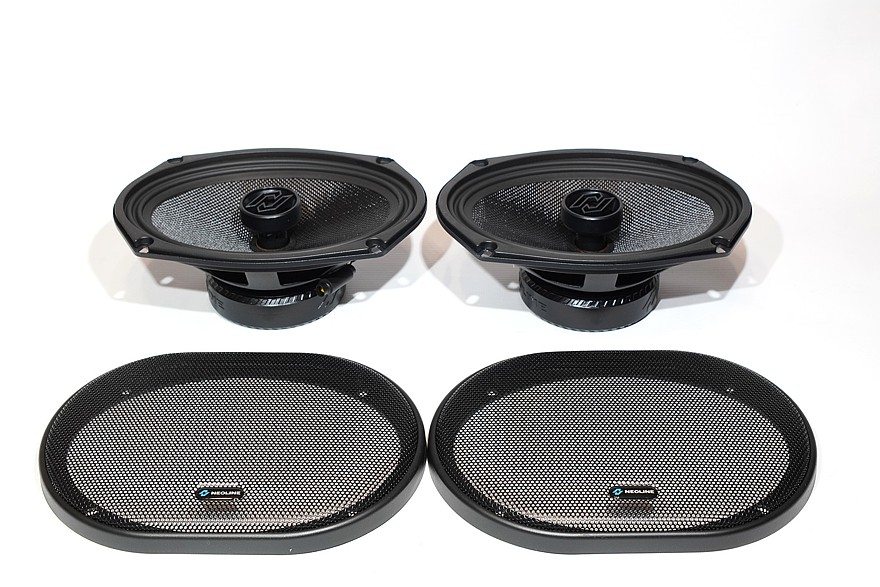
The speakers are supplied with sturdy, resonance-resistant protective grilles and a set of mounting hardware.
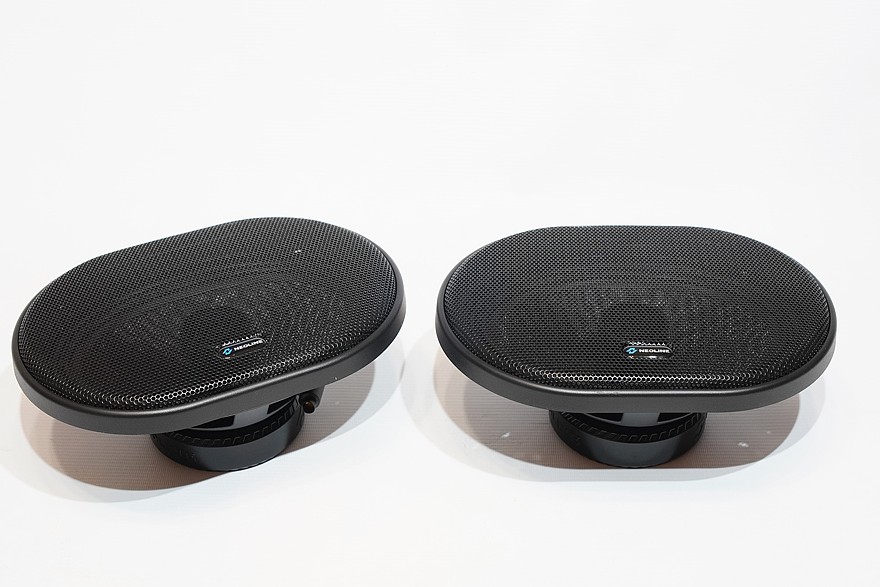
90 watts RMS and 360 watts peak for the Ultera RS69 is a very good figure. The overload capacity of drivers with large, heavy magnet systems is very high, four times the RMS power. This is crucial for reproducing bass peaks without distortion, a hallmark of 'proper pancakes'. For budget drivers in general, and 'PA-style' ones in particular, the difference between maximum and RMS power usually doesn't exceed 2-2.5 times.
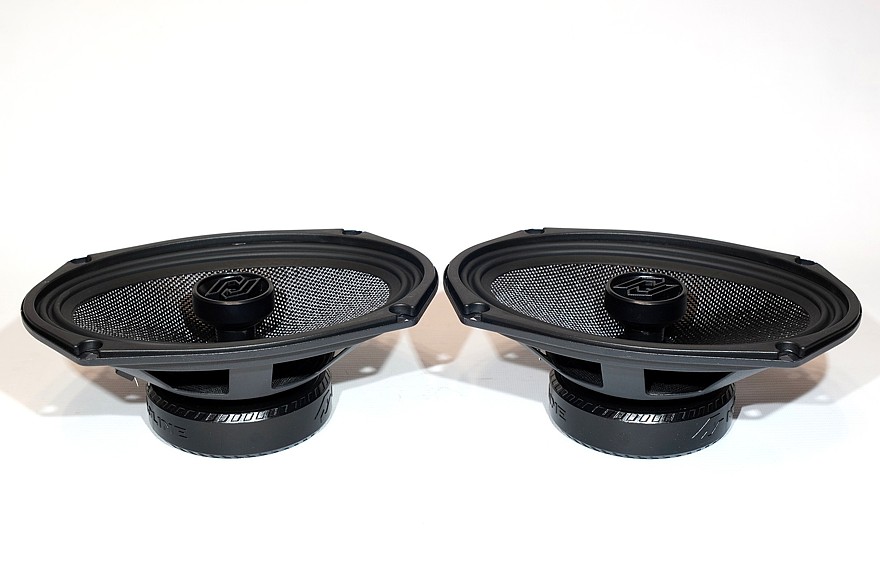
Signal is fed to the tweeter via a filter using flat braided wires routed along the centring spider. This is a very serious solution used in high-quality audio. In the majority of simple models, round-section wires to the tweeter simply pass straight through the midwoofer cone, leading to premature breakage and sometimes rattling against the cone at high volume.
Incidentally, the voice coil impedance of the RS69 is 3 ohms, allowing you to painlessly get 15-20% more power from a head unit or amplifier compared to standard 4-ohm speakers. Such impedance is often found in component and coaxial series from many brands.
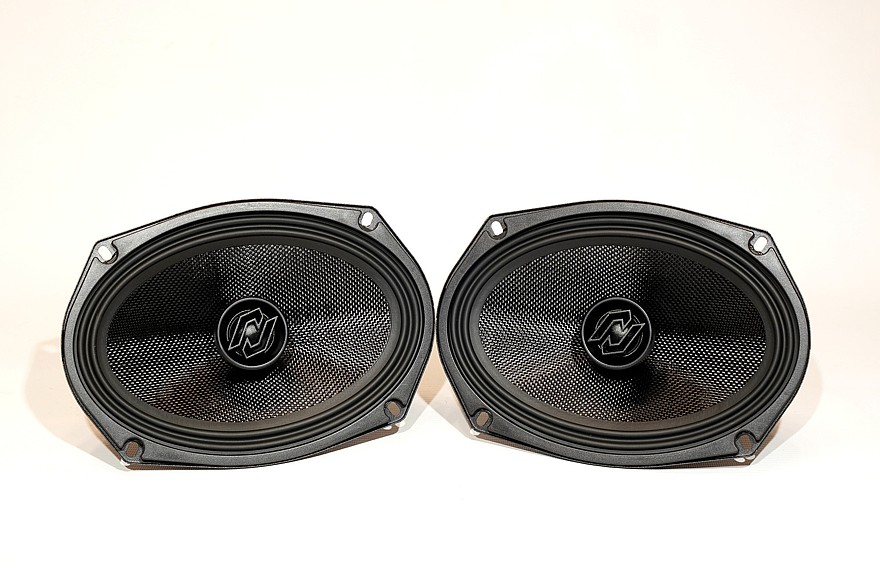
The lower frequency limit of 50 Hertz delivers tight, punchy bass. The impact dynamics of drums are slightly exaggerated, but it doesn't spoil the sound. The 'kick drum', of course, isn't as expressive as in systems with a separate subwoofer, but it's perfectly adequate. Moderate bass distortion is ensured by a wide, honest butyl rubber surround without any 'optimisation games' with width and materials typical of budget audio. Fast and transparent midrange with almost no distortion – its guarantee is the very light yet rigid fibreglass cone. The one-inch tweeter, responsible for the top end of 20 kHz, features a silk dome, which softens the highs, preventing them from becoming 'razor-sharp' – but this is neither good nor bad, simply a matter of taste.
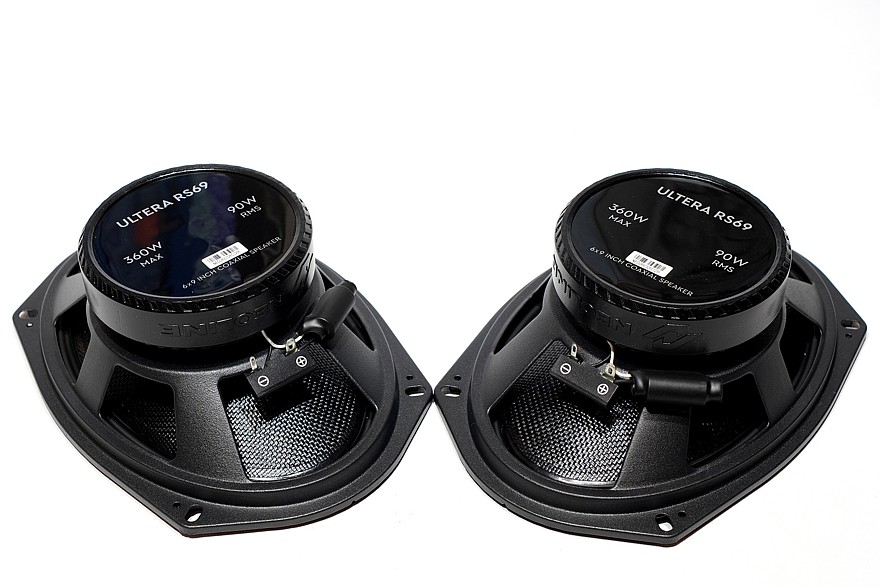
Sensitivity is above average for the class. For good 'ovals' in their traditional sense, a sensitivity of 90 dB is normal. Here, this parameter is 92 dB (1W/1M). Higher sensitivity is typically characteristic of PA-style 'shouters'.
To sum up
Currently, the Neoline audio family consists of 4 models in the most popular sizes. Besides the RS69 'ovals', these are:
- RS52, 5.25-inch coaxial two-way speakers 70-20,000 Hz, 240/60 W
- RS65, 6.5-inch coaxial two-way speakers 60-20,000 Hz, 280/70 W
- RS65C, 6.5-inch component two-way speakers 60-20,000 Hz, 280/70 W
It is clear that the Ultera line in general, and the RS69 model in particular, deserve a closer look, especially from those replacing factory drivers in new cars or 'refreshing' audio systems in used vehicles. High-quality materials, impeccable build, and respectable characteristics are on par with audio components touted as significantly more expensive. In the future, the Neoline audio family will surely expand – we look forward to it!
Comments
0 comments