
Police Car Tyres Are Built Differently From the Ones on Your Car
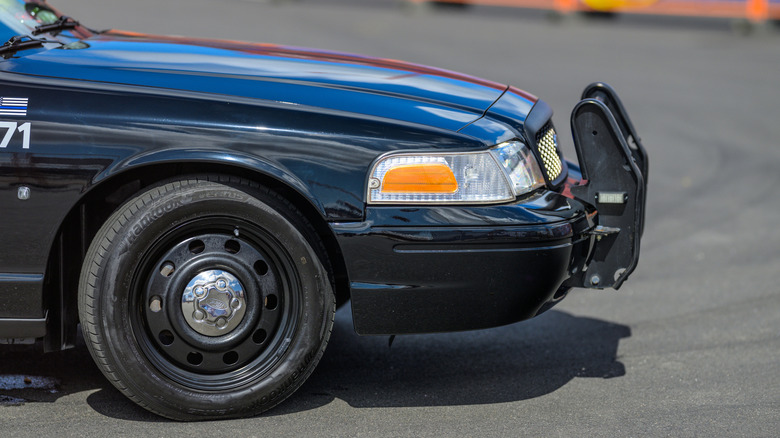
Police tyres may look just like the tyres on any ordinary vehicle, but they are often built to an entirely different standard. As police vehicles spend their days braking hard, cornering aggressively, and occasionally travelling at sustained three-digit speeds, the rubber beneath them has to be able to cope with more intense use than an average commuter tyre could be expected to endure.
As a result, many police vehicles come equipped with pursuit-rated tyres. These feature a reinforced internal construction and large shoulder blocks designed to resist flex during sudden direction changes. That extra rigidity improves handling and better supports the vehicle during emergency manoeuvres. It also enables the vehicle to handle impact — such as from a kerb or pothole — better than a standard road tyre.
Other considerations for a pursuit-rated tyre include heat resistance and speed ratings. Driving at higher speeds for sustained durations with heavy braking thrown in requires not only a suitable speed rating, but also effective resistance to heat buildup as higher temperatures could weaken the tyre's structure. With all that said, the tyres on police vehicles are not puncture-resistant or bulletproof, so they must be treated with care and attention. As such, regular inspections are crucial to ensuring police vehicles and their tyres remain safe for duty and the intense driving situations.
Police tyre requirements
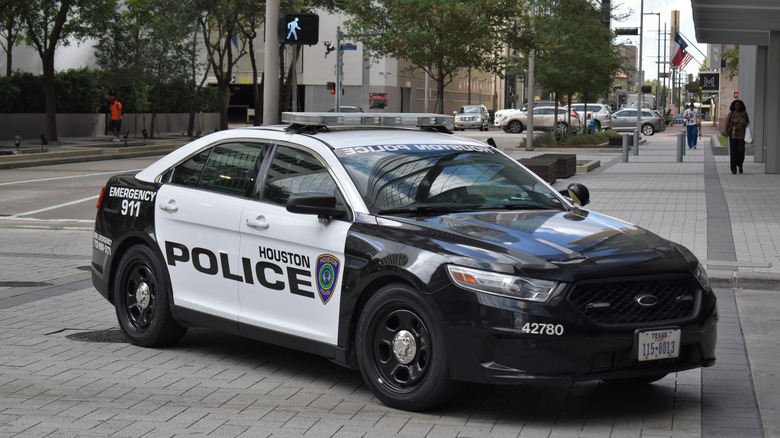
High-performance all-season tyres are great all-rounders for pursuit vehicles, but across the entirety of a police fleet, various different types of rubber will be utilised. Tyres on police vehicles are carefully selected depending on the climate, terrain, and duties expected of each individual vehicle.
Departments in colder regions may equip their vehicles with dedicated winter tyres in the colder months, although changing tyres seasonally can compromise their structure, so switching between designs isn't always ideal. Still, the best winter tyres will enable police vehicles to perform as expected on snow and ice far better than all-season tyres would allow, so it's a compromise worth making. In some instances, police vehicles may opt for all-terrain tyres; designs like these typically sacrifice a little on-road precision in exchange for improved traction on loose and slick surfaces. Such tyres can also be provided with immensely robust constructions, allowing them to withstand severe impact that might otherwise pose puncture risks to lesser tyres, which makes them ideal for pursuits on rough terrain.
In conclusion, police car tyres can differ dramatically from the tyres found on civilian cars, but they will be chosen according to the expected duties of each individual car. For patrol cars that are not expected to endure intense driving, pursuit-rated tyres might not be used at all. It's also important to recognise that "pursuit-rated" is not an official accreditation – it's the tyre manufacturer that decides whether a tyre is so rated or not.
Comments
0 comments