
1996 1.7-tonne vs 2026 1.3-tonne SUV head-on collision... What's the result?
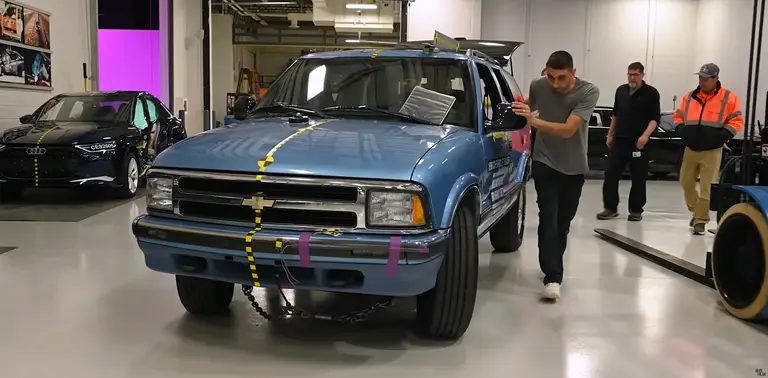
The US Insurance Institute for Highway Safety (IIHS) has conducted an intriguing vehicle crash test. The test was carried out on the Chevrolet Blazer, a mid-size SUV in high demand in the American car market. The IIHS prepared the latest model, the 2026 Chevrolet Blazer, alongside a 1996 Chevrolet Blazer built 30 years ago.
Although both vehicles are from the same Chevrolet brand, they were produced in different countries. The 1996 Chevrolet Blazer was manufactured locally in the US, whereas the 2026 Chevrolet Blazer is a model produced domestically and exported to the United States.
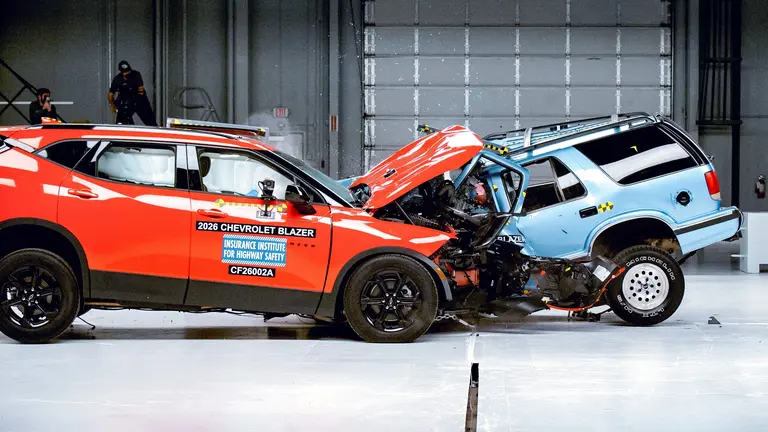
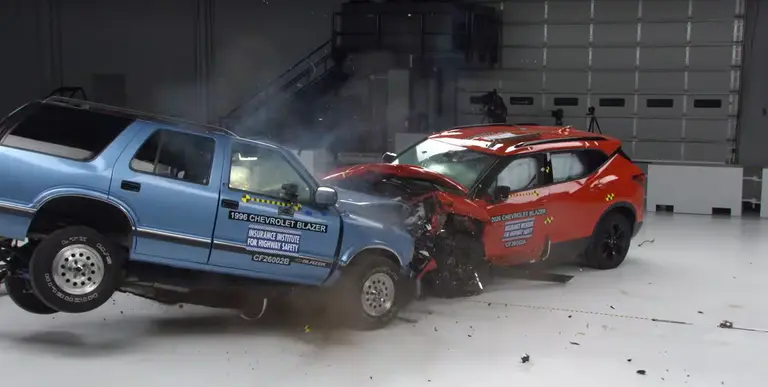
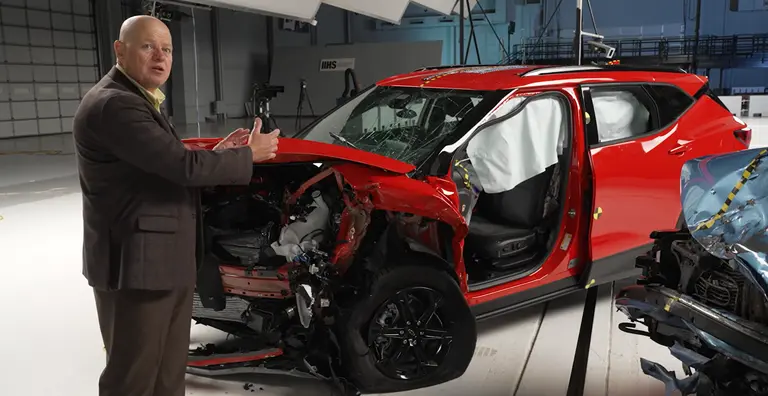
The IIHS conducted a frontal collision between the two models, which are 30 years apart in age, to gauge the level of progress in safety technology over that period. The test involved the 1996 Chevrolet Blazer being stationary while the 2026 Chevrolet Blazer struck it at a speed of 64 km/h. Using an offset method where 40% of the front ends overlapped, the extent of damage to the two vehicles showed a clear difference.
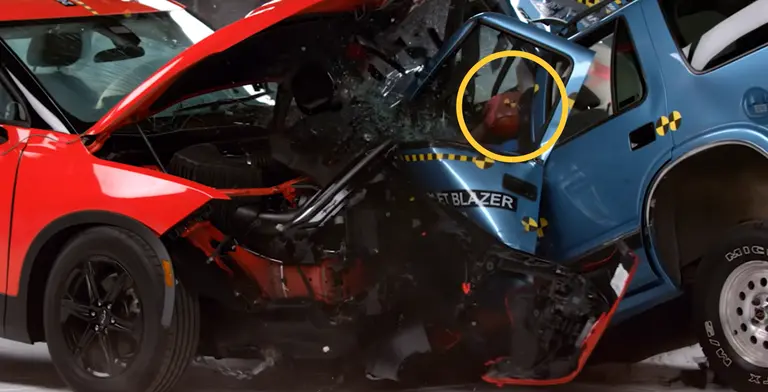
At the moment of impact, the interior of the 1996 Chevrolet Blazer failed to maintain its structure and completely collapsed. As the engine compartment compressed, the A-pillar could not withstand the force and buckled upwards towards the roof, causing severe deformation of the driver's space. The dashboard was pushed into the passenger compartment, delivering a critical impact strong enough to force the crash test dummy out of the driver's seat.
In contrast, the 2026 Chevrolet Blazer crossover only sustained damage to the engine compartment and part of the front windscreen, while the passenger compartment remained intact. Although sensors on the dummy detected a risk of injury to the driver's right foot, this was within acceptable safety limits.
This comparative test was conducted to mark the 30th anniversary of the introduction of the IIHS's vehicle safety evaluation programme. Similar assessments of crash safety between new and old vehicles have also been carried out in Europe.
In 2025, the German vehicle testing and inspection organisation DEKRA conducted driving stability and crash tests on a 1983 second-generation Volkswagen Golf and the latest eighth-generation Golf, highlighting the advancements in automotive safety technology to the public.
Comments
0 comments