
Here's How the Temperature Affects the PSI in Your Tyres
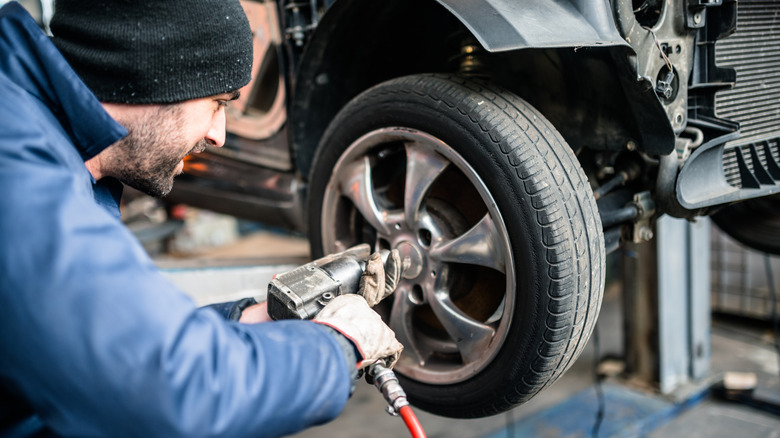
You're probably familiar with that first cold-temperature ping on your car's dashboard, warning of low tyre pressure. Why did that happen, and why is it important to always check the pressure after that first cold snap? Because cold air shrinks inside the tyre, taking up less volume. Even in summer, if you fill your tyres on a sunny day, with that rubber nice and hot, it takes up more space. The PSI figure will be higher. Then, overnight, if the temperature has fallen from 90 to 70°F, it will result in a 2-to-4 PSI drop.
Now, you're probably thinking this is no big deal. But the tyres carry the weight of your car, and the pounds per square inch (PSI) of air in them impact handling, braking, and safety. And low air pressure in your tyres can also cost you. A 2014 study by the Oak Ridge National Laboratory found that low pressure can lead to a 10% reduction in fuel economy. (Although, hold that thought, because how much tyre pressure actually affects fuel consumption isn't the biggest risk.)
To be sure your PSI setting is accurate, manufacturers recommend filling your tyres when they're cold, meaning you haven't been driving on them. If that's not possible, then recheck the inflation the next morning at the coolest time of day, to make sure you're in the ballpark of the inflation mark recommended for your car. And FYI, using the inflation number on the tyre sidewall is a terrible idea. That number isn't specific to your car make and model. Instead, use the pressure shown on the placard inside the driver's door.
The safety hazard of a low tyre is greater than the mileage ding
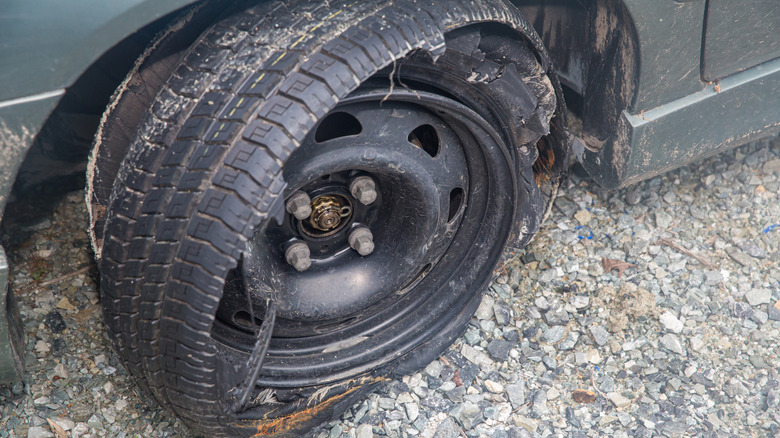
First off, we just said that if the temperature drops by 20 degrees overnight, the pressure in your tyres will likely fall by roughly 2 to 4 PSI. Is that a huge deal? Well, it's not going to have a significant impact on fuel economy. The Oak Ridge National Laboratory 10% fall-off rate was for a tyre at a scary 50% inflation. However, as we'll get into, there are several other risks to squishy tyres.
Back when the Feds used to study stuff, in 2008, the National Highway Traffic Administration (NHTSA) looked at whether running tyres on pure nitrogen rather than the air you typically get from a compressor would reduce pressure loss. How come? Because on this planet, most of what we breathe and inject into our car's tyres isn't oxygen; it's 78.08 percent nitrogen, 20.95 percent oxygen, and 0.93 percent argon. But nitrogen leaks more slowly, so if somehow we could roll on nitrogen-filled tyres, we'd be better off — NHTSA found running only nitrogen reduced the pressure loss by 35%.
Unfortunately, you're not going to find nitrogen at the petrol station. And while a four PSI drop in air pressure overnight may not have that much of a ding on fuel economy, the friendly folks at retailer Tire Rack caution that a tyre that's underinflated just six PSI could lead to tyre failure. And they're not alone. Consumer Reports also says an underinflated tyre can lead to a softer ride, make the car "wallow," and possibly lead to a tyre blowout.
Low tyre pressure leads to greater tyre wear
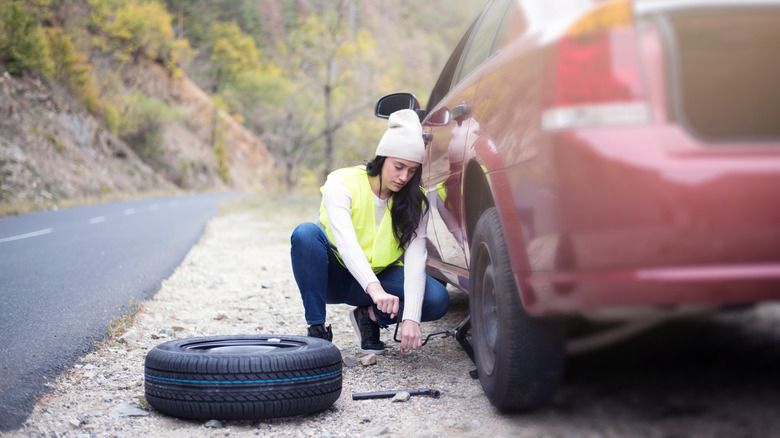
Americans are chronic under-inflators, but we are getting better, kinda. See, a 2011 NHTSA study found that the advent of Tyre Pressure Monitoring Systems (TPMS) has greatly improved our attention to sagging rubber. Overall, in a look at 6,103 cars with and without TPMS, they found that 12.4% had tyres that were 25% or more under the manufacturer's recommendation. But sifting finer, looking at cars equipped with the sensors, that number fell to just 5.7%.
Here's the rub(ber — get it?!). AAA found that TPMS sensors often don't trigger until you've hit about a 20% loss in pressure. Now remember that both Consumer Reports and Tire Rack cautioned that lower inflation can lead to poor handling and a possible blowout, and you know you can't just rely on the TPMS. Although underinflation may not hurt too much at the pump, it will cost you with as much as 25% reduced tread life, according to Tire Rack. And a separate 2019 finding in the journal Reliability Engineering and Resilience found a 15% reduction in tyre life caused by rolling around on squishy balloons.
Bottom line: A hot tyre shows a higher pressure than a cold tyre. But the bigger hazard to proper inflation is inattention. Check the pressure monthly, so you're not paying as often for new rubber, and you're safer on the road.
Comments
0 comments