
Fewer levers, more galvanising: getting to know the updated Niva Legend
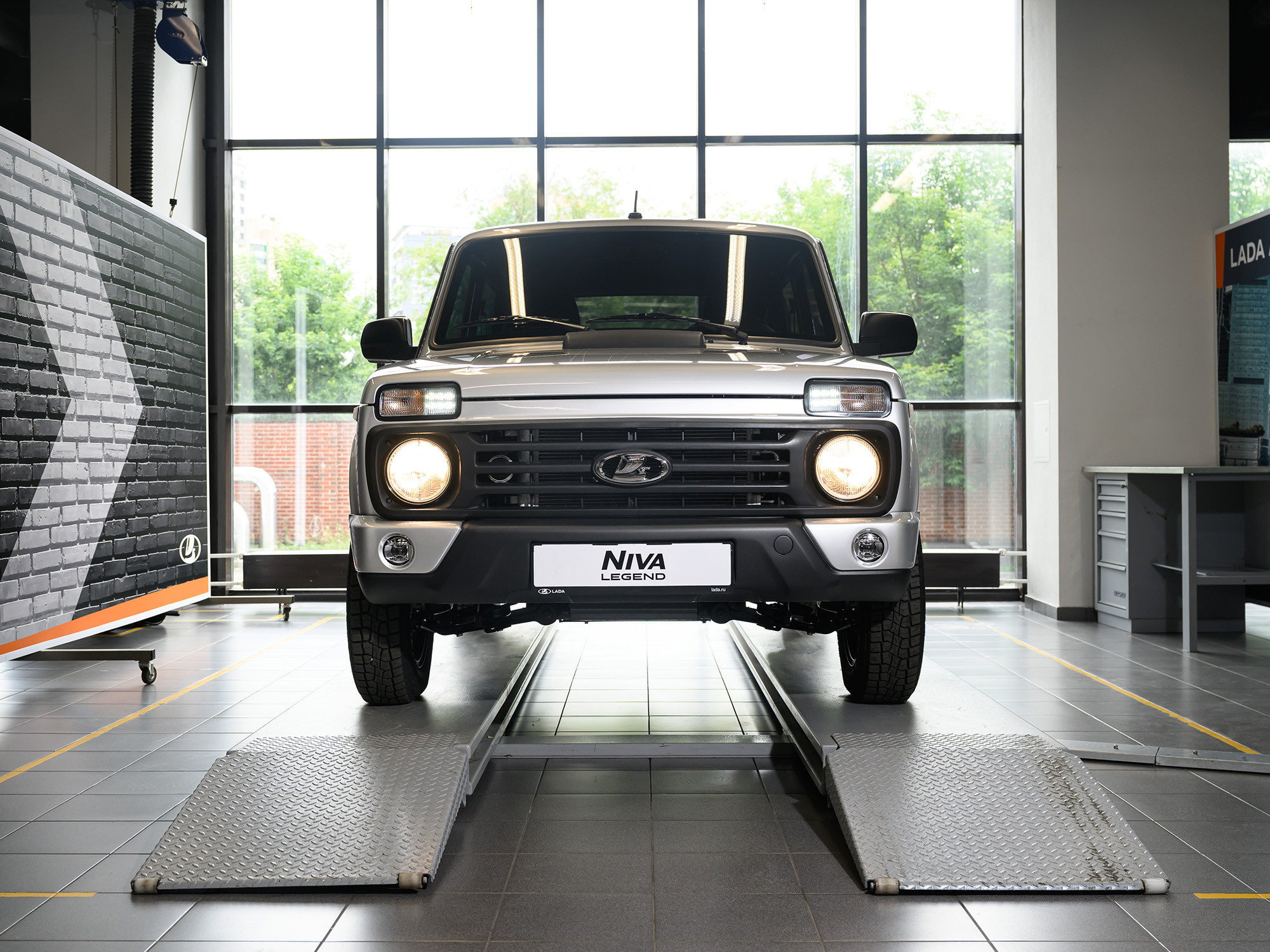
On 20 July, the first Niva Legend will roll out of the gates of AVTOVAZ's assembly shop, having received a whole host of updates designed to breathe new life into a car that has been on the production line for 50 years now. Of course, the good old Niva, whose total production run has surpassed three million units, has long since fallen out of the bestseller cohort, but demand for it remains steady – which means there is every reason to keep improving it and bringing it up to modern standards. As far as that is even possible, of course, for a model designed more than half a century ago.
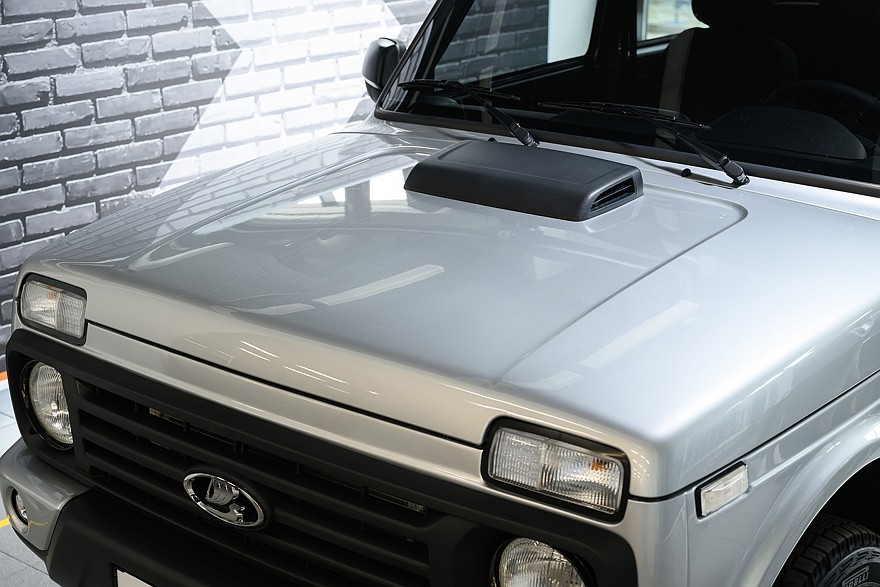
The current update should not really be called a facelift, if only because the car's exterior has barely changed. The only detail that allows you to identify the updated Niva Legend at a glance is the plastic air-intake grille cowl on the bonnet. This component is designed to prevent, or at least minimise, dust and water droplets from entering the air intake tract. All the changes are on the inside, and the main one is a heart transplant.
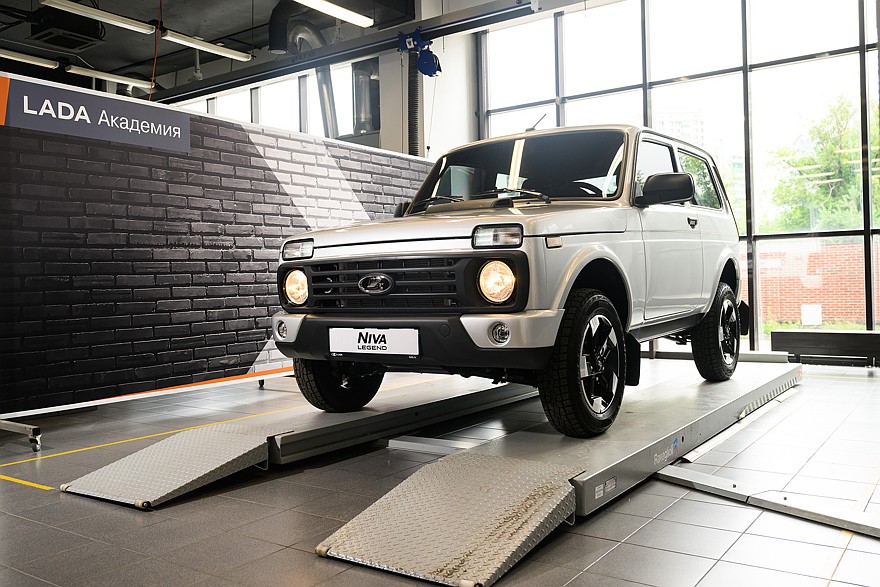
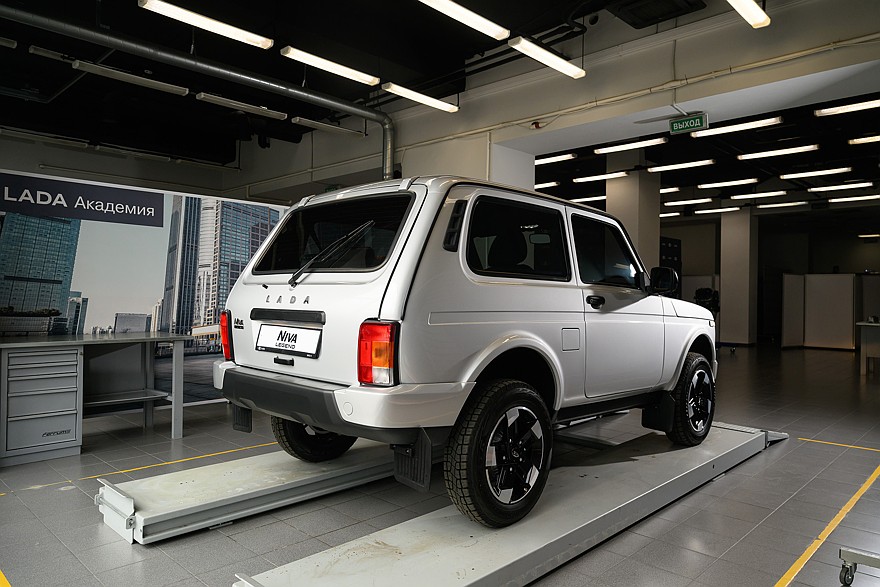
From now on, under the bonnet of the Niva Legend lives a 1.8-litre eight-valve VAZ-11184 engine producing 90 hp – the very same unit that powers the Niva Travel. A gain of seven 'horses' may not seem like much, but the key difference lies in torque. The 1.7-litre engine could deliver a maximum of 129 Nm, and only at 4,000 rpm. The VAZ-11184 produces 24 Nm more peak torque, and it reaches 80 per cent of its peak value by just 1,000 rpm. This means that the Niva's main off-road shortcoming – a lack of low-end grunt – is dramatically reduced or at least mitigated. It is now possible to crawl over obstacles that previously had to be taken purely with momentum.
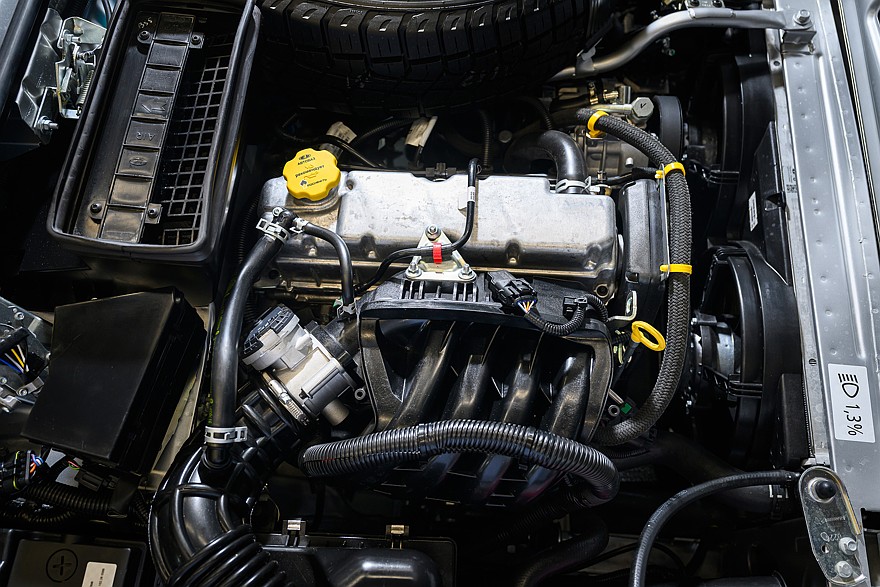
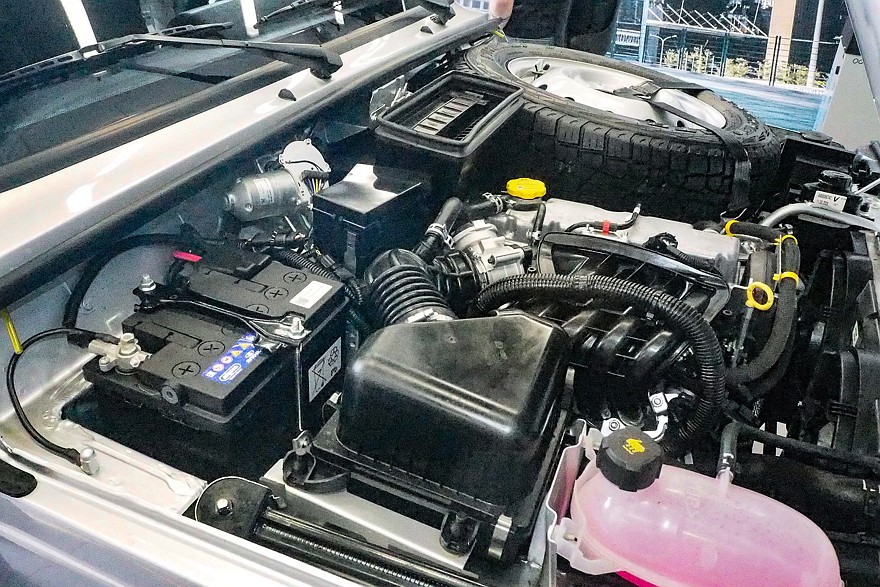
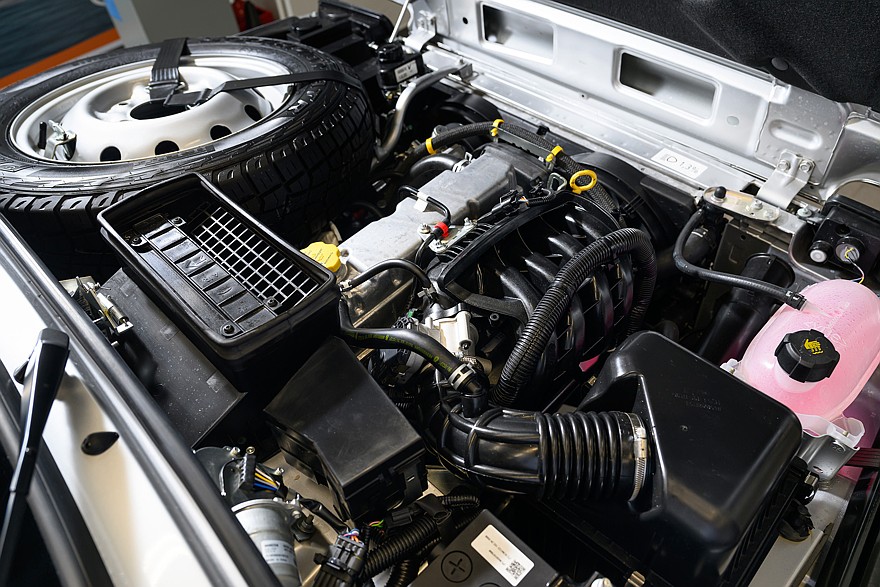
But the engine swap brought with it a host of other changes, including in the engine bay. A new engine mounting system had to be developed, with a new main bracket and new mounts. The new shortened intake tract features an air filter housing with a clip-on lid, allowing the filter to be changed without any tools. The exhaust tract cross-section has been increased from 42 to 48 mm, and, as Grigory Lychev, head of the powertrain design department, put it, the engine can now breathe more easily.
The situation with thermal management control has also been improved. It turned out that with the electric fans positioned in front of the radiator, the effective cooling area was only 178 square centimetres. Moving the fans behind the radiator has allowed this to be more than tripled, to 626 square centimetres.
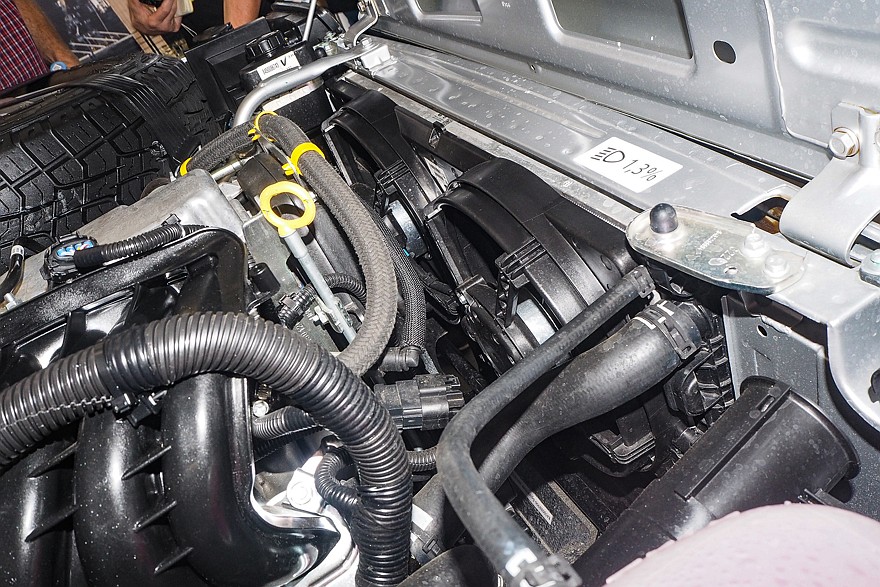
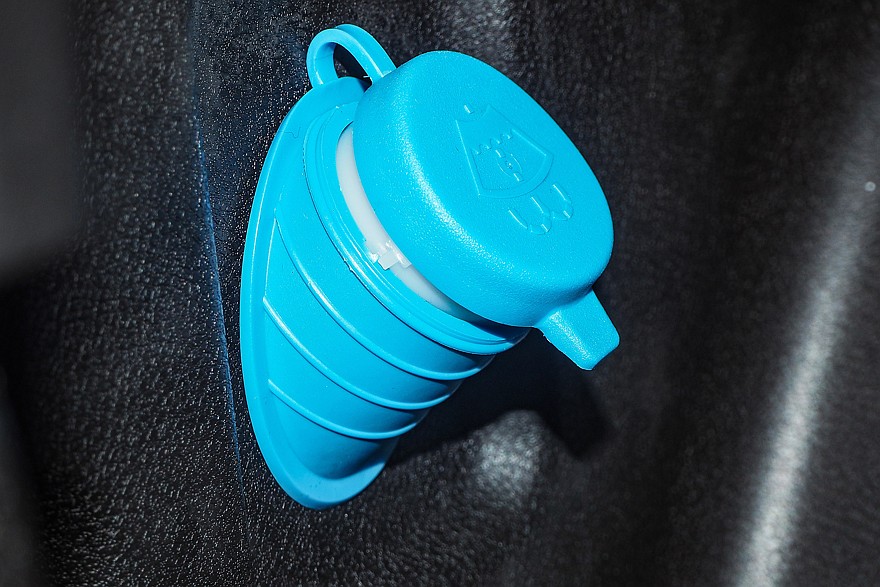
The specific geometry of the engine bay necessitated the design of a fundamentally new bracket for the auxiliary units and the fuel injector rail. This same specificity also meant the car had to be fitted with a new washer fluid reservoir of a rather complex shape. Looking ahead, I should mention that it was not possible to run the rear window washer from the same source as the front one – the filler neck for the rear reservoir still protrudes in the boot.
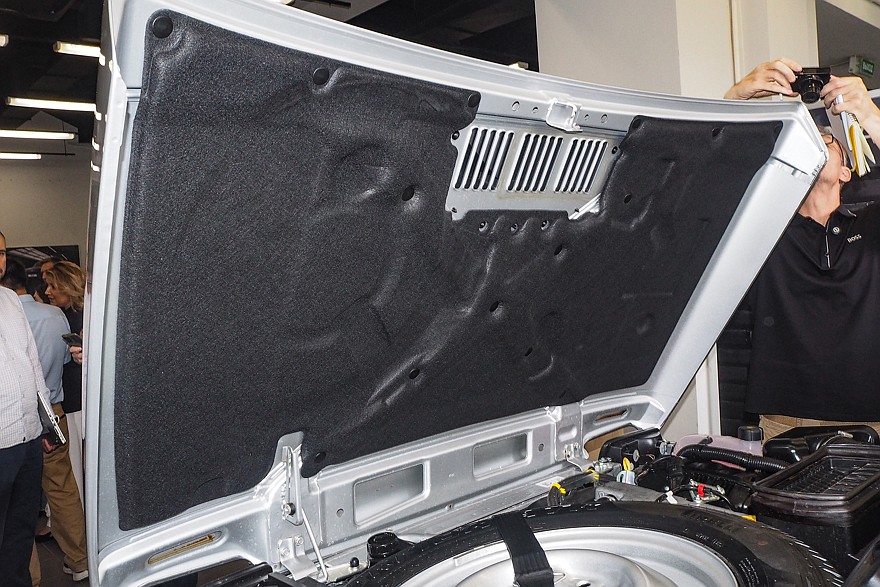
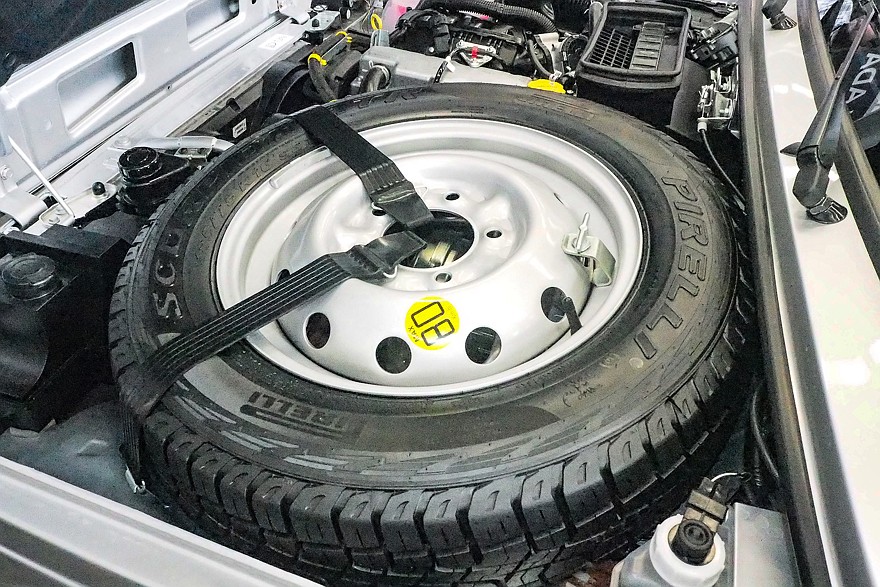
Thought has also been given to improving acoustic comfort: the bonnet now features a single moulded pad of a fairly complex shape instead of four separate pieces. The complexity of the shape is partly due to the retained layout of the spare wheel, which lives under the bonnet. Finally, the engine has received a 'sanctions-proof' M74.91 controller, whose software has been calibrated and optimised specifically for the engine's operation under the bonnet of the Niva Legend. These settings are intended to optimise engine operation, ensuring rated power output, maximum torque and improved fuel economy.
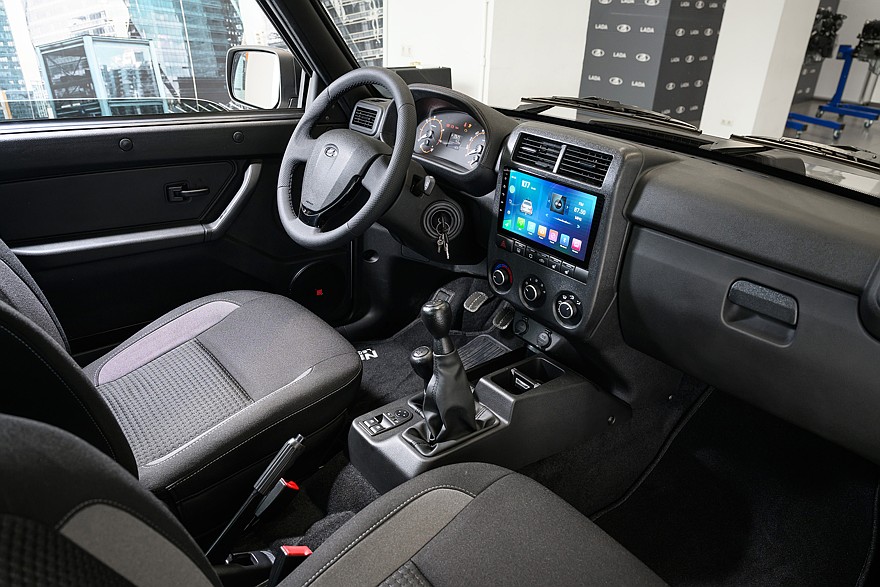
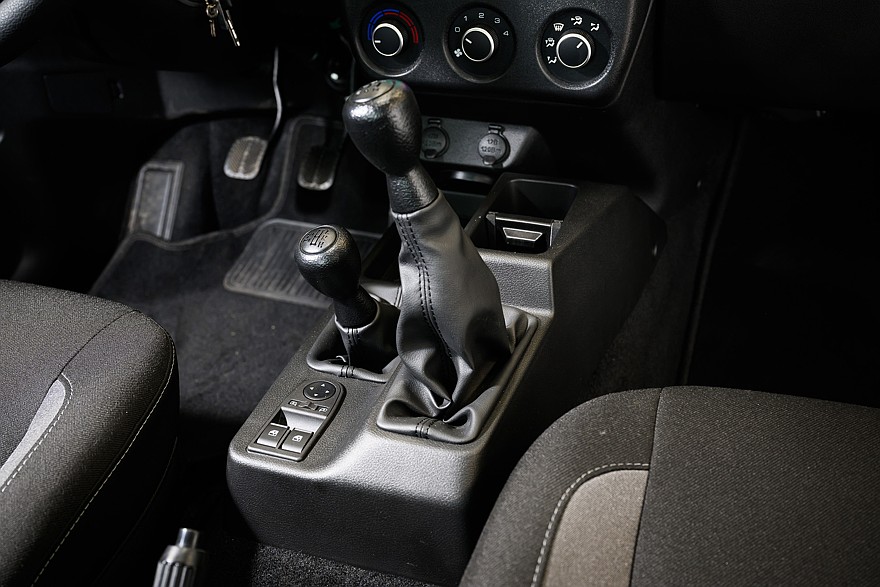
Andrei Alexandrovich Kromm, project director for the 'Niva family of vehicles', said that virtually all the changes made to the Niva Legend's design were 'at the request of the workers', that is, based on complaints voiced by owners. And throughout all the years of the Niva's existence, owners have complained about the ergonomically incorrect positioning of the gear lever, which required a stretch to reach. Online, you can find countless recipes for a DIY cure for this ailment, involving moving the lever back, closer to the driver, and transmitting the lever's movement to the fork via a rod. Now all of this has been implemented at the factory, with the rod hidden under a plastic tunnel cover.
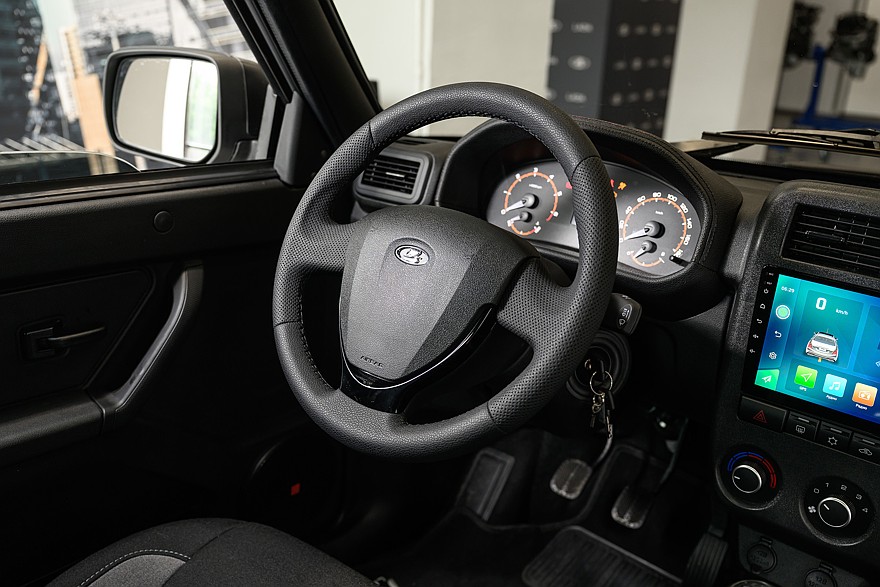
A whole cluster of transmission control levers looks like a strange anachronism in the 21st century. So that is exactly what has been done away with: the new transfer case is finally controlled by a single lever. Admittedly, the cup holders have disappeared from the plastic tunnel cover, but a dedicated space for a smartphone has appeared in their place. The steering wheel comes from the Granta and features an airbag. Incidentally, the impact sensor that triggers the airbag has been specially calibrated so that the airbag does not deploy off-road when the vehicle makes contact with the ground. The steering column is also new.
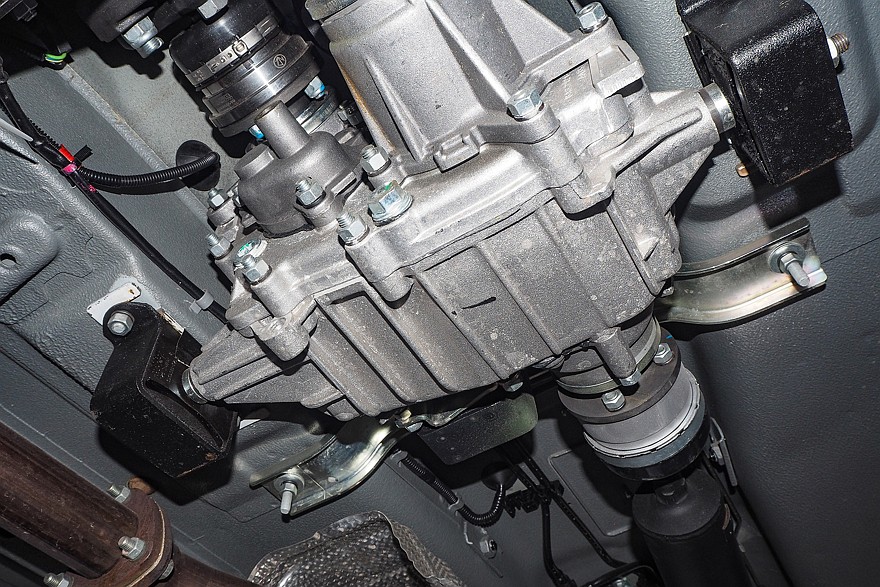
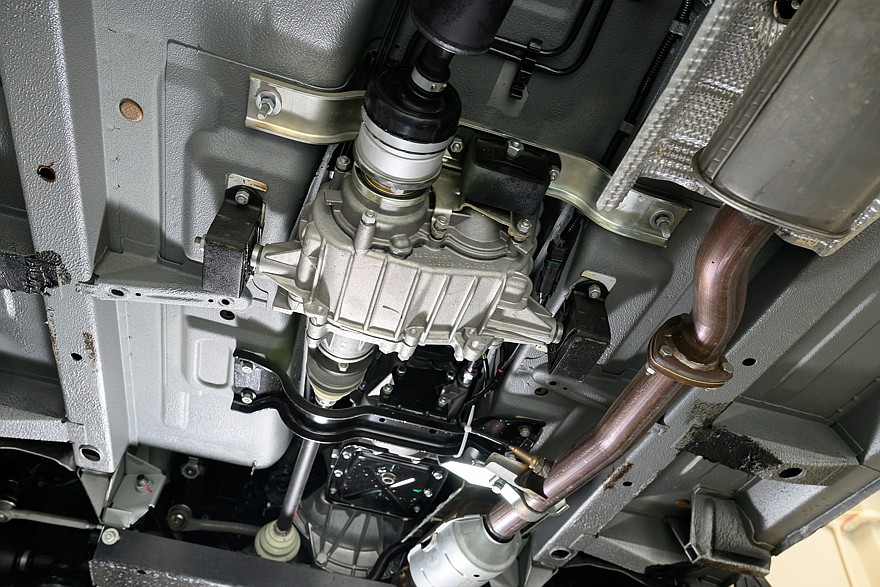
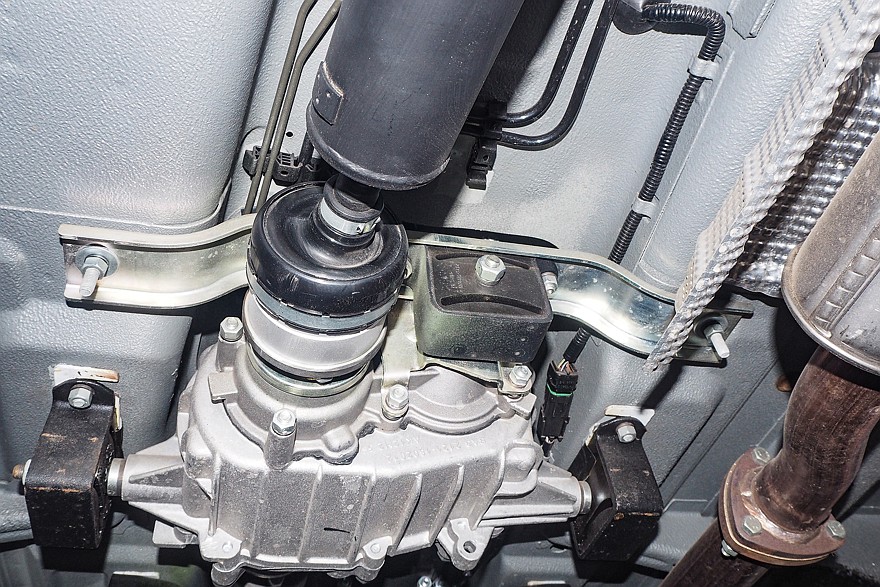
Another inherent defect has also been rectified – the transfer case mounting on two mounts. In theory, this should be enough to radically reduce vibration levels and to make the transfer case less vulnerable when coming into contact with obstacles off-road. Changes also had to be made to the gearbox, which now features a new clutch housing, a new reverse gear and 5th gear block, and a new 5th gear on the output shaft. The front and rear axles have received forged differential side gears with revised geometry and an increased number of splines from 22 to 24, along with forged pinion gears. Accordingly, the half-shafts have also gained 24 splines.
Serious changes have also taken place in the front suspension. It now uses control arms unified with the Niva Travel. The anti-roll bar, which previously also served the function of supporting the front axle, has been moved back, behind the differential, and now works purely for stabilisation. The springs are now manufactured using cold coiling, and the compression bump stop strut has been lengthened by 10 mm to prevent contact between the tyres and the shrouds. Finally, the entire front corner module has been unified with the Niva Travel, and the front brakes now feature ventilated discs.
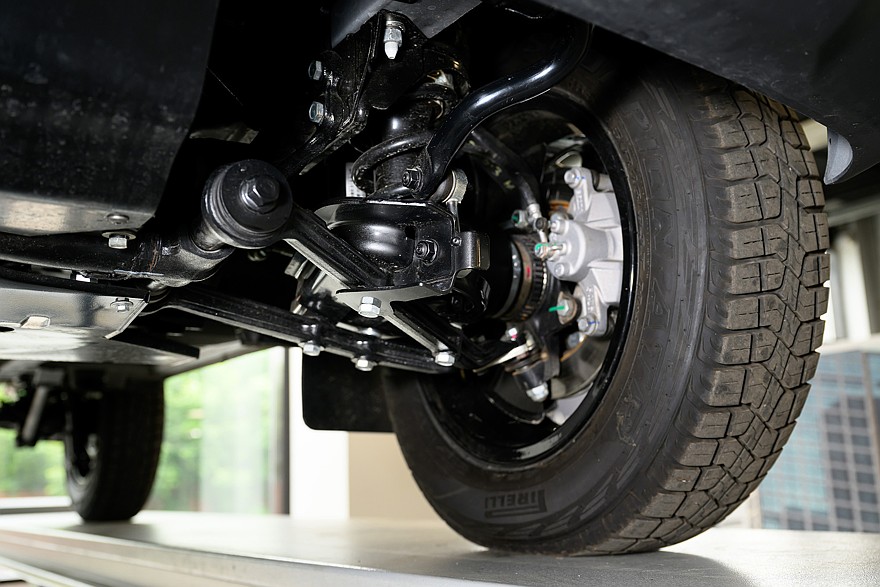
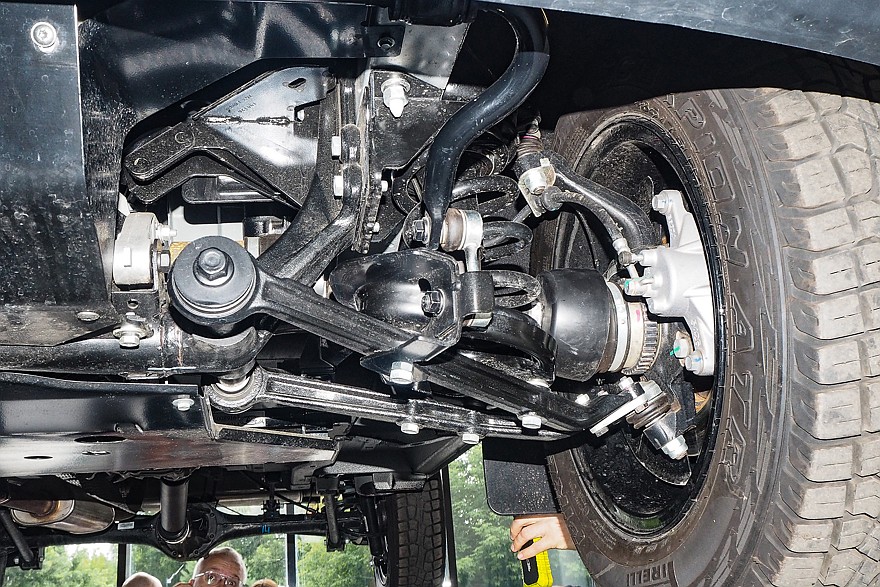
The problem with the front tow eyes has been solved. Previously, they were attached to the front body panel, but now they are attached to special brackets that also serve as the mounting brackets for the anti-roll bar – in other words, to structural elements. But there is a catch here: the plastic bumper of the Urban trim completely blocks access to these tow eyes. The designers decided that for this trim level it would be more appropriate to keep a screw-in tow eye, but they did not remove the 'normal' tow eyes either – deeming it economically unviable. I would, of course, have suggested equipping the Urban's plastic bumper with hatches in the lower section to provide access to the tow eyes, but never mind – the VAZ designers know best.
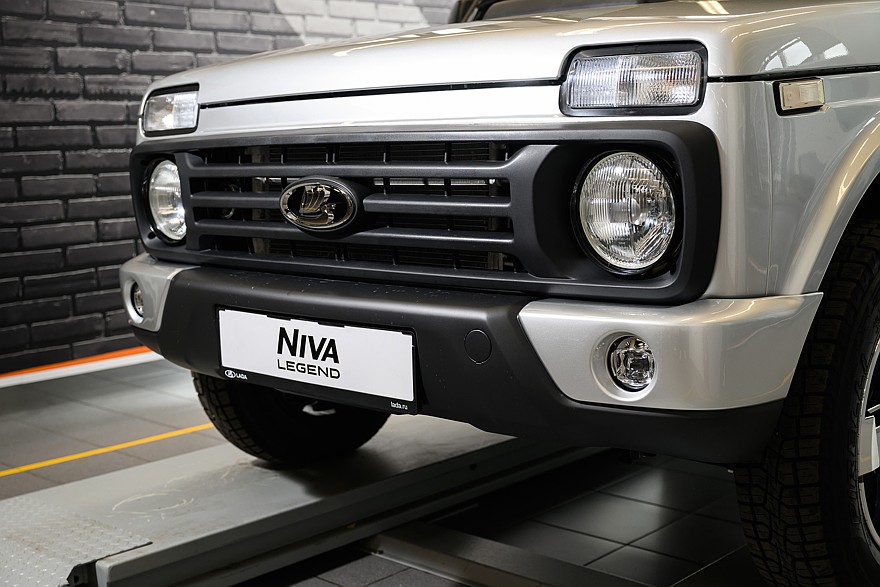
And the icing on the cake – galvanised bodywork! In fact, the Niva Legend was the only AVTOVAZ model completely devoid of galvanisation. And now – ta-da, fanfares, champagne spray... The bonnet, front and rear panels, tailgate and roof have all received galvanisation. In reality, this particular set raises certain questions: on most modern cars, it is precisely the roof that remains the one part without galvanisation. The fact that the front and rear panels and the bonnet are now stamped from galvanised steel is correct – these are the parts that very often suffer minor paintwork damage, after which they begin to corrode. But the fact that the floor, sills and side panels remain without galvanisation is a great pity. Naturally, we asked the factory staff why this was the case. The answer turned out to be rather mundane... Replacing 'black' panels with galvanised ones requires both new welding equipment and serious changes to the technology. The factory was able to do this in some areas, but it simply did not have the resources for a complete changeover. However, the factory did manage to alter the body's structural layout by introducing a whole series of reinforcements, including those for mounting the transmission components.
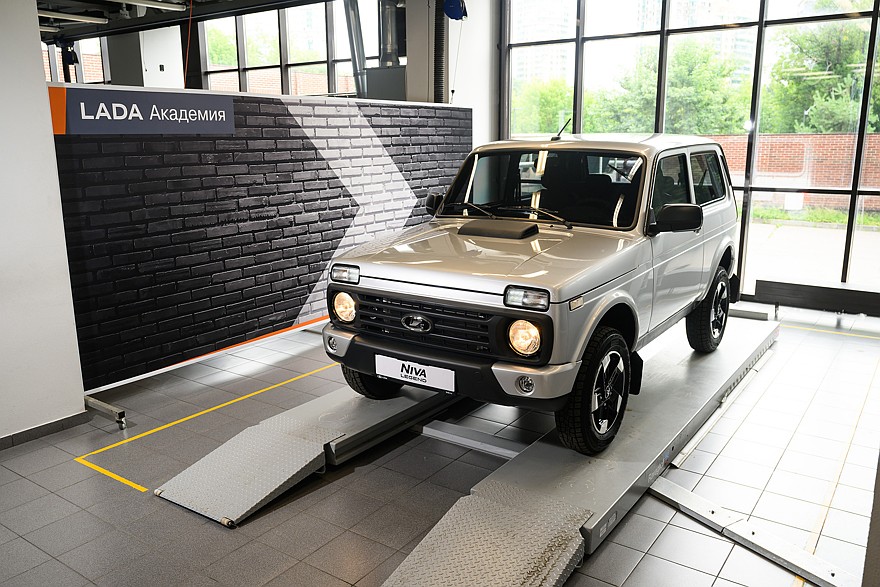
Prices for the updated Niva Legend have not yet been announced – they will appear when the cars begin arriving at dealer warehouses, that is, in late August to September. It is clear that the price will rise nonetheless – quite a few innovations have been introduced into the car. However, the factory workers have solemnly promised that the car will, in principle, remain in the same price bracket and will still be the cheapest four-wheel-drive vehicle on the Russian market. And one more question that concerned colleagues gathered at the presentation of the updated Niva Legend: how long is the life cycle of this model expected to be? The answer from Leonid Alexandrovich Orlov, director of products and programmes, was simple and unequivocal: the Niva will remain in the factory's production line-up for as long as there is consumer demand for it. So there are, as yet, no signs that the Niva era is drawing to a close.
Comments
0 comments