
20mph limits under discussion for England
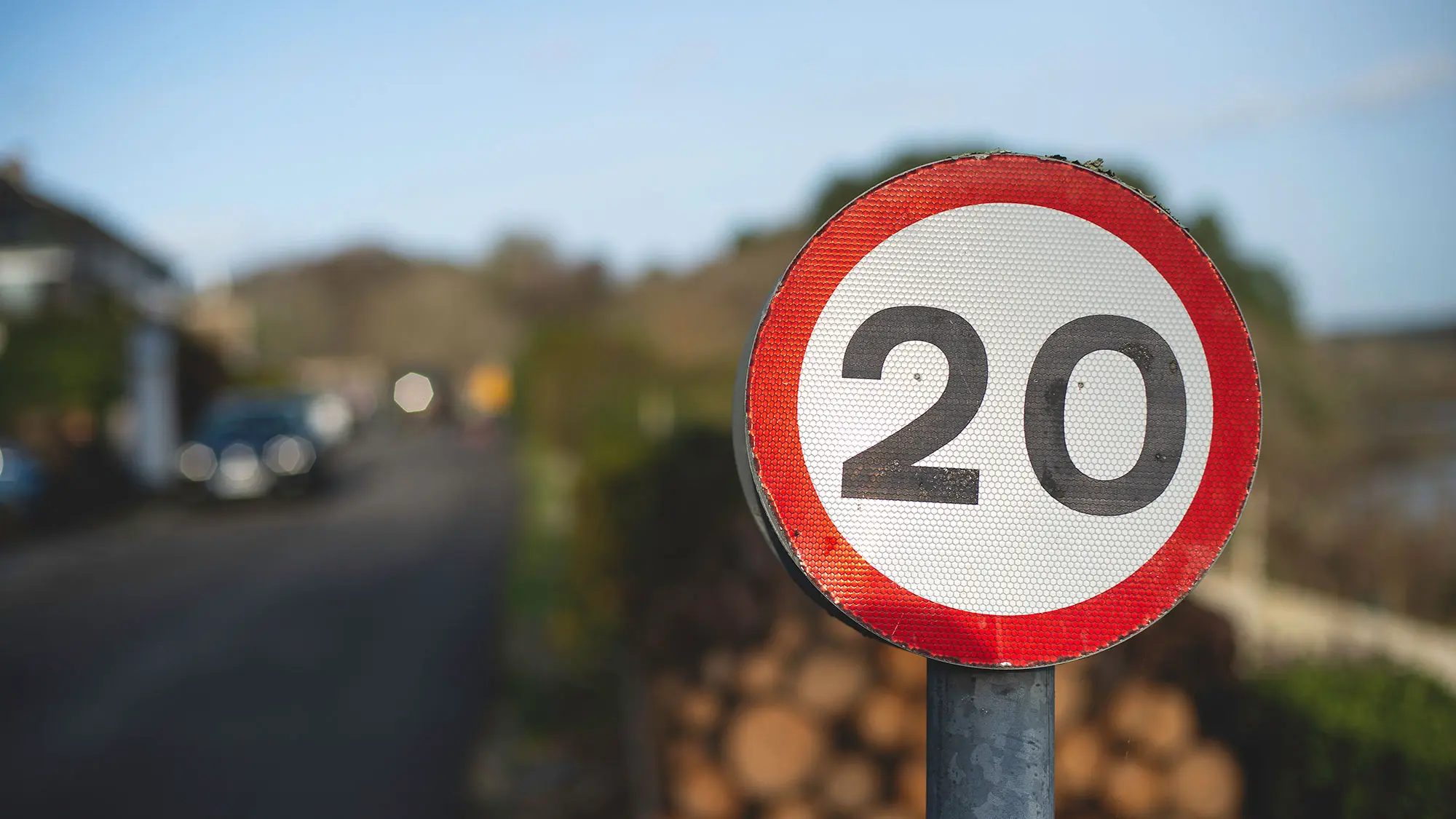
► Panel presents evidence in favour of lower 20mph limits ► It states change could reduce fatalities and injuries by 10–15% ► Forms part of government’s wider road safety strategy rethink
We hope you’re not in a rush. The 20mph speed limit could soon be coming to more English towns and cities. The Transport Committee has heard evidence from a panel of four industry experts who suggested the lower limit would reduce the number of people killed or seriously injured (KSIs) by between 10 and 15%.
That’s important, because the government’s proposed new road safety strategy (in which this meeting played an important role) aims to reduce that KSI figure by 65% by 2035. It’s also laid out an ambition for a 70% reduction in the number of children killed or seriously injured on the road, for which the 20mph limit will have the biggest impact.
The panel included Adrian Barendt, director of the campaign group 20’s Plenty for Us; Phil Jones, chairman of the transport planning company PJA (who oversaw the 20mph roll-out in Wales); Lilli Matson, chief safety, health and environment officer for Transport for London and pre-critical care doctor Rob Török. A fifth panel member from the Road Haulage Association was also invited to present evidence, but they withdrew.
What the experts said
All four panel members made it abundantly clear that they were in full support of a blanket 20mph limit across England. Matson said: ‘reducing speed is at the heart of making roads safer. It’s the first and most important systemic change that the government and local governments can make.’
She highlighted her experience in the capital. When Central London adopted the 20mph limit in 2020, she said the change reduced the number of KSIs by around 24%. She also flagged a secondary benefit in that the lower limit ‘changed the feel of those roads’ by ‘making them places where people do want to live, walk, cycle, play.’
Exactly why she’s comfortable allowing children to play in the road is beyond us, but we’ll endeavour to get a response from her office.
Török echoed her comments, saying: ‘20mph limits nationally set or nationally prioritised – urgently – would save countless numbers of people from injury and harm and cost.’
Barendt was most critical of the government’s proposed road safety strategy as, while it has laid out a hierarchy of road users with pedestrians at the top and cars at the bottom, it hasn’t prescribed an enforceable lower speed limit to protect the most vulnerable.
He said: ‘Because there’s no commitment to a 20mph speed limit on residential streets – and since around 50% of KSIs occur on 30mph roads – without reducing that speed limit down to 20, you simply can’t achieve the target of 65%.’
He also stressed that the 20mph limit is ‘by far and away the biggest single measure’ the government could take to cut the number of deaths on its roads. He suggested the change would account for between 10 and 15% of its target.
In addition, Barendt mused the lower limit would encourage all road users to ‘look out for each other more,’ as the lower speeds give drivers more cognitive capacity to watch out for and react to hazards. Such as unattended children wandering out into the road.
The 20mph limit in action: Wales
Wales is probably the most infamous application of the 20mph limit – and it’s a good case study for this discussion because it was introduced in the same fashion this consultation’s panel of experts is suggesting would be suitable for England.
The changeover happened on 17 September 2023. The infrastructure updates, which included new 20mph signs and road markings, cost the taxpayer over £34 million. What’s more, a Welsh government assessment also determined that the lower limit would cost the nation’s economy £4.54 billion over the following 30 years.
However, Welsh first minister Mark Drakeford justified the speed adjustment by stating it would save the NHS £92 million per year in A&E visits from traffic accidents.
The public response to the 20mph limit was, shall we say… lively? A Welsh petition challenging 20mph limits quickly attracted more than 400,000 signatures – and the outcry was so severe that the Welsh government was forced to revert some of its new 20mph roads back to their original 30mph limit in 2024. People don’t seem to want this change.
When quizzed about the public resistance to 20mph limits, Barendt said: ‘It’s change management. We’ve got used to 30mph as the limit. That’s been with us for 100 years or so. Whenever you change, people are going to get uncomfortable.
‘It’s just getting used to it. We saw the petition in Wales at the point of the change. Over 400,000 people signed this. There was an identical petition two years later and it attracted 2,378 signatures. I can’t do that maths in my head, but it’s a tiny number of signatures.’
Dr. Török added to Barendt’s point, saying: ‘The fact that there are groups that are loudly opposing or resistant to this change doesn’t mean that the majority aren’t in support. You know, the surveys that the RAC and similar bodies do tell us that people do want reductions in speed limits and safer roads.’
We’ll let the comments section be the judge of that. Please, let us know your thoughts below. We’re genuinely curious to gauge your interest.
What this means for you
As of today, nothing will change. The Transport Committee is still only talking about the adoption of 20mph limits – and it doesn’t have the legislative brawn to push new laws through parliament. So, 20mph limits in England won’t appear overnight.
However, the government’s new road safety strategy will be informed by the findings of panel discussions such as this one. So, there’s a chance – especially given the strength of the evidence provided by these experts – that the limit could be adjusted down. We’ll have to wait and see.
CAR magazine’s opinion
We completely understand the need to improve road safety, especially in the areas where children and families are most likely to be. However, the pelt-every-town-with-buckshot approach to 20mph limits probably isn’t the way to go. It’s an overly simplified solution to a fiendishly complicated problem.
The panel in this discussion was completely fixated on the deaths and injuries caused by traffic collisions, but they failed to acknowledge those caused by emissions.
Our urban speed limits have been almost universally set at 30mph since 1934. Because of that, manufacturers have designed the fuelling and gearing of pretty much every petrol and diesel car since then to be efficient at that speed. However, to comfortably maintain 20mph, you need to be in a lower gear than you would be at 30mph – and that creates more pollution. Your engine’s turning more revs, which belches more exhaust fumes into the air.
The government states there are between 28,000 and 36,000 deaths every year caused by pollution. That cohort is as important (if not more so, given the far greater number of fatalities) than the 1,600 deaths and 29,000 serious injuries caused by road traffic accidents in 30mph urban areas, as quoted by Dr. Török in this hearing.
Yes, we know the level of pollution in our cities will naturally decrease as more drivers adopt electric cars. But petrol and diesel cars aren’t going anywhere any time soon. They’ll still be rolling around on our roads long after the ICE ban comes into force in 2035.
Team the 20mph limit with stricter ULEZ regulations in our most crowded cities, and all we’ll effectively be doing is moving chunks of our pollution out of our densely inhabited regions and into our smaller rural towns. Which doesn’t seem all that sensible.
We’re not saying the 20mph limit is a bad idea. In fact, we support its introduction around schools. But we think it needs to be applied carefully and sensibly, with a watchful eye on how it’ll affect emissions and a package of education to instruct the most vulnerable road users how to interact with motorists in our cities.
Let’s see how it plays out.
Comments
0 comments