
Physical AI Competition Shifts from 'Building the Body' to 'Laying the Foundation
Three months, three rounds, over 2 billion yuan — this is the financing scorecard delivered by Lightwheel AI in the first half of 2026.
On June 23, the latest officially announced round of 1 billion yuan in strategic financing included investors such as government funds like Zhongguancun Science City Fund and Sichuan Development Venture Capital Fund, as well as industrial capital including Giant Network, Yusys Technologies, and Boton Technology.
At the same time, over the past two months, Lightwheel AI has also added names like PICO, Alibaba Cloud, Wuji Technology, and Boton Technology to its partnership portfolio one by one.
How has a company founded only three years ago managed to get government funds, industrial giants, and financial institutions to bet on it simultaneously?
The answer may lie in a grander proposition: Physical AI is currently shifting from competition over embodiments and models to competition over infrastructure, and Lightwheel AI is attempting to become the one who redefines the "starting line" of the赛道.
Four Cards: Data, Simulation, Evaluation, Deployment
Lightwheel AI positions itself as a "Physical AI data and evaluation infrastructure service provider."
In simple terms, Lightwheel AI does not build embodied intelligent robots, but provides the underlying support of "data, simulation, evaluation, and deployment feedback" for all companies that do build robots.
This positioning stems from a systematic judgment by Lightwheel AI's founder and CEO, Xie Chen, regarding the data dilemma in Physical AI.
Xie Chen has深耕 the fields of autonomous driving and Physical AI simulation for many years. He previously worked at Cruise, where he was fully responsible for core autonomous driving simulation work, and later joined NVIDIA, where he led the construction and iteration of NVIDIA's autonomous driving simulation system.
In 2023, Xie Chen officially founded Lightwheel AI, focusing on the Physical AI infrastructure赛道 and specifically addressing the core pain points in the research, development, and deployment of embodied intelligence.
In Xie Chen's view, unlike the autonomous driving industry where the core bottleneck is algorithm iteration, the ultimate development bottleneck for Physical AI and embodied intelligence is inevitably data. "The scale of data demand for Physical AI is 1,000 times that of autonomous driving," Xie Chen even stated bluntly.
This gap mainly stems from two dimensions.
First, the fundamental difference in pre-training datasets. Large language models have free data publicly available on the internet; autonomous driving has millions of production vehicles providing loop data; but embodied intelligence currently has no free, standardized, or universal public pre-training dataset. This is the most critical underlying短板 of the industry.
Second, the exponential gap in the complexity of physical interaction. The interaction in autonomous driving is mainly the limited-dimensional interaction between the vehicle and ground dynamics. In contrast, embodied intelligence needs to replicate fine-grained physical operations of humans across all scenarios, involving a vast number of high-degree-of-freedom, high-precision force and posture interactions. The research difficulty and data requirements far exceed those of autonomous driving.
An even greater challenge is that autonomous driving can rely on production vehicles to continuously transmit real road conditions, but embodied intelligence, for now, cannot achieve the deployment of millions of real machines in the short term. Consequently, 99.9% of Physical AI training data cannot come from the embodiment itself.
In other words, the data iteration for embodied intelligence must obtain training materials through human demonstration and simulation synthesis without having enough real machines.
From this, Xie Chen derives a core conclusion: Simulation is the only viable path for large-scale evaluation of Physical AI and the only way out for the industry to break the deadlock.
More specifically, Xie Chen believes that, considering the long-term fundamental needs of the Physical AI industry, the industry will require two billion-level generation systems: a billion-level human data generator to support training, and a billion-level simulation generator to support large-scale evaluation.
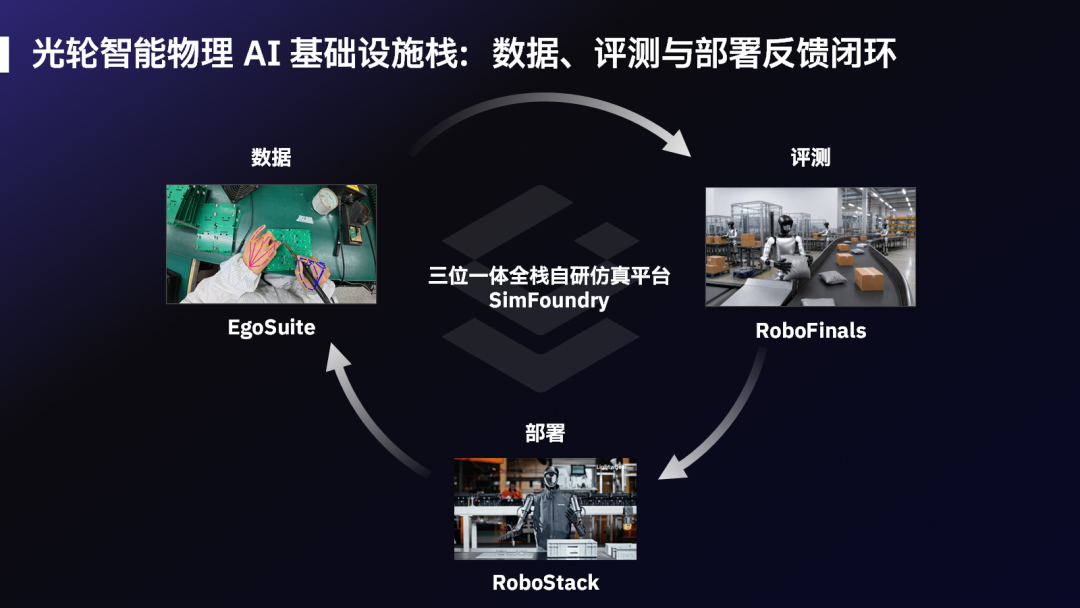
Based on this judgment, Lightwheel AI has built a closed-loop system called "Real2Sim2Real" (Real World → Simulation World → Real World) and refined four core products:
EgoSuite (Data): Provides real-world experience, focusing on human behavior data,沉淀 high-quality, large-scale, cross-embodiment human operational experience. This mainly includes human observation, manipulation, error correction, and long-horizon task experience in the real world, providing scalable learning material for robots.
RoboFinals (Evaluation): Validates model capabilities, focusing on industrial-grade large-scale evaluation. Through standardized tasks, reproducible environments, and comparable metrics, it determines what the robot model has learned, where its capability boundaries are, and what its failure modes are, and inversely defines the next round of data requirements.
RoboStack (Deployment): Recycles deployment feedback. After robots enter industrial sites like factories, warehouses, agriculture, and logistics, they continuously encounter new task distributions, anomalies, failure samples, and on-site constraints. This feedback is brought back into the data, simulation, and evaluation systems, becoming the starting point for the next learning cycle.
SimFoundry: This is the Physical AI simulation infrastructure supporting the closed loop of "Data-Evaluation-Deployment" mentioned above. It addresses a more fundamental question: how to transform the real world at scale into a simulation world that robots can learn from, train in, and validate against.
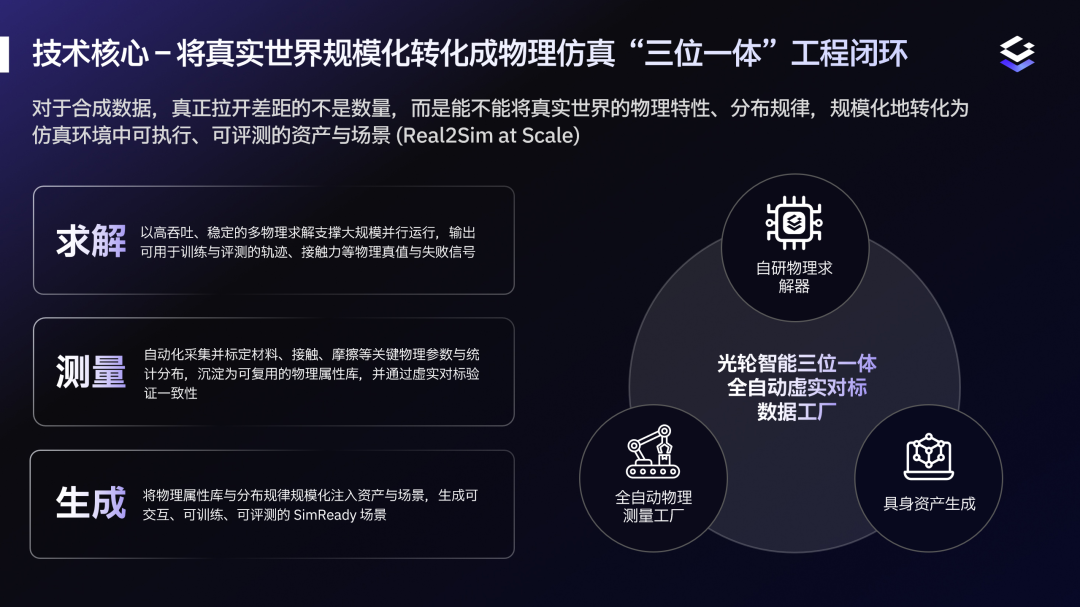
To this end, Lightwheel AI has independently developed a full-stack simulation platform integrating "Solving – Measuring – Generating." This platform supports SimFoundry in transforming physical properties, scene distributions, and task experiences from the real world into executable, trainable, and evaluable simulation assets and scenarios, supporting data generation, training validation, and evaluation iteration.
Among these, Lightwheel AI's self-developed high-precision GPU physics solver possesses differentiable, multi-physics, multi-material unified solving capabilities, supporting high-precision real-time simulation of complex physical processes such as rigid bodies, soft bodies, fluids, and particles.
This strategy of starting from the bottom layer of the physics engine reflects Lightwheel AI's attempt to establish a fundamental difference in "physical consistency."
Currently, Lightwheel AI has established deep cooperation with overseas leading companies like OpenAI, DeepMind, and Figure, as well as the vast majority of top-tier domestic embodied intelligence startups, leading industrial enterprises, and automotive companies.
According to previously officially released data, in the first quarter of this year alone, Lightwheel AI's new orders reached 550 million yuan.
It is particularly worth mentioning that while the industry generally believes data services are customized, non-standard services, Lightwheel AI has taken the lead in achieving "standardization" of data products. "Our one-hour standardized data product can simultaneously serve 10 different industry clients," Xie Chen pointed out.
Yang Haibo, co-founder and president of Lightwheel AI, even previously revealed that the resale rate for data from high-quality scenarios at Lightwheel AI has exceeded 10 times.
This means Lightwheel AI is breaking through the traditional bottleneck of diseconomies of scale in data services by transforming long-tail scenario data into reusable products, thereby diluting marginal costs.
However, Xie Chen is also clearly aware that building a complete full-lifecycle education system for Physical AI cannot be accomplished by a single company. This is the fundamental reason why Lightwheel AI is intensively collaborating with various sectors of the industry.
The Ecosystem Continues to Expand
Looking at Lightwheel AI's recent collaborations, from data collection hardware and cloud computing platforms to scenario deployment and industry standards, this company that doesn't build robots is trying to make itself an indispensable role in the Physical AI infrastructure layer.
Securing the Data Entry Point: Locking in first-hand data sources from the physical world.
Physical AI training must first solve the problem of "what to learn." How humans operate, how objects are subjected to forces, how the environment provides feedback — these raw data are the starting point for all model capabilities. And obtaining data requires hardware.
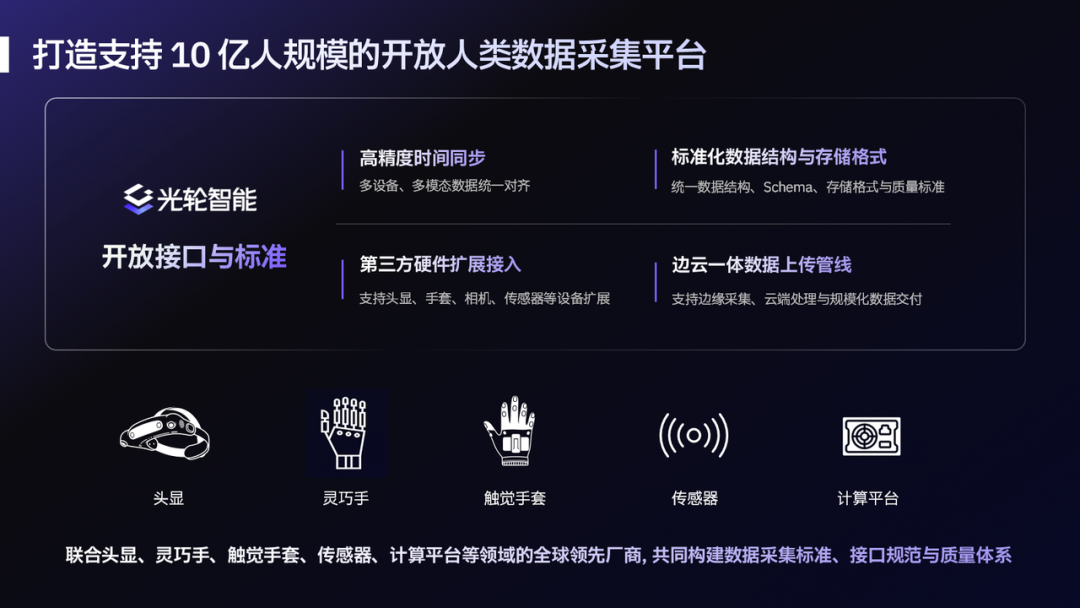
On June 18, Lightwheel AI announced a deep cooperation with PICO. The two parties will engage in deep synergy around the construction of human data collection infrastructure for the Physical AI field, jointly creating a new generation of general-purpose human data collection hardware solutions.
Specifically, in this cooperation, PICO will provide hardware R&D and product engineering capabilities, while Lightwheel AI will provide high-quality human video data, simulation-synthesized data, and industrial-grade simulation evaluation capabilities — a typical combination of "hardware entry point + data definition."
Almost simultaneously, Lightwheel AI also reached a strategic cooperation with Wuji Technology. The two parties will jointly formulate the next generation of human data collection standards, focusing on key collection aspects such as dexterous hand movements, tactile feedback, and force control signals, aiming to form standardized capabilities reusable across the industry.
It's important to note that vision and touch are the two most important perception modalities for Physical AI. By simultaneously binding core players in these two fields, Lightwheel AI is, to some extent, competing for the first gateway for data to flow from the physical world into the digital world, defining the "format" and "standards" for data collection.
Building the Computing Power and Platform Foundation: Moving from "Cottage Workshop" to "Standardized Cloud Service."
If the cooperation with PICO and Wuji Technology is about securing "where data comes from," then the cooperation with Alibaba Cloud and Moore Threads is about solving "where data goes for processing."
On June 17, Lightwheel AI announced a deep cooperation with Alibaba Cloud. The two parties will jointly build cloud-based infrastructure for Physical AI, including a Physical AI simulation evaluation cloud, a Physical AI continuous learning cloud, and an open Egocentric data infrastructure. Through cloudification and engineering capabilities, this aims to make the originally fragmented and complex workflow easier for developers and enterprises to use.
Prior to this, in May, Lightwheel AI reached a strategic cooperation with Moore Threads. Leveraging Moore Threads' full-function GPUs and Kuae intelligent computing clusters, combined with Lightwheel AI's self-developed simulation platform, they jointly created a domestically developed simulation-synthesized data solution.
These two collaborations point towards two directions: cloudification and domestic localization.
Cloudification allows Lightwheel AI to quickly reach more small and medium-sized developers, transforming simulation evaluation from a "luxury item" for big companies into a universally accessible tool for the industry. Domestic localization allows it to embed itself within an autonomous and controllable technology stack, securing a strategic position at the policy level.
Deepening the Scenario Closed Loop: Using real-world industrial data to feed back into model iteration.
Data and computing power solve "where capabilities come from," but whether a set of infrastructure is truly effective ultimately depends on whether it can work in real-world scenarios.
Lightwheel AI goes deeper in this aspect — not just signing cooperation agreements, but directly establishing joint ventures with industry partners.
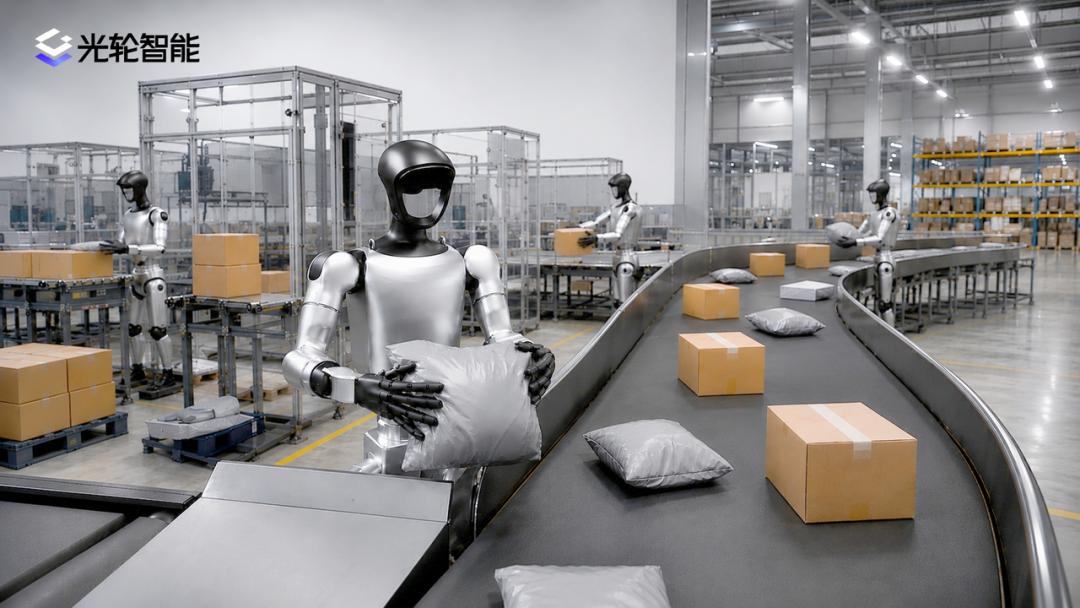
At the end of April, Lightwheel AI and New Hope Group established a joint venture called "Xinguang World," covering scenarios like logistics, breeding, and retail, aiming to沉淀 high-value industrial data from real business needs.
In mid-June, Lightwheel AI further jointly invested with Boton Technology to establish a joint venture, focusing on high-risk positions in industry and mining, building a continuous learning closed loop from data collection to on-site feedback.
After all, no matter how accurate simulation data is, it needs feedback from the real world for calibration. By deeply binding with industry partners, Lightwheel AI is building a "scenario data moat" that competitors will find difficult to cross.
Participating in Standard Setting: Transitioning from "Player" to "Referee."
In addition to data entry points, computing power foundations, and scenario closed loops, Lightwheel AI is doing something even more fundamental: participating in defining the rules.
In this field, Lightwheel AI has not only cooperated with the National Robot Testing and Evaluation Center (Headquarters) to jointly build a "real + simulation" closed-loop testing and evaluation infrastructure, promoting embodied intelligence towards more verifiable, replicable, and scalable industrial deployment.
On June 15, Lightwheel AI further reached a strategic cooperation with Shengshu Technology to jointly build high-quality world model data standards, a reproducible and high-quality world model evaluation system, and jointly explore the transformation path from model capabilities to scenario applications, promoting the verification, feedback, and iteration of world models and embodied intelligence in real industrial scenarios.
Earlier, Lightwheel AI was also invited to join the Newton Technical Steering Committee, working with giants like NVIDIA, DeepMind, Disney, and Toyota to jointly formulate global underlying standards for physical simulation.
From an industry participant to a co-creator of rules, if this transition is completed, Lightwheel AI will no longer be just a data service provider, but a new infrastructure interface for the Physical AI era — capable of supporting robots from R&D and training to evaluation and deployment, all running on its infrastructure.
Lightwheel AI's "Hidden Reefs"
Lightwheel AI's layout, on the surface, is a series of superimposed collaborations, but underneath lies a systematic thought process about "how data drives the deployment of Physical AI."
However, whether this logic can truly form a closed loop depends on multiple variables.
For example, is simulation evaluation a fundamental industry need, or a "defined need"?
Lightwheel AI places RoboFinals at the core of its strategy, based on the premise that large-scale, standardized simulation evaluation is the most urgent need for the Physical AI industry. However, this judgment may not be a consensus within the industry.
Wang Zhongyuan, Director of the Beijing Academy of Artificial Intelligence (BAAI), stated bluntly that while testing based on simulation environments is convenient, there is a clear gap compared to real application scenarios. Switching to real machine testing brings new problems, such as scene fidelity and hardware differences between devices, which can affect the fairness and objectivity of the evaluation.
Especially in the physical world, robots are highly sensitive to environmental details. "Even a slight misalignment in a screw installation can significantly reduce the success rate of equipment operation. Sometimes, it's mistakenly thought to be a model problem, but everything returns to normal after resetting the part," pointed out Xu Huazhe, founder of Pocoo Robot.

Furthermore, the trust crisis regarding the physical "gap" cannot be ignored.
On one hand, the physical world contains a vast number of details that are difficult to model precisely, such as subtle changes in material friction coefficients, slight variations in ambient lighting, and the accumulation of tolerances in component assembly. These are often simplified or ignored in simulations.
If the simulation produces "physical hallucinations," then the "knowledge" output by the entire "education system" could be wrong, leading robots to learn incorrect operational habits. This is a common vulnerability faced by all simulation companies in the Physical AI industry.
On the other hand, the value of a simulation evaluation platform essentially depends on the "consistency between simulation and reality." If the simulation environment cannot accurately reproduce the physical laws of the real world, high evaluation scores are meaningless.
Moreover, as the cooperation ecosystem continues to expand, how Lightwheel AI maintains focus on its core business amidst a broad network of collaborations while effectively integrating resources from various parties is also an unavoidable issue.
There are no ready-made answers to these challenges. The only certainty is that Lightwheel AI has completed its strategic positioning in the chaotic early stages of Physical AI.
As for the final outcome — whether this four-in-one layout of "Data + Simulation + Evaluation + Standards" will become the infrastructure of the Physical AI era or merely a carefully constructed narrative game — time will tell.
Comments
0 comments