
Intel AI Box Ultra Enters Mass Production for Vehicles as Changan Automobile Launches Cabin Solution
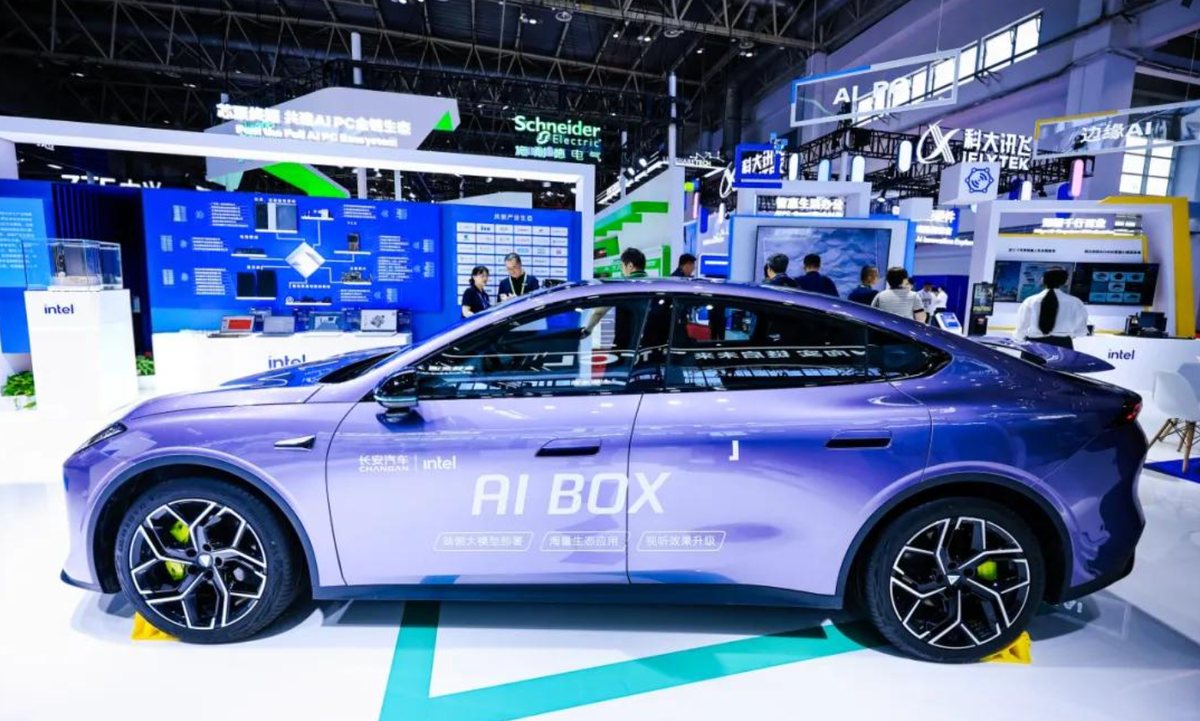
On 22 June, during the fourth China International Supply Chain Expo, Intel and Changan Automobile jointly unveiled an AI cockpit solution powered by the Intel AI Box Ultra, corresponding to the Changan Tianshu Cockpit AI Box.
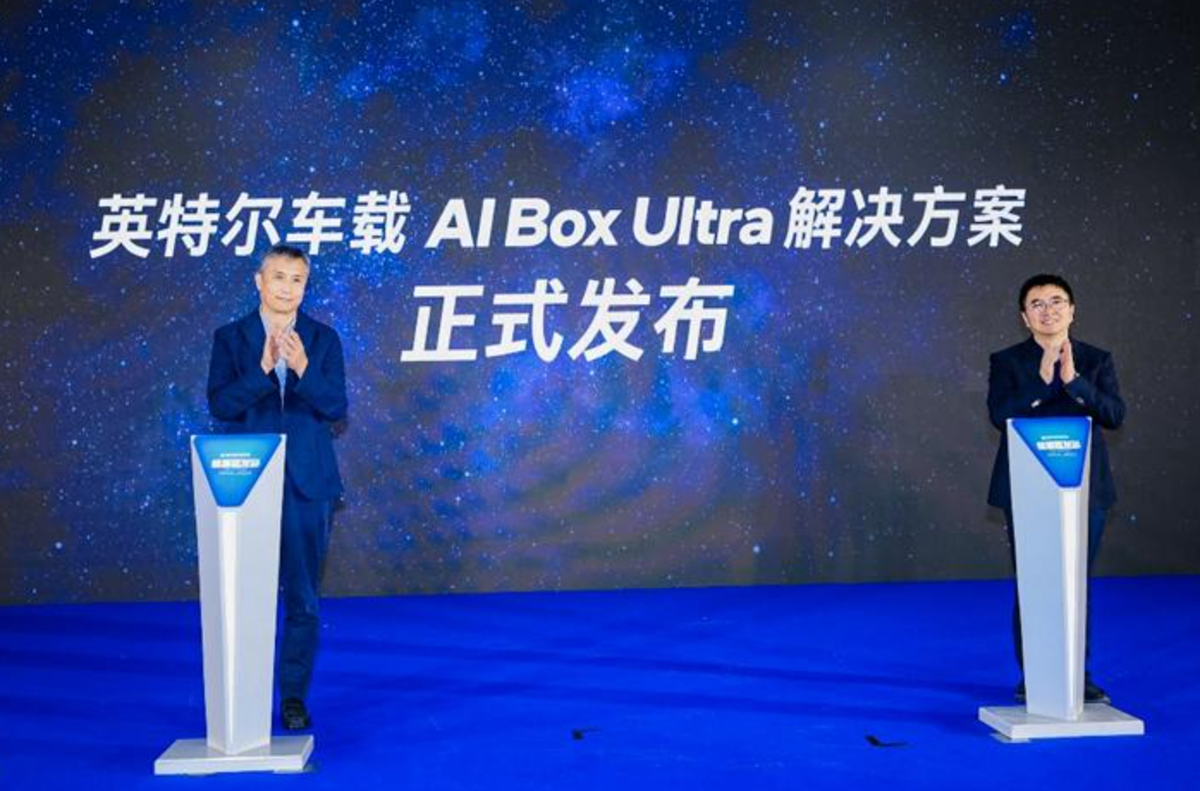
Wang Jingjia, General Manager of Intel's Industry and Solutions Business in China, stated that this collaboration marks the first step in mass-producing the Intel AI Box Ultra. The core hardware of the solution is based on the third-generation Intel Core Ultra processor, employing a heterogeneous computing architecture of CPU, GPU, and NPU. This design effectively equips the vehicle with an independent high-performance computing hub, shifting AI tasks that previously relied on cloud processing to local execution.
The system supports the local deployment and operation of large language models within the vehicle, enabling natural voice interaction, multimodal fusion perception, and GUI agent functions. Multimodal perception encompasses voice, camera, and gesture recognition, enhancing the dimensionality and accuracy of human-machine interaction.
In terms of data security and system stability, localised computing addresses the issue of limited functionality in weak or no network environments. Sensitive data such as call logs, driving footage, and personal itineraries are processed locally without being uploaded to the cloud, physically reducing the risk of privacy breaches. Compared to purely cloud-based solutions, on-device AI computing minimises data transmission latency, ensuring real-time responsiveness of cockpit functions.
Ecosystem compatibility is another technical feature of this solution. Users can activate the AI Box Ultra's dedicated interface with a single click via the vehicle's infotainment system, directly accessing mainstream Android app stores and using Android applications. This mechanism bridges the gap between mobile and in-vehicle application ecosystems, allowing the smart cockpit to leverage the mature mobile app ecosystem, thereby reducing the cost and development cycle for automakers to create bespoke in-car applications.
Currently, mainstream smart cockpits predominantly use specialised automotive-grade chips such as the Qualcomm 8295. The Changan Tianshu Cockpit AI Box, by opting for the x86-architecture Core Ultra platform as an external computing module, presents a different technical route in terms of computing power specifications and application ecosystem, offering the industry a new hardware selection reference.
Comments
0 comments