
Li Xiang on AI: A Rift Behind Him?
Li Auto has always wanted to 'get on board'.
On the AI train.
It's just that on the journey to catch this train, Li Auto doesn't seem entirely at ease, always leaving the impression of being 'almost there'.
This 'almost there' means that when Li Auto and its CEO Li Xiang talk about AI, there's always an underlying tone of 'persuasion' and 'self-justification'.
Li Xiang: The 'Career Transition' of a Super Product Manager
This self-justification and persuasion began at the end of 2024.
As the year drew to a close, Li Xiang gave an extended interview, repeatedly stating that 'Li Auto is not a car company, but an artificial intelligence enterprise.'
To deliver on its promise of becoming an 'AI company' as quickly as possible, Li Auto was busy throughout 2025: restructuring to 'de-Huawei-ify', open-sourcing the Star Ring OS, advancing in-house chip development, and launching its first pair of AI glasses.
But this didn't seem to be enough.
At the beginning of this year, Li Xiang called an impromptu all-hands internal meeting without prior notice. The meeting lasted nearly two hours. For most of it, Li Xiang shared his views on AI trends and emphasised several key AI-related milestones.
However, after the meeting, employees were left bewildered, with one remarking: 'I don't understand what the boss is talking about.'
And this sentiment was not uncommon. At the time, many Li Auto employees expressed on the company's internal social media platform that they 'didn't understand' or questioned the purpose of the meeting.

In other words, at least internally at that time, Li Xiang had not yet fully convinced his employees that 'Li Auto is an AI enterprise.'
Why is that?
'Li Auto's team has always been heavily focused on short-term goals,' noted one automotive industry analyst. So when Li Xiang suddenly started talking about long-term objectives, the employees' first reaction was that it didn't fit his usual 'pragmatic' persona.
Li Xiang is indeed very pragmatic.
After all, before 2024, as a product manager akin to a 'top-tier hit-maker', Li Xiang's decisions always seemed to hit the market's 'sweet spot' and generate returns in the shortest possible time.
That's the pragmatism of a 'product manager'.
But in an era where everyone talks about AI, with trends and concepts laid out on the table, Li Xiang's identity as a product manager needs to evolve. He needs to become a technically savvy CTO that the market can believe in.
Li Xiang's new CTO-like persona was on full display at the Livis Day Li Auto Software & Embodied Intelligence Launch Event.
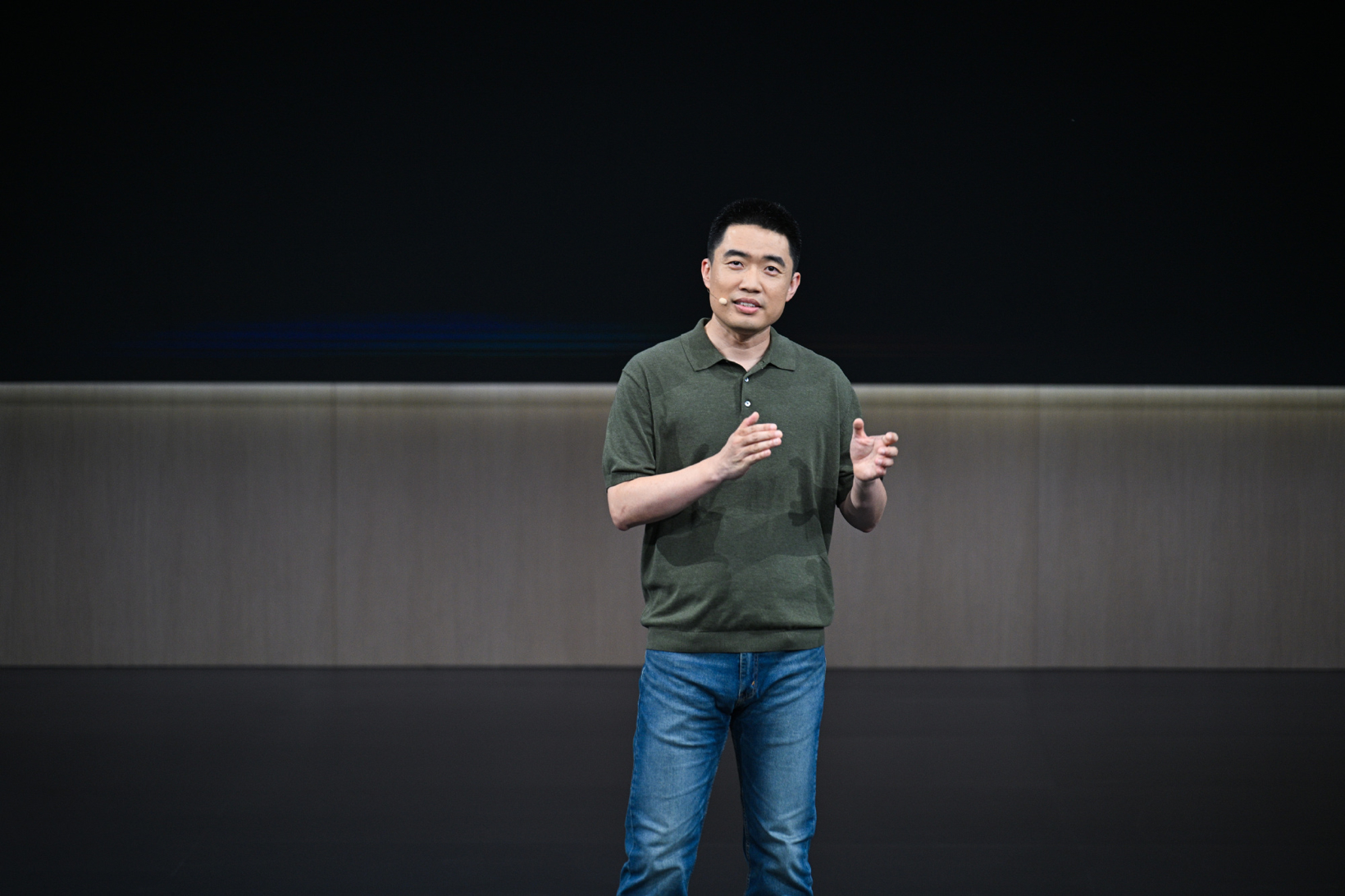
On 15th June, in Beijing.
Standing on stage, Li Xiang set the tone for Li Auto's next decade. He said that in the past ten years, Li Auto had created a 'mobile home', and in the next ten years, they would 'give life' to both the car and the home.
From 'building the house' to 'doing the interior decoration', aside from the need for Li Xiang's own identity shift to be recognised, there was also the need for the tool that gives life to Li Auto's vehicles—AI's capabilities—to gain acceptance.
The launch event was dense with information: the in-house Mach M100 chip, the Mach Mind large model, the Mach VLA intelligent driving system, the full-year OTA roadmap, the promise of 'safety and efficiency surpassing humans', and an appealing upgrade path: a new version in Q3, and capabilities matching Tesla's FSD V14 by Q4.
At a glance, these capabilities don't seem particularly extraordinary when compared to other car companies with intelligent driving features.
So, what was the point of this launch event?
Li Xiang's criterion for deciding whether to hold a launch event is: 'If you don't hold this event, users will miss out on knowing one important thing, then it should be held; if after holding it, you haven't given users more valuable information, then it shouldn't exist.'
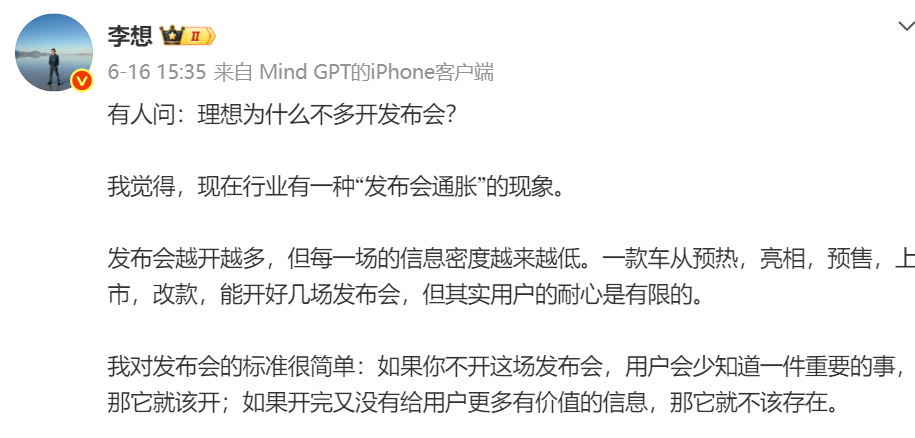
Judging Livis Day on 16th June by this standard, it seems that simply understanding these technical specs isn't exciting enough. Li Auto desperately needed a 'hardcore tech showcase' to counter the public's entrenched stereotype that 'Li Auto only knows how to make fridges, TVs, and sofas.'
So, who was this embodied intelligence launch event really for? Did it achieve the effect Li Xiang wanted?
To a certain extent, yes, but not by much.
The primary audience for this event was Li Auto owners, followed by institutional investors in the secondary market and core algorithm teams. It was also a 'poach-proof' and 'short-proof' roadshow aimed at talent and capital.
One owner, who was among the first batch of both L8 and i6 buyers, told Auto after watching the event: 'In terms of intelligent driving, Li Auto is head and shoulders above the rest.' They also stated that their third car would undoubtedly be another Li Auto.
Clearly, the event convinced at least one Li Auto owner. The 'not by much' aspect was reflected in the share price: Li Auto's stock fell 1.5% at the close on 16th June, and a further 3.75% at the close on 17th June.
The implication is clear.
Embodied Intelligence That Isn't 'Sexy' Enough: 'New Wine in Old Bottles'?
But this is understandable. Unlike creating a hit product, the cycle for monetising technology is long. Li Auto, accustomed to seeing returns in the short term, is inevitably going through a period of quiet solitude.
The question is, for the current market, is the concept of 'embodied intelligence' built on Li Auto's technologies really that exciting?
To find the answer, we first need to clarify what Li Auto's embodied intelligence actually is.
The day before the event, on 15th June, Li Xiang posted on Weibo: 'Many people got to know Li Auto starting from the "fridge, TV, big sofa". Today, please remember this picture.'
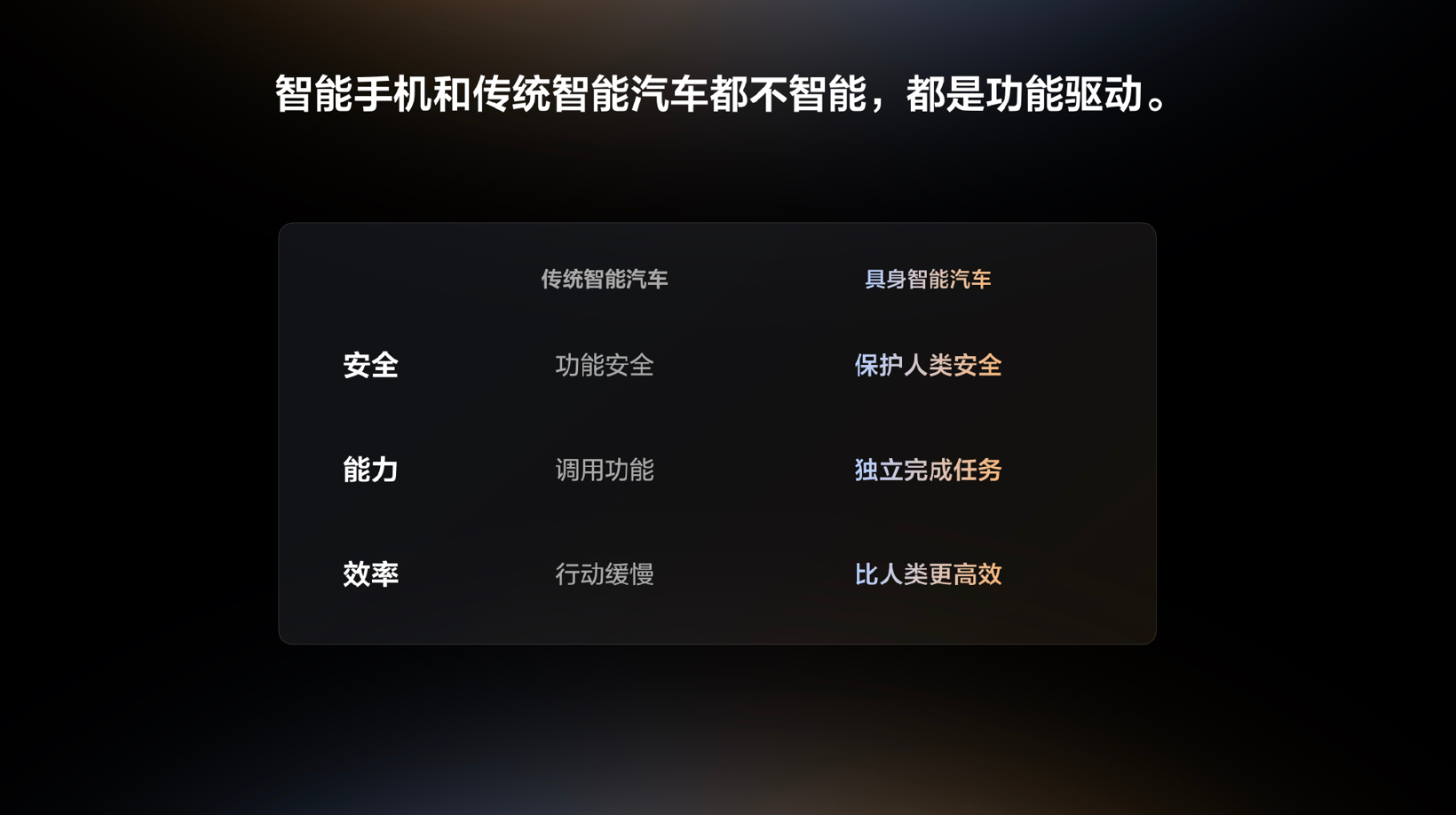
Li Xiang said: 'The core difference between an embodied intelligent car and a smart car is: protecting human safety, completing tasks independently, and being more efficient than humans. This is our definition of an embodied intelligent car, and it's what Li Auto aims to achieve in the next ten years.'
In other words, unlike XPeng's catwalk humanoid robot at its previous event, the concept of embodied intelligence Li Auto wants to convey seems somewhat 'abstract', and the audience needs time to accept this less tangible idea.
In fact, while this appeared to be a technology launch event, it was more about 'redefining the rules of the game'. Li Auto is using the term 'embodied intelligence' to elevate the competition to the dimension of 'whose car has more life'.
Li Xiang's definition of an embodied intelligent car is a 'four-in-one': an electric vehicle, a professional driver, an AI computer, and a life assistant. The electric vehicle and AI computer are the 'embodiment', while the professional driver and life assistant are the 'intelligence'.
The cleverness of this definition lies in repackaging a bunch of industry buzzwords into a concept with a sense of ownership. 'Professional driver' is autonomous driving, 'AI computer' is the computing power base, and 'life assistant' is the in-cabin AI.
Tesla talks about these things, XPeng talks about them, NIO talks about them too. But Li Auto gave them a collective name—'embodied intelligent car'—and then declared: This is true intelligence; the rest are mostly 'function-driven' smart features.
It's like a restaurant boasting a 'Michelin three-star chef + organic farm direct supply + temperature-controlled wine cellar + butler service', and then slapping on a label saying 'new culinary species'.
It's just that while each individual thing is done well, together they don't create a new species.
1280 TOPS of Computing Power: How to Make an Expensive 'Brick' Pay Off?
If the concept of embodied intelligence wasn't communicated effectively, it might just be a matter of Li Auto not mastering the rhythm of communication in the AI wave. But if we turn our attention to the heavyweight technology Li Auto launched, is it impressive enough?
Take the Mach M100 chip, for example. The specs are certainly solid.
In May this year, the Mach M100 was mass-produced and installed in vehicles, becoming the world's first mass-produced dynamic data flow AI chip. It uses a 5nm automotive-grade process, with a single-chip computing power of 1280 TOPS and an actual operating efficiency exceeding 82%. Compared to mainstream industry solutions, like NVIDIA's Orin-X with 254 TOPS per chip, the Mach M100's computing power density is significantly higher. The new Li Auto L9 Livis, equipped with dual Mach M100 chips, has a total computing power of 2560 TOPS.
Li Auto announced it has achieved full-stack in-house development, from chip, compiler, and operating system to AI algorithms and domain controllers.
But a harsh reality masked by these impressive specs is that the core of AI is data, and Li Auto's data scale is being left behind by the leading players.
Tesla's FSD V14 relies on millions of cars on the road, sending back real-world driving data every day. Huawei's ADS relies on its vast cooperative car manufacturer matrix.
In comparison, Li Auto's assisted driving mileage data still has an order-of-magnitude gap with these two. The time pressure to catch up within half a year is immense.
However, Li Auto has its own solution: using 'computing power' to compensate for the lack of 'data'.
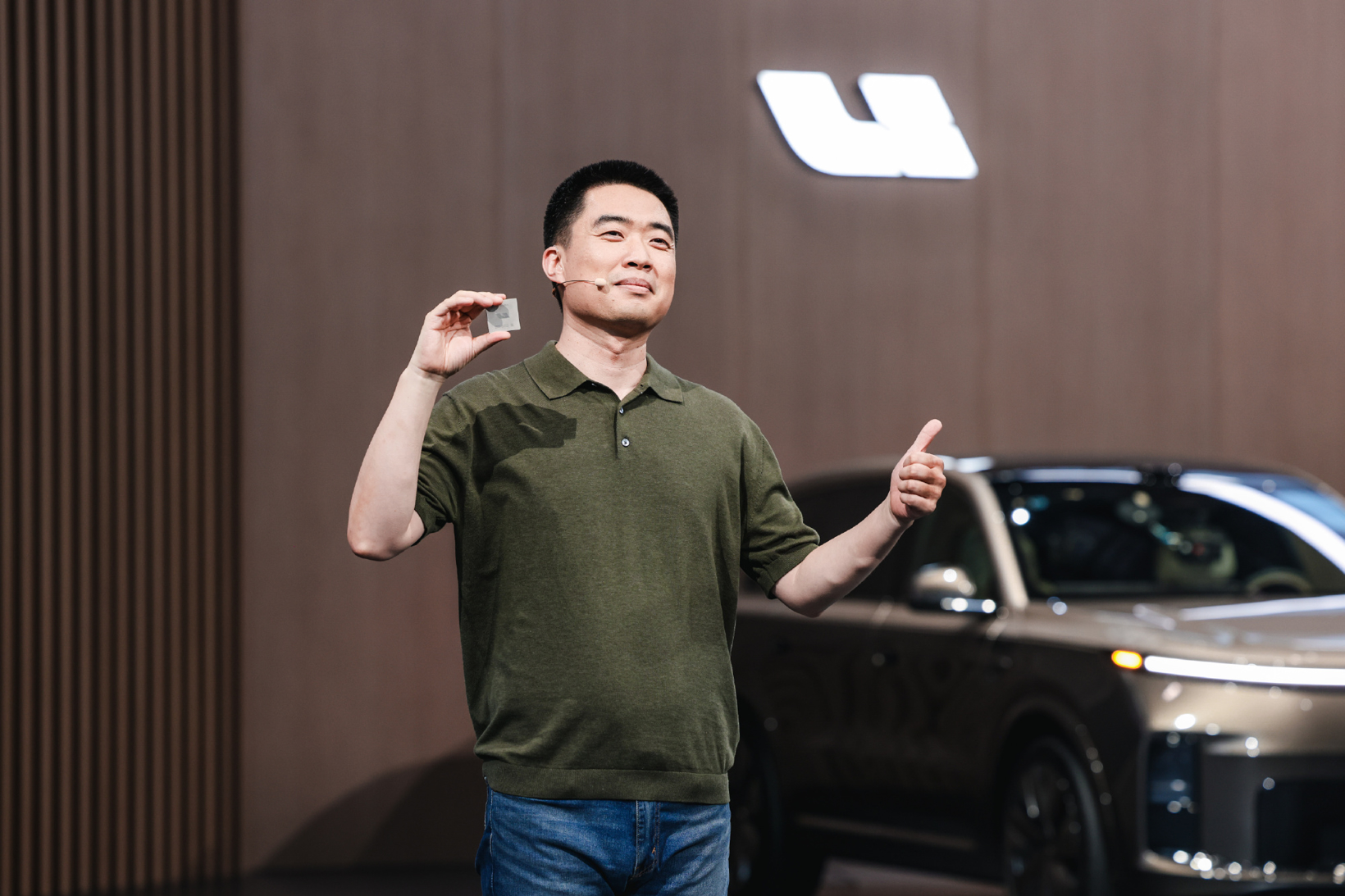
The real value of the Mach M100 isn't the 1280 TOPS number; it's that it gives Li Auto the ability to define its own data pipeline. No longer constrained by the iteration pace of third-party chips, it can customise the computing power structure according to its own data needs.
Using simulated synthetic data to train world models—that's the biggest reason for the Mach M100's existence. It's not designed to handle today's L2+ systems, but to run tomorrow's high-density simulations.
This is an expensive 'overtaking on the bend' strategy. Essentially, it's an admission: the speed at which I expand by selling cars in the physical world can't keep up with the speed of data demand.
But this path carries extremely high risk.
XPeng's Turing chip was already mass-produced in Q3 2025, with cumulative shipments exceeding 200,000 units, targeting nearly 1 million units in 2026, and switching its entire model line to its own chip in Q2. Li Auto's chip has just had its 'first installation', large-scale mass production verification hasn't begun, and the data loop hasn't been closed.
If the simulated data path doesn't work out, the Mach M100 will become Li Auto's most expensive 'brick'.
Conclusion:
As mentioned earlier, the day after Livis Day ended, Li Auto's share price fell for two consecutive days.
This isn't the market failing to understand the technology; it's precisely because the market understands it too well. It knows how many yield rate climbs lie between a 5nm chip's launch and its large-scale verification. It also knows how many gaps between OTA promises and delivery lie between defining a 'four-in-one' embodied intelligence entity and its mass-production experience.
As Li Xiang completes his identity shift from 'product manager' to 'technology evangelist', have the company behind him and the users in front of him kept pace? This cognitive disconnect is becoming the most difficult chasm for Li Auto to cross in the AI era.
Comments
0 comments