
Polestar says Trump administration forced it to halt U.S. sales
Polestar said on June 25 that the U.S. government is forcing the electric vehicle company to stop selling cars in the U.S. market starting in 2027. Following the news, Polestar's share price fell 5.7% in early trading.
It is reported that the U.S. Department of Commerce did not approve Polestar's sales permit under the "Connected Vehicle Rule." The new regulation stipulates that, starting in 2027, the import and sale of vehicles equipped with Chinese connected vehicle technology will be banned.
The U.S. Department of Commerce has not yet responded to the above reports.
As early as 2024, Polestar warned that the new U.S. connected vehicle regulations would effectively block its vehicle sales business in the U.S., even if the vehicles were manufactured domestically in the U.S.
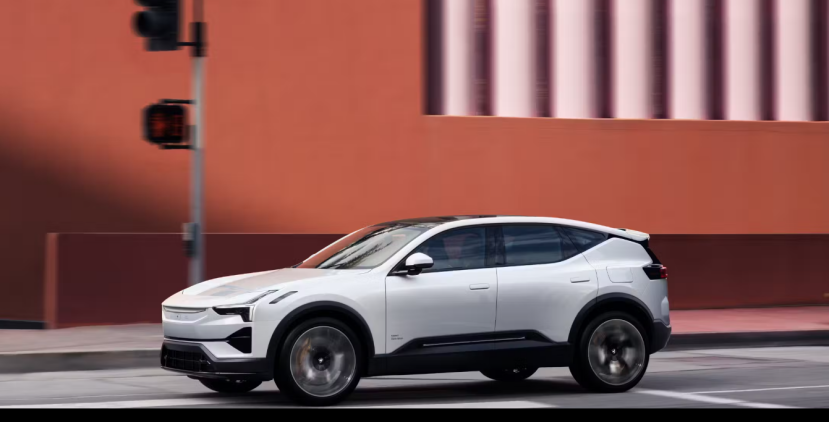
This setback in approval also casts a shadow over the prospects of the Polestar 3, the brand's only U.S.-manufactured model.
Some Polestar models are produced under contract by Volvo Cars. However, Polestar stated that the currently available Polestar 3 and Polestar 4 models can still be sold normally in the U.S., and the after-sales service network will continue to operate.
In March, Volvo Cars announced that it would concentrate all production capacity for the Polestar 3 at its South Carolina plant in the U.S., and would no longer produce the model simultaneously at its Chengdu plant in China. In response, a Volvo Cars spokesperson told Reuters on June 25 that the Chinese plant has not yet ceased production. It is currently impossible to determine whether this policy change will alter its production plans.
Faced with layers of tariff barriers, Polestar has chosen to iterate on existing older models while postponing the development of new models. Deliveries of the new Polestar 4 model will begin later this year, and a facelift for the Polestar 2 sedan is planned for 2027.
The brand's next all-new model is the compact SUV Polestar 7, which will be produced at Volvo Cars' planned factory in Slovakia.
Affected by intensifying competition and weakening consumer demand, Polestar's sales in the U.S. have remained sluggish, and the company's business focus is increasingly shifting towards Europe. Only 6% of the company's first-quarter sales came from the U.S., while the European market accounted for 78%. Polestar CEO Michael Lohscheller stated: "The automotive industry has entered a new phase of regional competition. Our strategy will adjust accordingly. Europe will become the core growth territory, and we also plan to produce the Polestar 7 model in Europe."
Polestar has long struggled to achieve profitability and has repeatedly relied on capital injections from its major shareholder Geely and Chairman Li Shufu. The company's stock price has continued to decline, and last year it could only maintain its Nasdaq listing status through a reverse stock split.
The U.S., citing national security concerns, previously introduced new regulations to control in-vehicle Bluetooth, wireless networks, cellular mobile communications, and some satellite communication technologies. This regulation was formally implemented by the previous U.S. administration in January 2025 and was retained after Trump took office. This is another significant measure by the U.S. to block Chinese-made vehicles from entering its domestic market, aiming to support its own automotive manufacturing industry. U.S. lawmakers have also proposed bills to further tighten restrictions. Additionally, Chinese electric vehicles also face high U.S. tariffs.
Besides Polestar, several automakers, including Ford, are urgently applying for U.S. government permits to protect multiple models that have been on sale for years and are now caught up in the connected vehicle ban controversy. Volvo Cars, a sibling brand to Polestar, announced in May that it had obtained a permit but still needs to ensure that all models sold in the U.S. comply with the detailed regulations.
Comments
0 comments