
Volkswagen Group Goes Global: Why Did Jetta Become the 'Pioneer'?
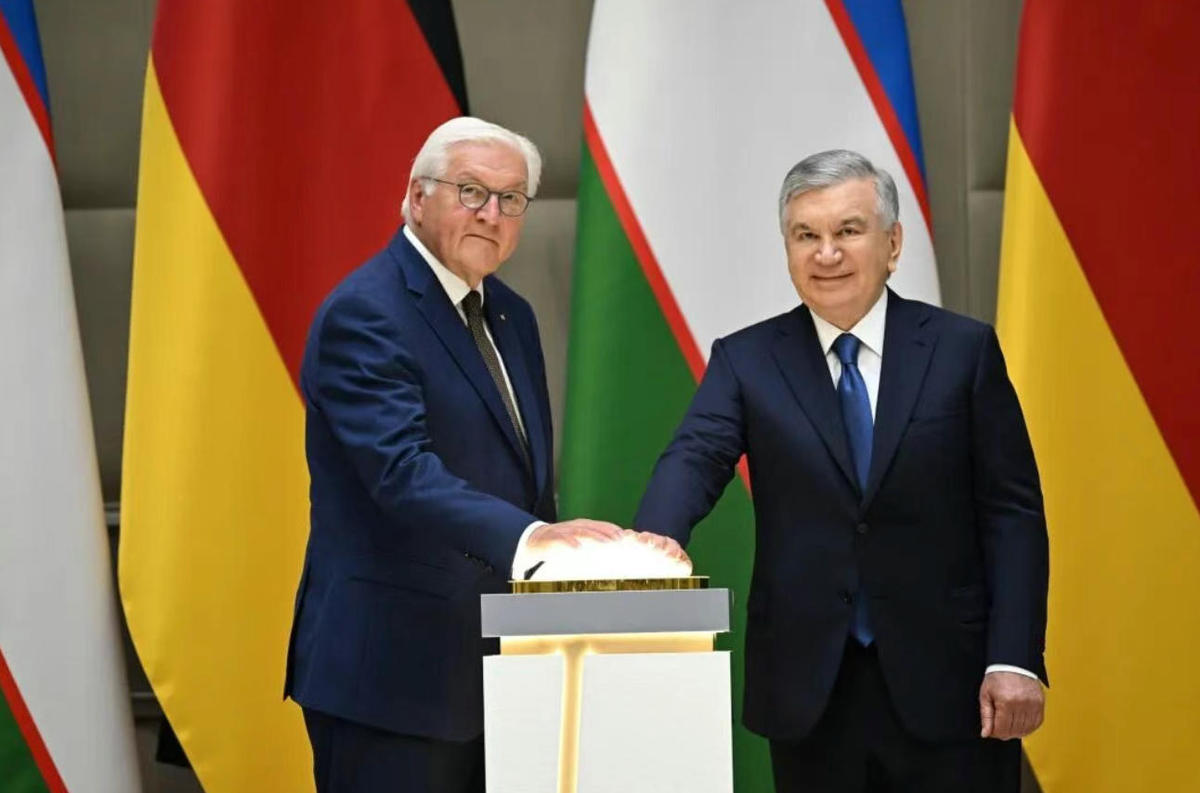
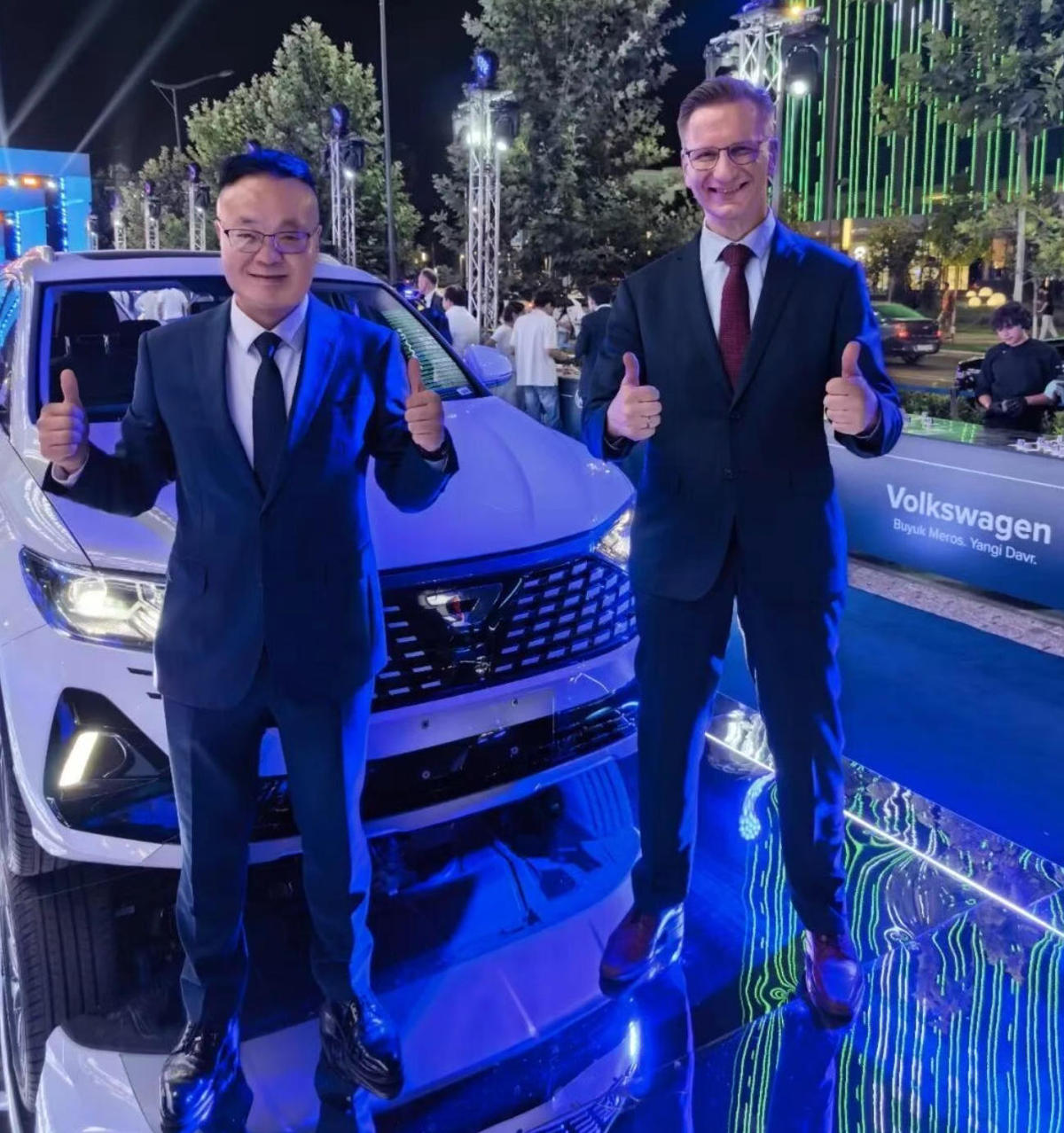
On June 17, German President Frank-Walter Steinmeier and Uzbek President Shavkat Miromonovich Mirziyoyev jointly launched Volkswagen's investment project in Uzbekistan, and inaugurated Volkswagen's new factory and first showroom in the country. Representatives of the Jetta brand and local partner Alyans Automobile Company attended the opening ceremony of the new automobile factory in Tashkent, Uzbekistan, including Gao Jiefang, Director and General Manager of FAW-Volkswagen Jetta Automobile Co., Ltd., Davron Khidoyatov, Deputy Chairman of UzAuto, and Dirk Mayer, General Manager of FAW-Volkswagen Jetta Automobile Co., Ltd., among other corporate leaders.
Jetta officially characterized this event as "a key step in global development, an important milestone." On the surface, it sounds like PR rhetoric, but if you read it in conjunction with Uzbekistan's market structure, Jetta's product matrix, and its subsequent "Five New Guidelines" and 2030 goals, you'll find that this move has a much tighter logical chain than the typical "a brand is selling cars in another country."
First, let's lay out the market data clearly. Uzbekistan has a population of over 38 million and is the fastest-growing automotive market in Central Asia. In 2025, annual passenger car sales reached 285,000 units, with A-segment cars accounting for over 95% of the market share.
These three figures are interesting only when read together. A population of 38 million makes it the largest in Central Asia, but the absolute number isn't staggering. Annual sales of 285,000 units don't make it a large market globally either. What's truly noteworthy is the structure of "over 95% being A-segment cars" — this means the market's consumption focus is highly concentrated in the economical family car segment. B-segment and above are largely negligible, and luxury brands are a niche within a niche. Under this structure, whoever is tagged as "economical + family-oriented + durable" aligns with the mainstream 95% of the market.
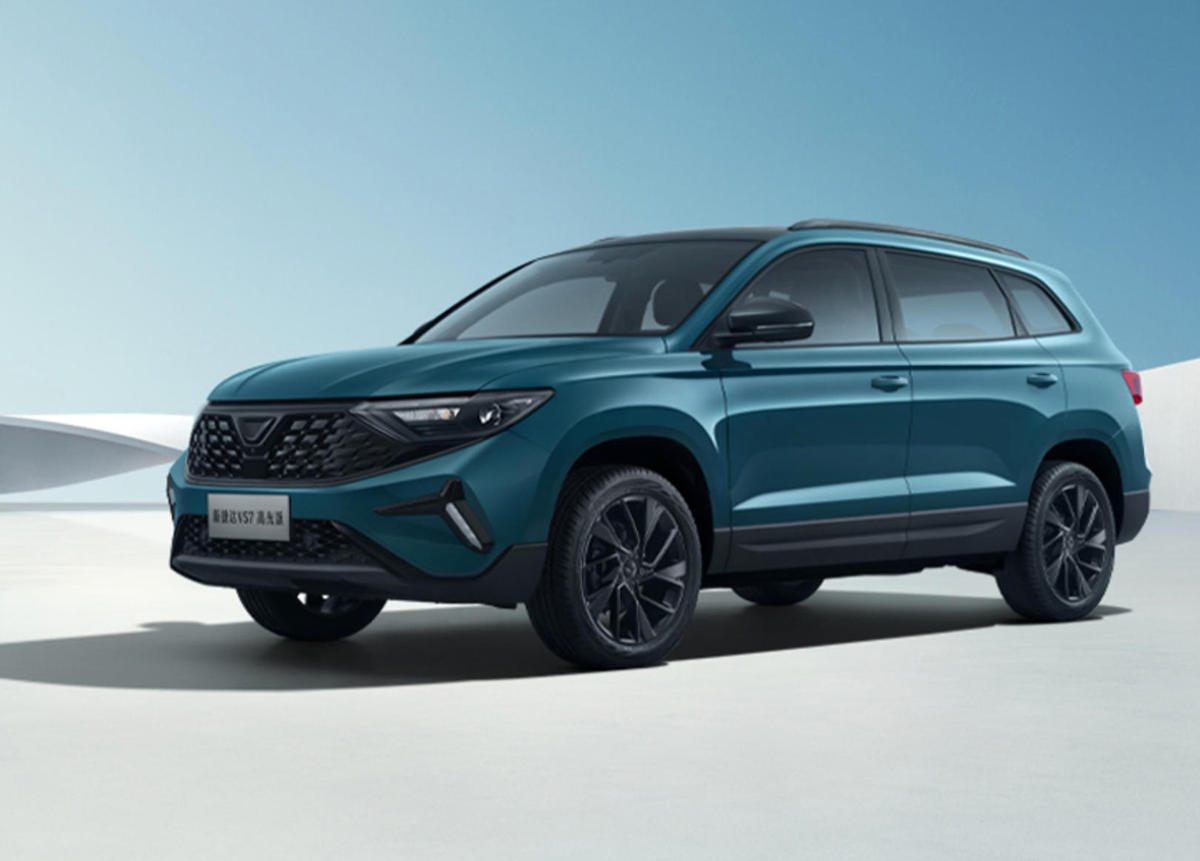
Jetta itself is the economical line spun off from the Volkswagen system, with a German foundation, mature Chinese intelligent manufacturing, and an integrated supply chain. Prices are set lower, and product definition leans towards family use. The VS5 is a compact SUV, and the VS7 is a mid-size SUV. In the initial phase, they are directly exported as complete vehicles to Uzbekistan, targeting "family travel needs." This product choice aligns with the market structure of 95% A-segment cars; it's not a forced fit.
What's more worth analyzing is not "where it entered," but "how it entered."
Jetta didn't immediately commit to KD (Knock Down) or full knock-down kits, nor did it rely solely on complete vehicle exports. Instead, it adopted a two-step approach: "complete vehicle exports first → SKD (Semi-Knocked Down) assembly in Tashkent by the end of 2026." The partner is Uzbekistan's Alyans Automobile Company, and the timeline for the end of 2026 targets the semi-knocked down assembly production of the VS5 and VS7.
What's the significance of this pace?
In the first phase, complete vehicle exports are in small volumes, and even with high tariffs, it's manageable. The core task is to establish channels, after-sales service, and brand awareness. Products are ready-made, without waiting for local production lines. Once sales climb, the SKD line is running smoothly, and local workers and supply chains are mobilized, then the switch to semi-knocked down assembly occurs. At that point, tariff advantages can be fully leveraged, and compliance pressures are lower than with deep localization from the start. In a market like Uzbekistan, where policies, exchange rates, and supply chain foundations are still fluctuating, the two-step approach offers significantly higher fault tolerance than the aggressive "build a factory upon arrival" strategy.
The choice of Alyans as a partner wasn't random either — it's tied to UzAuto (the backbone of Uzbekistan's automotive industry), providing ready-made local resources, government relations, and channels. Jetta contributes products, standards, and the "German quality" brand, while the partner provides landing capabilities. This division of labor is a typical template for joint venture overseas expansion.
Many people gloss over the fact that two presidents endorsed this event, but the level of ceremony is worth highlighting.
Steinmeier is the German President, and Mirziyoyev is the President of Uzbekistan. Together, they launched Volkswagen's investment project in Uzbekistan and inaugurated the factory and showroom, with the ceremony also streamed online. For a sub-brand to land in a Central Asian country at this level of ceremony is beyond what a commercial launch can explain.
It reflects two layers of meaning: Germany sees Central Asia as a new fulcrum for extending the Volkswagen system outward, while Uzbekistan views "foreign investment in car manufacturing and localization of the automotive industry" as a showcase for economic openness. Jetta, as the vehicle for this landing, fits perfectly into the "economical brand → high volume → significant impact on local employment and supply chain" range. It aligns better with the political narrative of "openness to investment" than launching with Audi, and offers more flexibility in pricing and positioning than using the Volkswagen badge.
This is also why Jetta is the vanguard, rather than the Volkswagen badge or Audi — an economical sub-brand is the least politically risky option in a country's early-stage industrialization automotive investment projects.
Zooming out a bit, Uzbekistan is an important starting point for Jetta's globalization. In the third quarter of this year, Jetta will launch in Madagascar and Kazakhstan, while simultaneously evaluating more emerging markets in the Middle East, Africa, and ASEAN.
The logic behind this selection is consistent: emerging markets + dominant family economical demand + reusable German reputation. Uzbekistan is the template, Madagascar and Kazakhstan are for replication and validation, and the Middle East/Africa/ASEAN are for expansion. Jetta has anchored its 2030 strategic goals with the "Five New" guidelines: New Products, New Marketing, New Territory, New Ecosystem, and New Mechanisms. The path is "Developed in China, Manufactured in China, integrating German quality, targeting global emerging markets with high cost-performance vehicles."
This paragraph gains weight only when read in conjunction with FAW-Volkswagen's overall layout. FAW-Volkswagen will coordinate the full-chain overseas export, localized production, and multi-regional expansion of the Audi, Volkswagen, and Jetta brands. This means Jetta's overseas expansion is not a single-brand action, but a group-level "three-brand coordinated overseas expansion" where Jetta serves as the entry point for volume, economical models, and emerging markets. Audi targets brand and profit at the top, Volkswagen badge goes mainstream, and Jetta focuses on penetration and scale — a three-tier structure, with Jetta carrying the heaviest volume pillar.
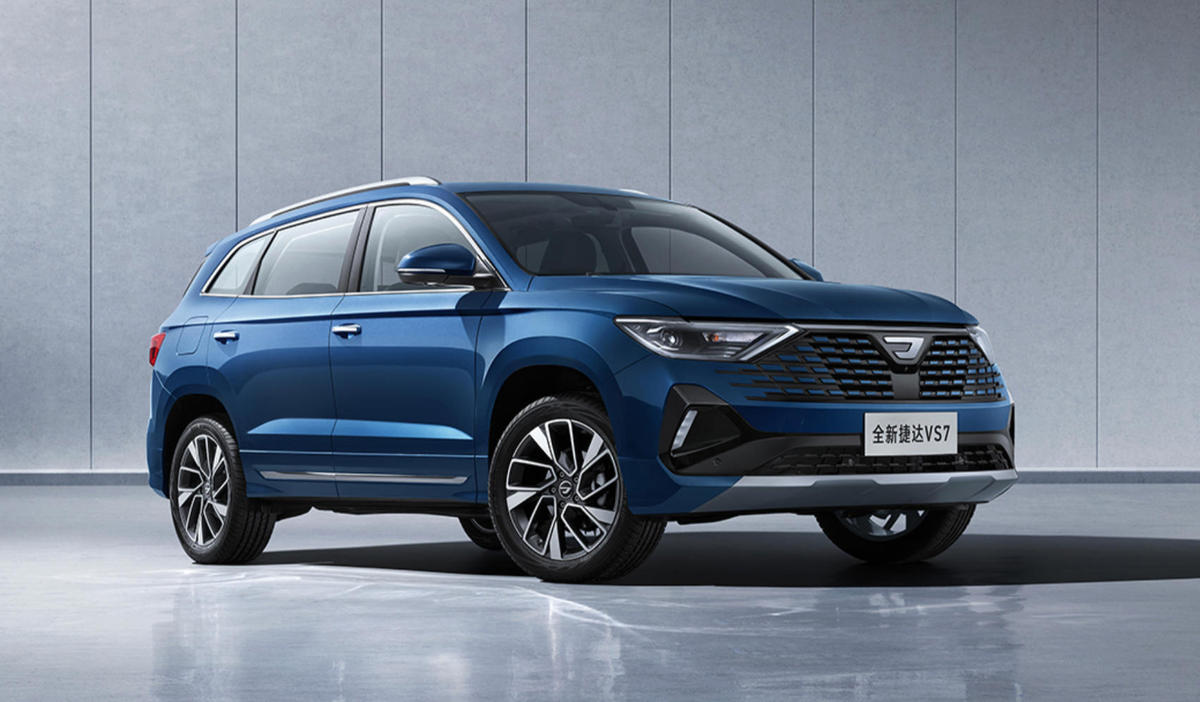
Returning to the products themselves, it's also worth analyzing why the VS5 and VS7 were chosen as the first two models.
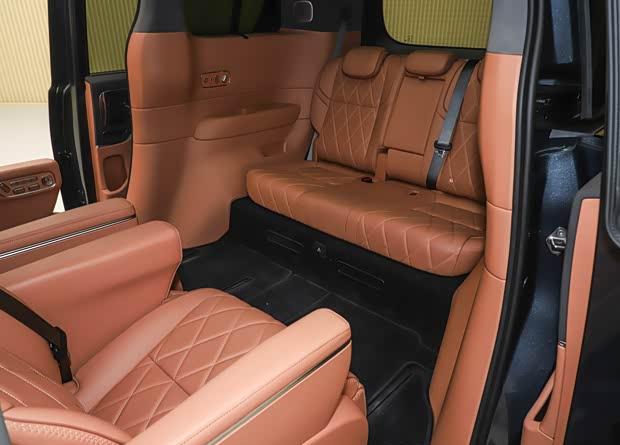
In the domestic market, these two are defined as "sufficient for family use, cheap to repair, and spacious." In a market like Uzbekistan, where families tend to be larger and cars are often fully occupied, the VS7's mid-size SUV body suits multi-member families, while the VS5, as a compact SUV entry point, targets first-time car buyers or budget-conscious families. Launching both together covers the family SUV range from entry-level to mid-range. The strength of mature Chinese intelligent manufacturing and integrated supply chain — the supply chain efficiency, cost control, and delivery pace honed domestically — offers product advantages in a market like Uzbekistan that hasn't yet been fully competitive. Selling economical SUVs, Jetta can provide space, features, and chassis quality that local older, low-priced models may not match.
And after switching to SKD by the end of 2026, with lower tariff costs, the pricing flexibility of this "German brand + Chinese supply chain body" combination will increase.
Putting the above layers together, the framework of this event is as follows:
Market side: Uzbekistan's 38 million population, 285,000 annual sales, and 95% A-segment structure perfectly align with Jetta's economical family positioning;
Product side: VS5 + VS7 exported as complete vehicles first, covering family SUV from entry to mid-range;
Landing side: Cooperation with Alyans/UzAuto, SKD in Tashkent by end of 2026, two-step approach to control risk;
Policy side: Endorsement by two presidents, clear signals from Germany, Uzbekistan, and the Volkswagen Group;
Strategy side: Uzbekistan is the "starting point," not a "single point"; Madagascar and Kazakhstan follow in Q3, with Middle East, Africa, and ASEAN under evaluation;
Group side: FAW-Volkswagen coordinates the overseas expansion of Audi/Volkswagen/Jetta three brands, with Jetta carrying the volume tier.
Viewed as a whole, Jetta's entry into Uzbekistan appears on the surface as "a sub-brand selling cars in a country," but underneath it is FAW-Volkswagen's "economical sample" test for its overseas export strategy — whether the template can be established depends on three things: Jetta's first-year sales and channel reputation in Uzbekistan, the smoothness of the SKD transition by the end of 2026, and whether the pace can be replicated in Madagascar and Kazakhstan in Q3. If these three things run smoothly, then the markets under evaluation in the Middle East, Africa, and ASEAN will see substantive progress; only then will the "New Territory" among the five new goals for 2030 have a fulcrum.
Jetta's path of "Developed in China + Manufactured in China + German badge + Emerging markets" is different from the overseas expansion models of brands like Chery and Great Wall Motors, which rely on brand independence and hard investment in channels. Jetta leverages the brand premium of the Volkswagen system and the cost efficiency of China's supply chain, playing a different card. Whether Uzbekistan can establish this template is the key variable determining how big that card can ultimately become.
Comments
0 comments